Bay and bow windows bring in broad views and extra daylight, but their angled structure makes window treatments harder to plan than those on a flat wall. The cleanest solution is usually to treat each section separately with an inside-mounted shade. This keeps the frame visible and lets each panel operate without crossing an angled joint. The right option depends on window depth, privacy, sun exposure, and how the projecting space is used.

What Is the Difference Between Bay and Bow Windows?
A bay window usually contains three sections: a larger center window and two side windows set at sharper angles. The side units may be operable while the center is often fixed, creating a deeper recess and more defined corners.
A bow window usually combines four or more similarly sized windows in a shallow curve. It offers a wider view, but its additional joints leave less room between headrails.
|
Feature |
Bay Window |
Bow Window |
|
Typical construction |
Three sections |
Four or more sections |
|
Shape |
Angular projection |
Gentle curve |
|
Interior space |
Deeper, more defined nook |
Wider, shallower ledge |
|
Main treatment challenge |
Different window widths and corner angles |
Limited clearance across several narrow sections |
Best Window Treatments for Bay and Bow Windows
Individual Roller or Cellular Shades
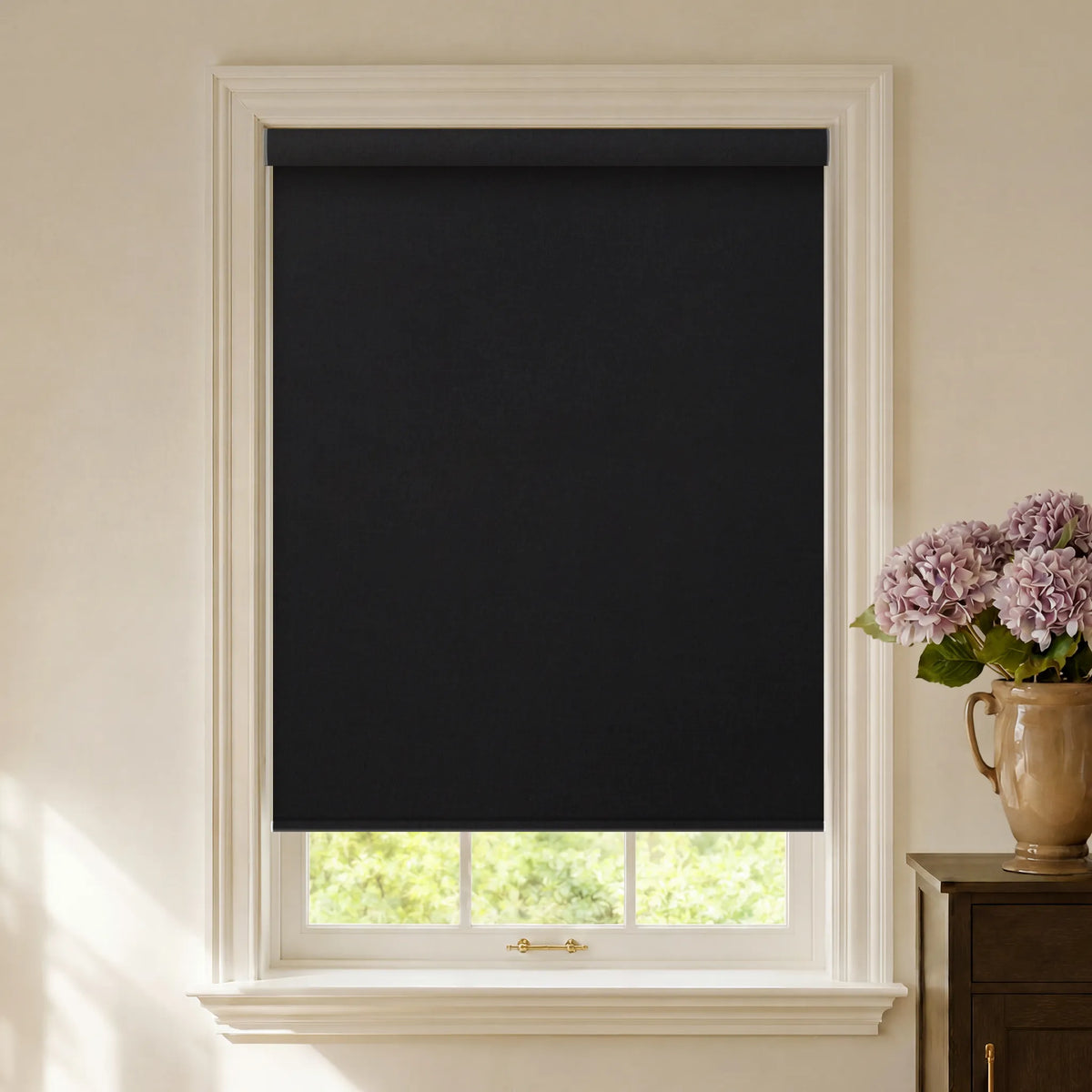
Installing one shade on each section is the most adaptable approach. Roller shades have a slim profile where corner clearance is tight. Cellular shades add insulation and suit reading or seating bays. Matching fabrics and aligned headrails help separate shades read as one treatment.
Roman Shades
Roman shades add fabric texture without filling the recess with drapery. They suit dining bays, reading nooks, and traditional interiors. Their folded stack is deeper than a roller shade, so check clearance at angled joints and handles.
Top Down Bottom Up Shades
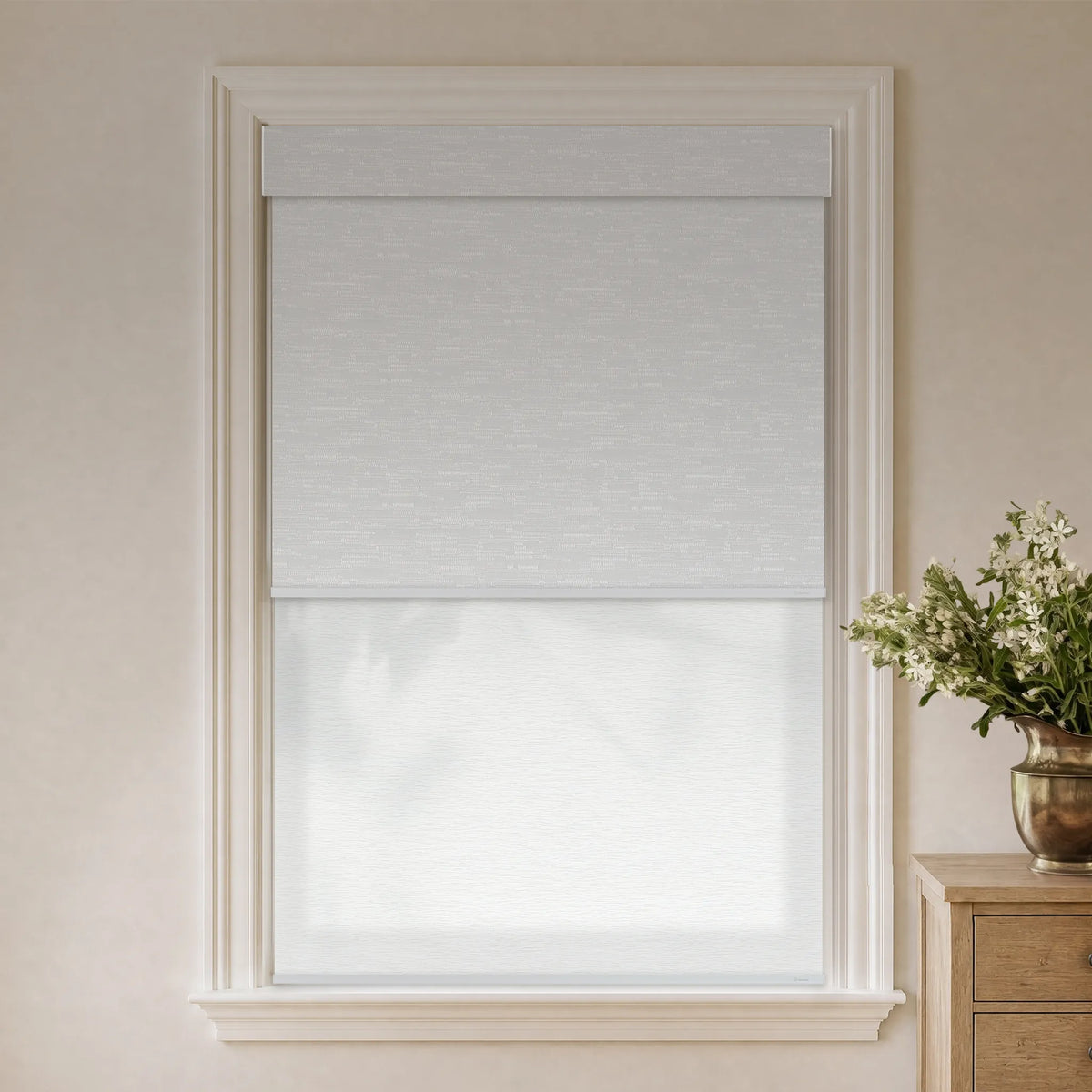
For street-facing bays, top down bottom up shades can cover the lower glass while admitting daylight from above. Every section still needs sufficient mounting depth and operating clearance.
Shutters
Custom shutters emphasize the architecture and provide adjustable light control, but their frames and hinged panels take up corner space. They suit deep bays better than shallow bow windows.
Curtains or Drapery
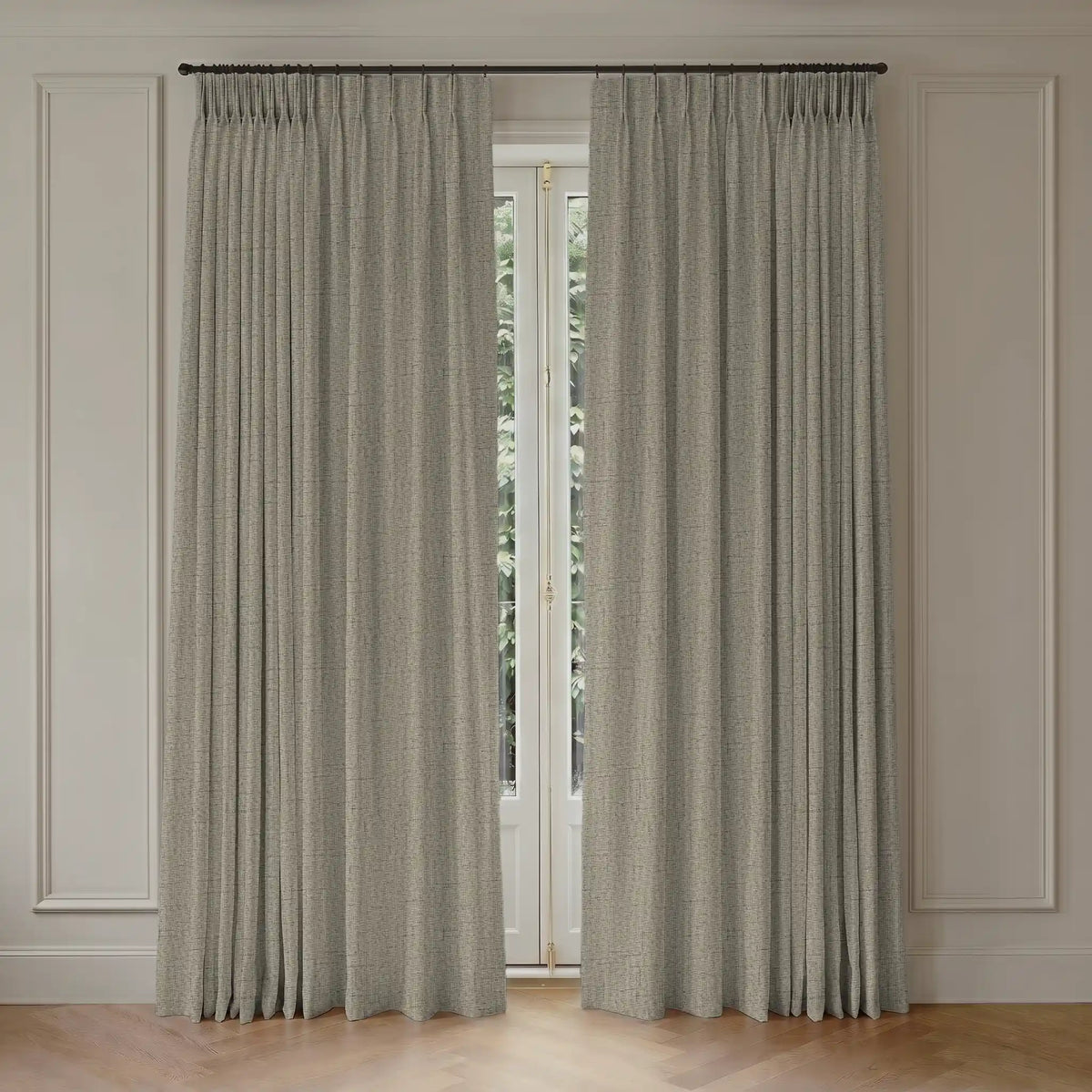
A rod or track outside the recess can frame the complete window and provide broad coverage at night. Closed curtains hide the shape, while tracks inside the recess may need custom angled or curved hardware.

Installation Tips and Mistakes to Avoid
Choose an Inside Mount When the Depth Allows
An inside mount is usually the first choice because it keeps the trim visible and reduces conflict at angled joints. Check the headrail's minimum depth and allow space for fabric rolls, folds, and moving window parts.
Measure Every Section Precisely
Do not assume matching panes have identical dimensions. Measure width at the top, middle, and bottom, and height on both sides and in the center. Record each section and its angles separately. Even a 1/8-inch error can affect operation in a tight corner. For complex layouts, a professional may use a laser measure and digital angle finder.
Check Handles, Locks, and Cranks
Cranks, handles, and locks can rub against fabric or block the bottom rail. Open every window before finalizing the mount. Projecting hardware may require a spacer, partial recess, or slimmer shade.
Plan the Corners Before Ordering
Adjacent headrails should align without touching. Mark their projected depth with painter's tape or cardboard templates, then decide whether the shades will operate together or independently.
Bay and Bow Window Design Ideas
Create a Reading Nook
Add a fitted cushion and pillows to the recessed seat. Drawers or lift-up compartments below provide storage. Choose a treatment that reduces page glare while keeping daylight.
Build an Indoor Plant Garden
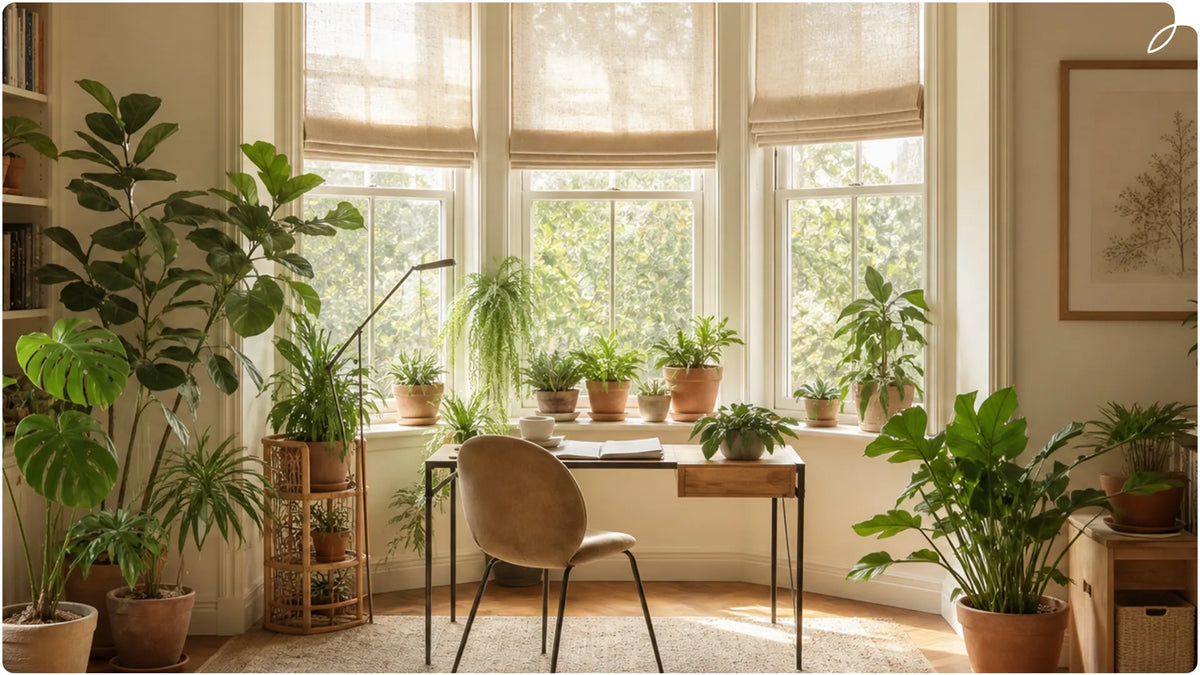
Use the ledge for succulents, trailing plants, or a small indoor tree. Light-filtering or solar fabric can soften direct sun. Keep leaves, soil, and watering tools away from the fabric and motor.
Extend the Dining Area
Place a compact round table beside the projection to create a breakfast nook. Individually controlled shades can manage glare on one side without covering the full view.
Style a Display Ledge
Display artwork, seasonal decor, or a focused collection on the ledge. Keep tall objects clear of moving shades, locks, and sensors so the display does not disrupt operation.

Graywind Window Treatments for Bay and Bow Windows
For a living room or dining bay, Graywind Motorized Light Filtering Roman Shades soften daylight and add structured fabric folds. Order one shade for each window section and confirm that the folded stack clears the angled joints.
Graywind Motorized Solar Roller Shades suit bright bow windows, plant displays, and rooms where glare control and the daytime view matter. Because solar fabric can become less private after dark when interior lights are on, pair it with another privacy layer if nighttime coverage is important.
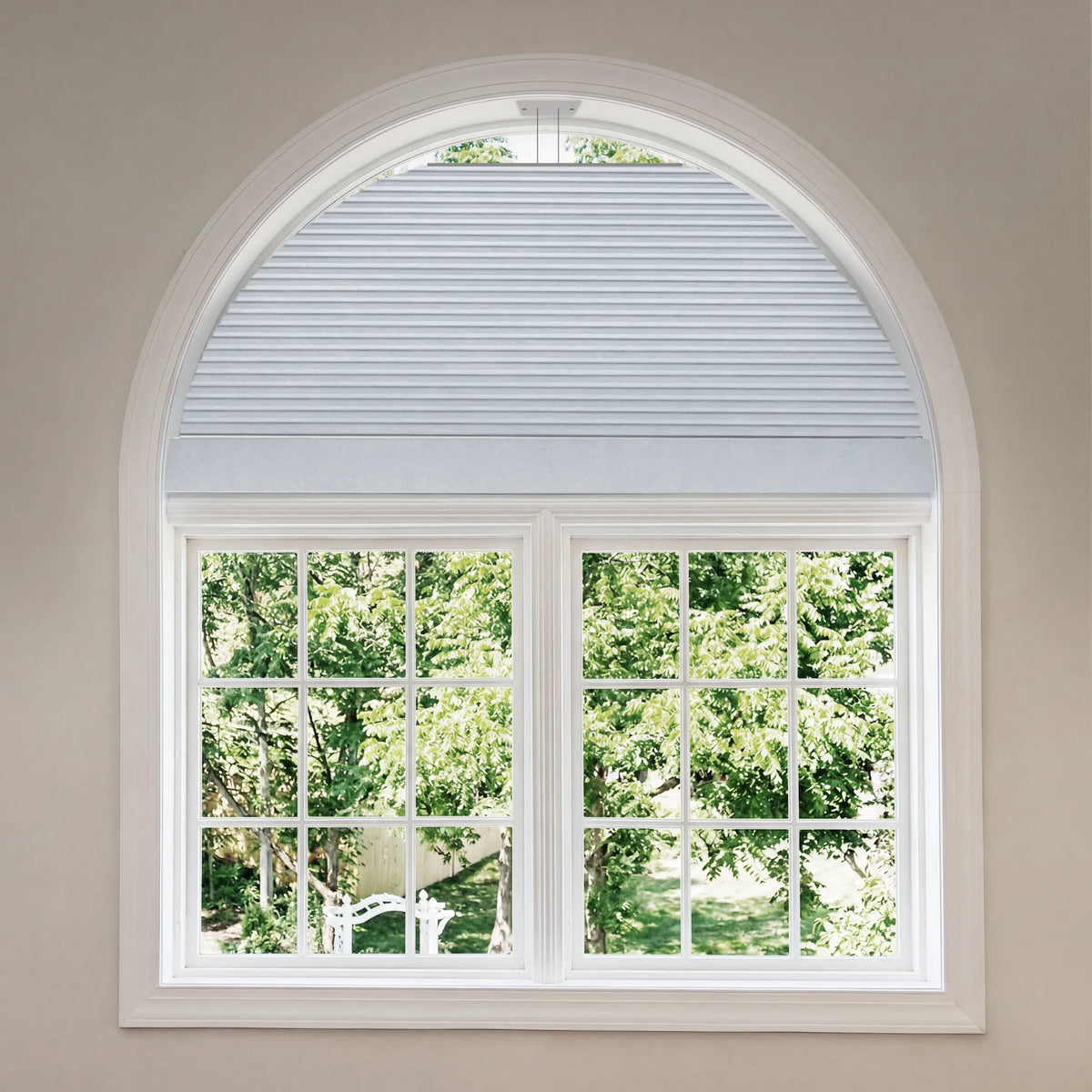
For a bedroom bay or insulated reading nook, Graywind Motorized Cellular Shades in Blackout provide stronger light control and a honeycomb structure. This product currently requires 1 1/2 inches of inside-mount depth, so check every section before ordering.
If the window faces a street, Graywind Motorized Top Down Bottom Up Roman Shades can combine lower-window coverage with daylight from above. Use Graywind's Measuring Guide for each opening and send photos and a measurement sketch for review when the corner geometry is uncertain.
Ultimately, the best treatment for your bay or bow window balances aesthetic goals with practical needs. While traditional options like custom shutters and Roman shades remain classics, Graywind's smart, customizable solutions offer a modern, convenient, and precise way to enjoy the full potential of your beautiful windows.