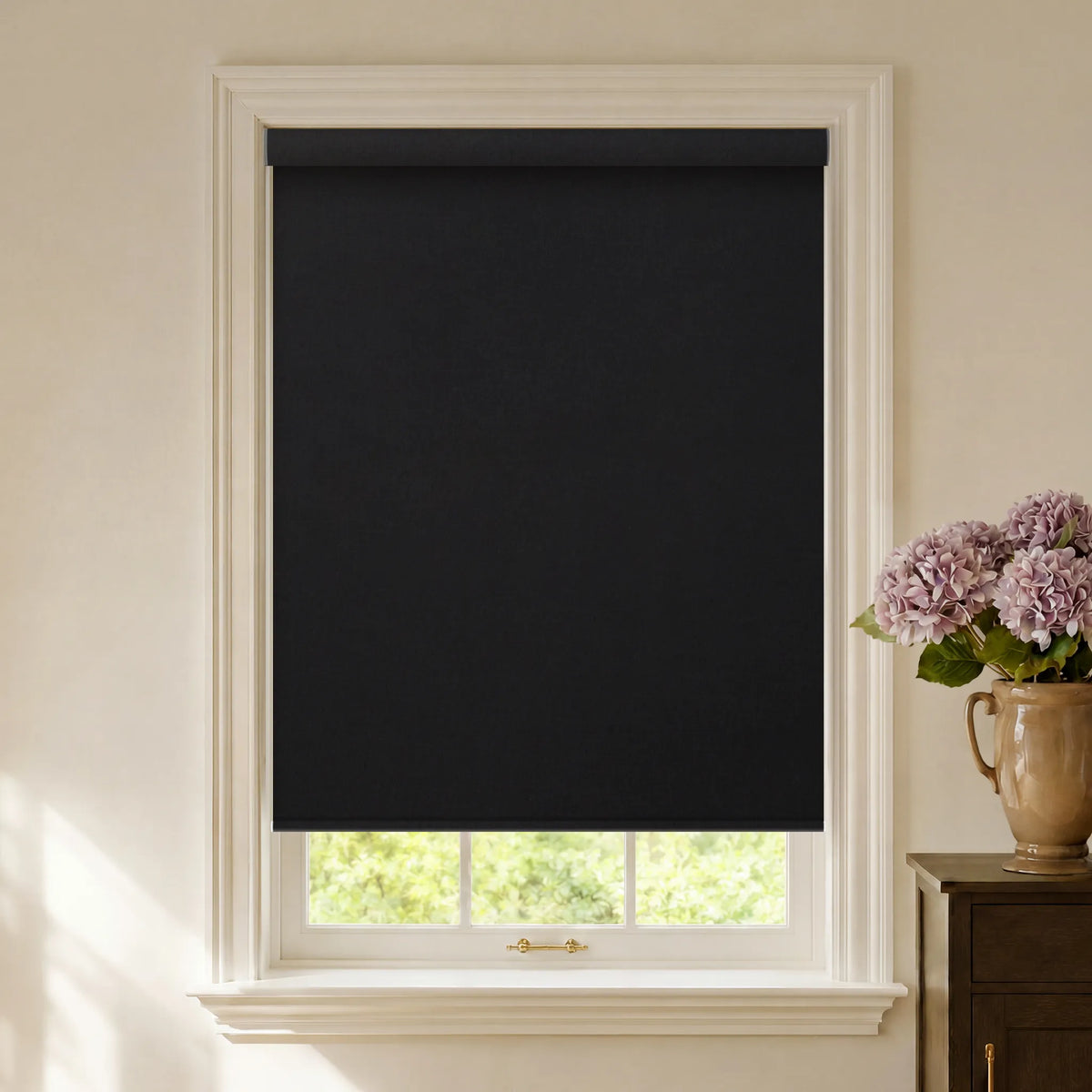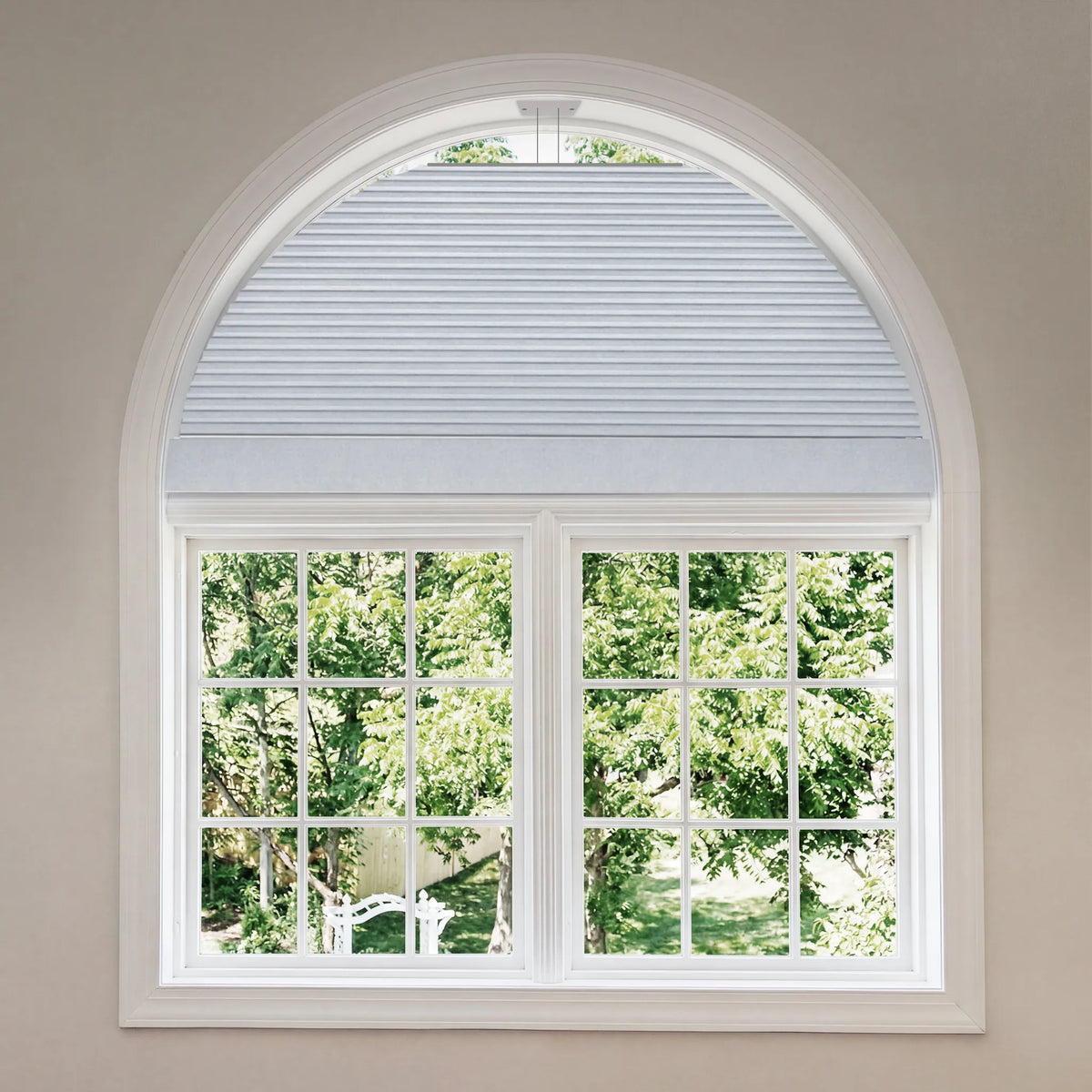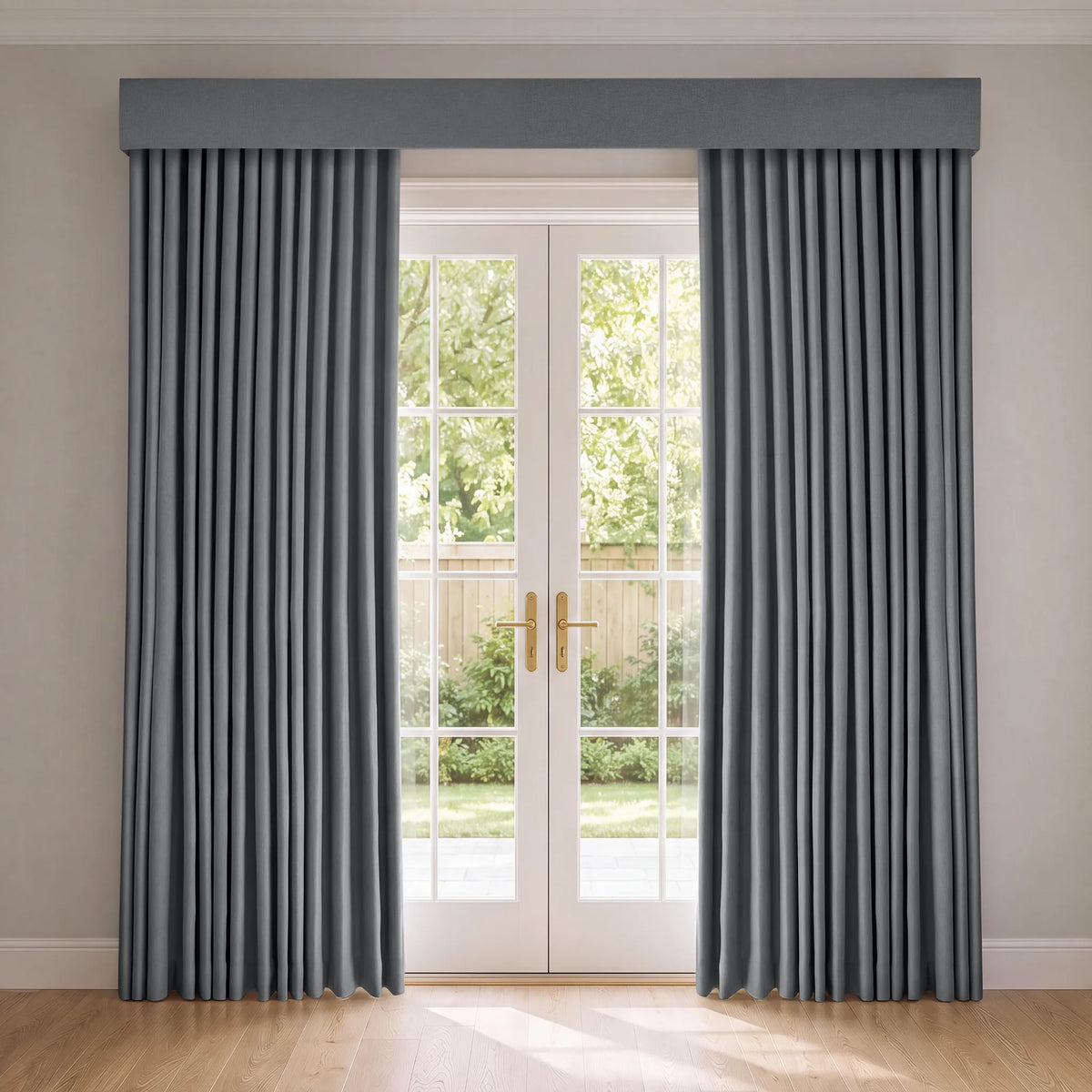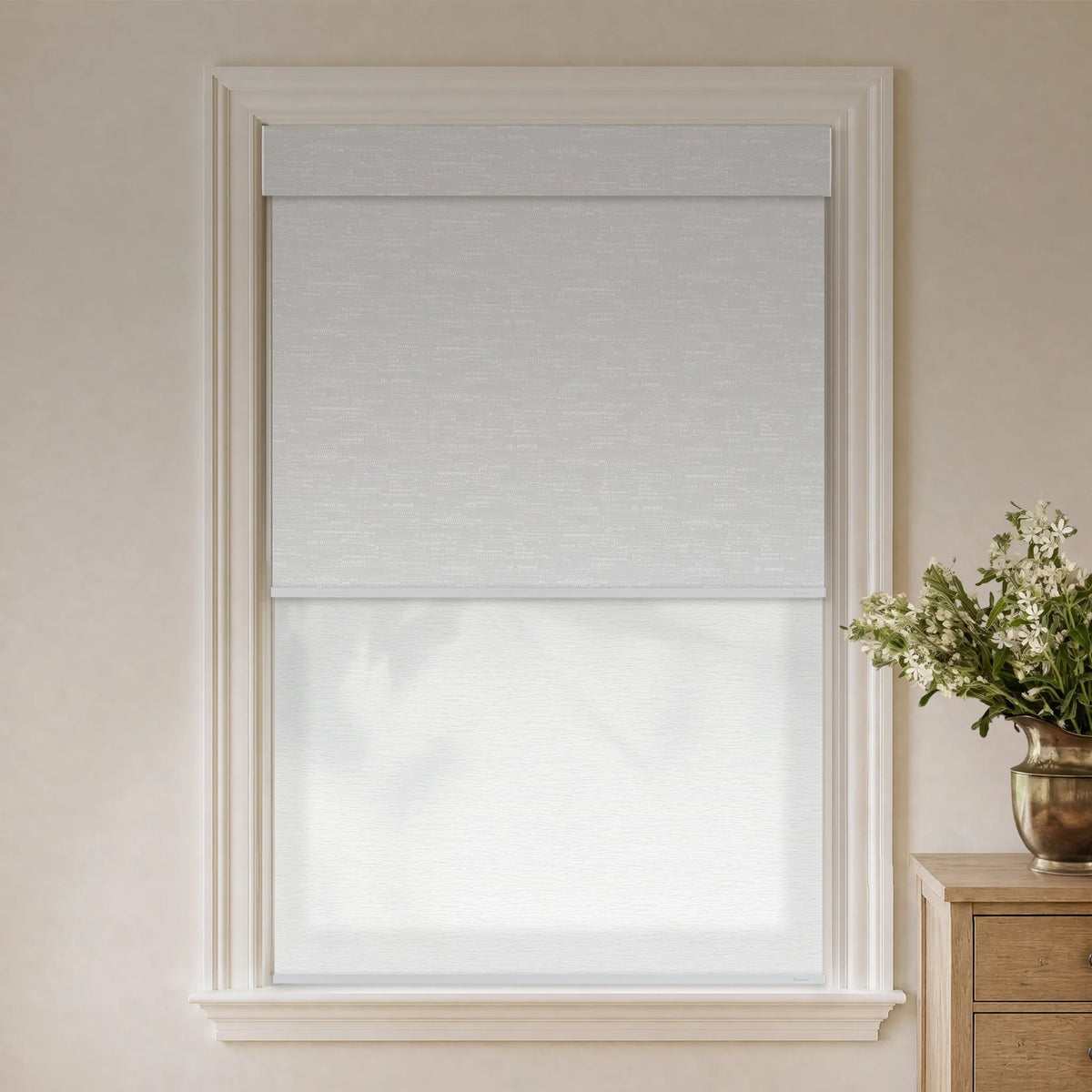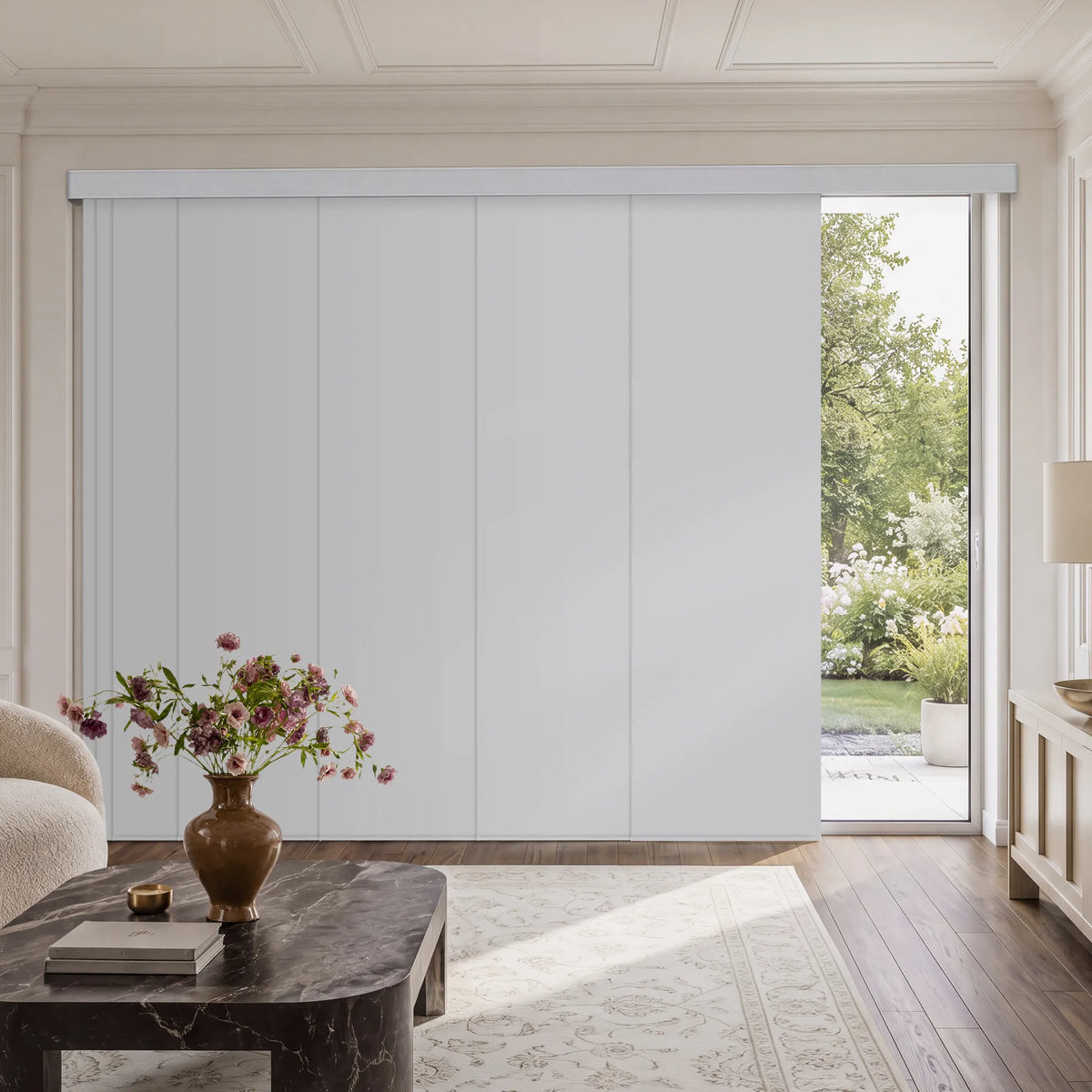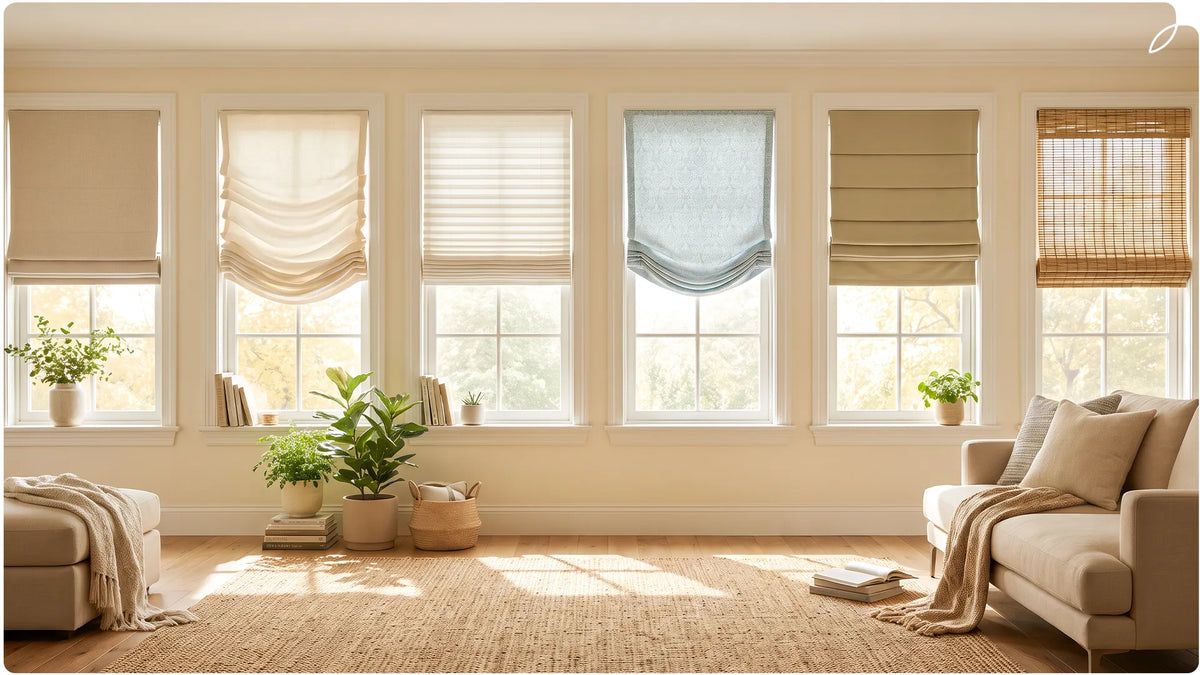
Roman shade styles differ in how the fabric hangs when lowered and gathers when raised. Flat, plain fold, soft fold, relaxed, balloon, and tulip shades range from smooth panels to decorative swags. The right choice depends on how much fabric detail you want and how the window needs to function.
Why does the fold matter? A print that looks clear on a flat shade can disappear into deep loops. A generous fabric stack can also cover more glass than expected. Choose the silhouette before choosing a color.
What Are Roman Shades?
Roman shades are fabric window coverings that lift into folds rather than rolling around a tube. Their construction determines whether the lowered shade looks smooth, segmented, looped, or curved.
Style names vary between manufacturers. These six are useful shopping categories, rather than a universal industry classification. Blackout, cordless, and motorized describe performance or operation, not fold styles.
Two Factors to Consider Before Choosing a Style
The Fabric's Appearance and Drape
Look at both pattern and flexibility. A large botanical print needs enough uninterrupted fabric to remain recognizable. A subtle weave can gain interest from structured folds or loops. Stiff fabric may resist a relaxed curve, while a very fluid fabric may need support to form crisp folds.
The Window's Daily Job
Decide how often you will adjust the shade, how much daylight you want, and whether nighttime privacy matters. Ask for the raised stack dimensions and mounting requirements. Fold style alone does not determine opacity: fabric, lining, and gaps around the installation also affect light control.
Six Roman Shade Styles Explained
1. Flat Roman Shades
Flat shades present a smooth face when lowered, then gather into horizontal folds as they rise. They suit modern rooms and fabrics with large motifs. The relatively uninterrupted surface also makes wrinkles and crooked pattern placement more noticeable.
2. Plain Fold Roman Shades
Plain fold shades have defined horizontal sections for a more structured appearance. They add detail to solid fabrics without the fullness of soft folds. Related designs may be described as classic or pleated, depending on the manufacturer. Check photographs rather than relying on the name alone.
3. Soft Fold Roman Shades
Also called hobbled shades, soft fold designs keep their overlapping fabric loops when fully lowered. They bring depth to traditional and transitional interiors. That fullness can create a substantial raised stack, so check how much glass remains exposed.
4. Relaxed Roman Shades
Relaxed shades have a gently dipping center hem, often described as a smile. They suit breakfast nooks and informal sitting rooms where a softer outline feels appropriate. Their folds can settle differently after operation and may need occasional arranging.
5. Balloon Roman Shades
Balloon shades gather into rounded poufs near the bottom. Their volume suits decorative windows and rooms with an intentionally ornate character. They are less suitable when you want a straight, restrained outline or an unobstructed view of a detailed print.
6. Tulip Roman Shades
Often grouped with London shades, tulip designs use inset pleats to create a draped center with decorative side details. They have a more shaped silhouette than a simple relaxed shade. Ask how the specific design looks fully lowered, since its decorative form may change with position.

Roman Shade Styles Compared
|
Style |
Defining feature |
Useful starting point |
Main tradeoff |
|
Flat |
Smooth lowered face |
Large prints, modern rooms |
Shows wrinkles clearly |
|
Plain fold |
Defined horizontal sections |
Solids, tailored interiors |
Fold lines divide patterns |
|
Soft fold |
Loops remain when lowered |
Layered, traditional rooms |
Fuller fabric stack |
|
Relaxed |
Gently curved center hem |
Casual rooms, breakfast nooks |
Folds may need arranging |
|
Balloon |
Rounded gathered poufs |
Ornate decorative windows |
Substantial visual volume |
|
Tulip |
Pleats and shaped side details |
Classic rooms, accent windows |
Appearance varies by position |
Compare photographs of the same style both raised and lowered. Fabric weight, lining, and window dimensions can change the result considerably.
Which Style Works in Each Room?
Living room: Try flat shades when artwork or wallpaper already supplies pattern. Consider soft folds when the room needs more fabric depth.
Bedroom: Start with flat or plain fold shades for a tailored look, or soft folds for more fullness. Specify light control separately from the style.
Kitchen: Flat and plain fold shades offer a restrained profile. Keep fabric away from splashes, grease, and heat; a washable alternative may suit an exposed window better.
Dining room: Plain fold shades complement structured furniture. Balloon or tulip designs can suit a more decorative setting.
Home office: Consider flat or plain fold shades, then test the chosen fabric against screen glare. A softly lit room can still have an uncomfortable bright window behind a monitor.

Choose Your Fold, Then Your Fabric With Graywind
The Graywind Roman shades collection lets you compare three premium fold styles without changing the basic idea of a fabric shade made for your window. Start with the appearance you want when the shade is lowered, then narrow the fabric and control options.
Motorized Flat Roman Shades suit rooms where you want the fabric to read as one calm surface. The face hangs smooth when lowered and gathers into neat folds when raised. Consider this style beside patterned wallpaper or when you want a fabric motif to remain easy to see.
Motorized Plain Fold Roman Shades add defined horizontal folds. They offer more visible structure for a dining room, study, or living room, especially when a solid fabric needs a little detail.
For a fuller treatment, Motorized Soft Fold Roman Shades retain cascading loops when lowered. Their fabric depth works well with upholstered furniture and layered interiors. Check dimensions carefully: this style has a smaller listed size range than the premium flat and plain fold versions.
All three offer light filtering, room darkening, and blackout fabric selections, plus custom sizing and removable shade fabric. Follow the selected fabric's care instructions. Remote, app, voice, and scheduled operation depend on the motor you choose; confirm compatibility with your existing setup before ordering.
For windows used throughout the day, compare the raised stack as carefully as the lowered view before placing your order.
Before committing to a color, request Roman shade fabric samples. Hold them upright at the window in morning and afternoon light, then compare them with your walls and upholstery after sunset. Check the sample offer's current terms and ask which booklet includes your shortlisted premium fabric, since the standard Roman swatch page lists several separate fabric series. Choose the fold from full shade photographs and the fabric from a sample in your own room.

Frequently Asked Questions
Which Roman shade style is the most popular?
Flat Roman shades are a common choice for their versatility. Individual retailers report strong demand for flat folds, but that does not establish an industrywide bestseller.
What is the downside to Roman shades?
The raised fabric stack can block part of the window. Fabric also needs appropriate care, and decorative folds may require arranging. Check stack clearance before ordering.
Can Roman shades block out light completely?
Blackout fabric can block light through the material, but the installed shade may still admit light around its edges. Complete room darkness requires attention to coverage and other light sources.
Why are Roman shades more expensive?
Custom Roman shades can cost more than basic roller shades because cutting, sewing, pattern alignment, lining, and lift assembly require additional work. Fabric, size, and motor selection also affect price.
Should Roman shades be mounted inside or outside?
Choose inside mounting to display attractive trim when the recess is deep enough. Outside mounting can cover shallow openings and provide more overlap. Check the product's mounting specifications.
Which Roman shade styles work with motorization?
Flat, plain fold, and soft fold designs commonly offer motorized versions. Decorative styles may also be motorized, but construction, weight, and the need to arrange folds must suit the selected system.