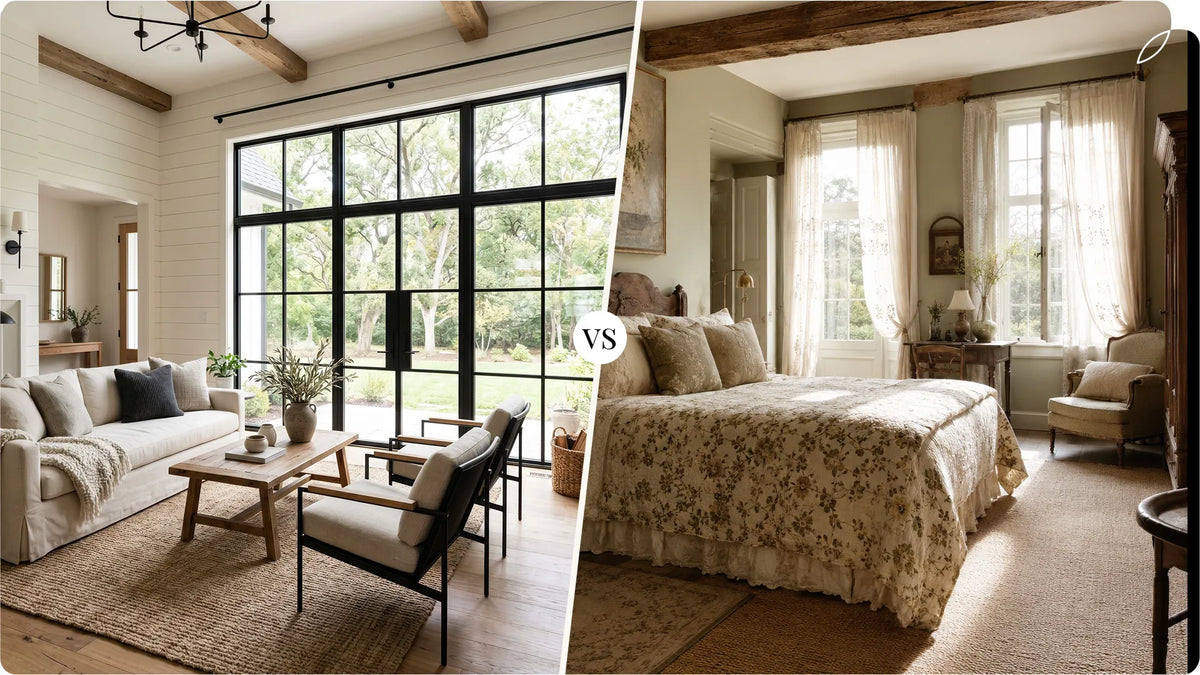
Modern farmhouse window treatments and cottagecore window treatments both use natural texture, softened daylight, and references to the past. The difference is in the finish. Modern farmhouse places rustic character inside a cleaner, more tailored room, while cottagecore favors romantic details that feel aged, collected, or handmade. Linen-look curtains, woven wood shades, Roman shades, and warm wood tones can suit either style. Silhouette, pattern, and hardware determine whether the result feels polished or timeworn.
Modern Farmhouse Window Treatments vs Cottagecore Style
Modern farmhouse is built around a 'new meets old' contrast. Flea-market finds may sit beside an apron-front sink, industrial lighting, a contemporary sofa, or polished metal accents. Its windows usually feature simple panels, tailored Roman shades, restrained checks or stripes, and uncomplicated hardware.
Cottagecore developed partly as a response to screen-led, technology-dependent life. It favors a slower, romantic vision of the countryside through faded florals, gathered cottagecore curtains, inherited linens, crochet trim, painted wood, and imperfectly matched pieces.
Modern farmhouse often uses current materials to recreate old textures. Cottagecore places greater value on genuine vintage or handmade character. Both can still begin with the same natural-looking window treatment.
|
Design element |
Modern farmhouse |
Cottagecore |
|
Overall mood |
Rustic references with clean, current lines |
Romantic, collected, and deliberately nostalgic |
|
Color palette |
Warm white, oatmeal, charcoal, black, and muted earth tones |
Cream, sage, dusty rose, butter yellow, and faded botanical colors |
|
Window silhouette |
Tailored panels, flat or softly folded Roman shades, and neat woven shades |
Gathered curtains, cafe curtains, tiebacks, ruffles, and relaxed folds |
|
Pattern |
Narrow stripes, checks, subtle geometrics, and solid texture |
Small florals, gingham, botanical prints, lace, and embroidery |
|
Best shared foundation |
Natural texture, warm neutrals, softened daylight, and visible wood grain |
Natural texture, warm neutrals, softened daylight, and visible wood grain |

Why Natural Materials Matter in Both Styles
Linen and cotton create soft folds, while wood, bamboo, rattan, and woven plant fibers add grain and irregularity. These qualities keep a neutral room from looking flat and diffuse daylight more gently than a smooth, dense surface.
The material must still suit the room. Untreated wood and absorbent fabric can react poorly to humidity, grease, and splashes. Natural fibers may fade, wrinkle, or vary in color. A moisture-resistant fabric or faux wood finish is often more practical in kitchens and bathrooms. Natural also does not automatically mean non-toxic or low-emission, so check the fiber content, finishes, and available certifications.
Room-by-Room Window Treatment Guide
Living Room
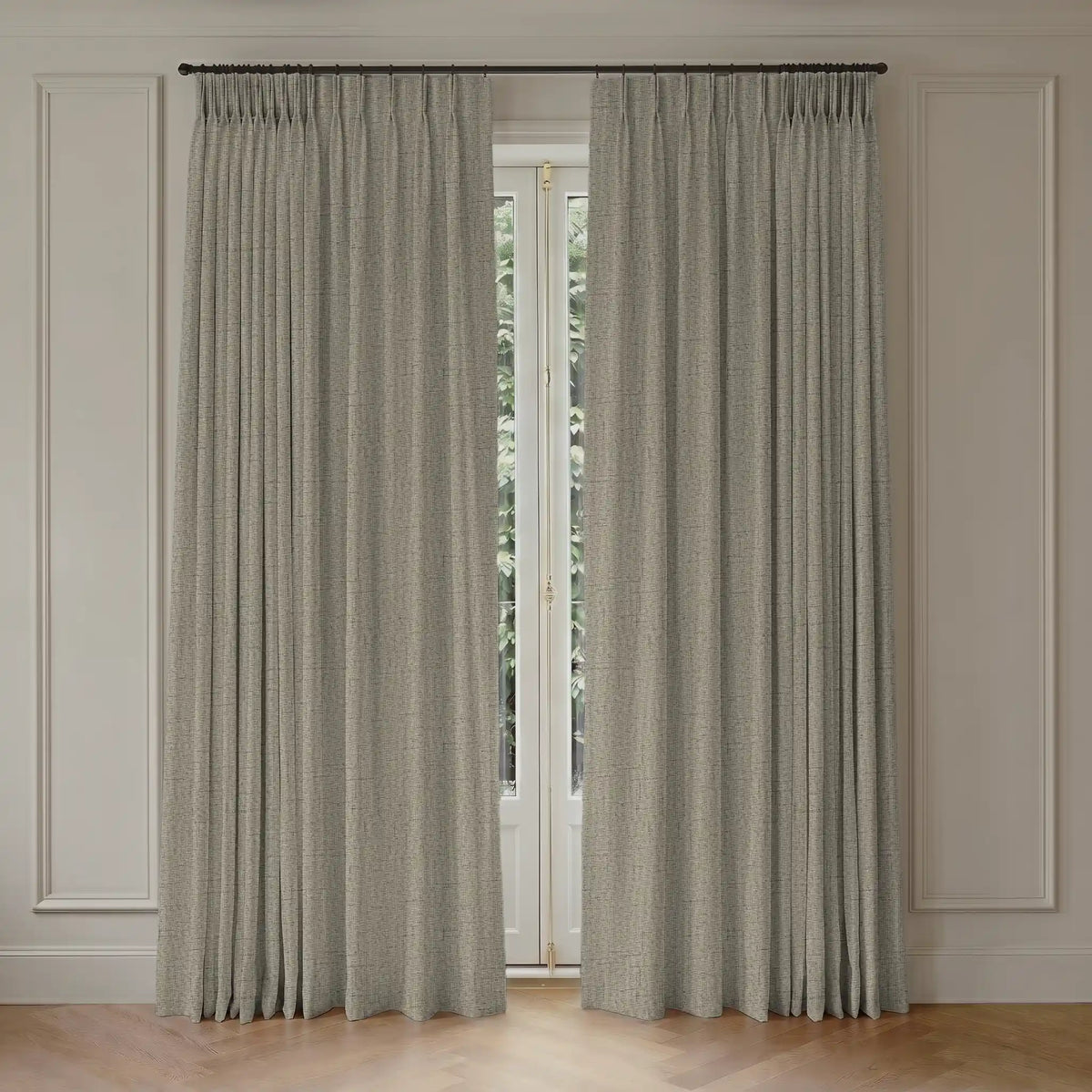
For modern farmhouse, pair a tailored Roman or woven shade with full-length curtains in flax, cream, or warm gray. Choose a black or aged-brass rod. For cottagecore, soften the same structure with small florals, faded checks, gathers, wood rings, or fabric tiebacks.
Bedroom
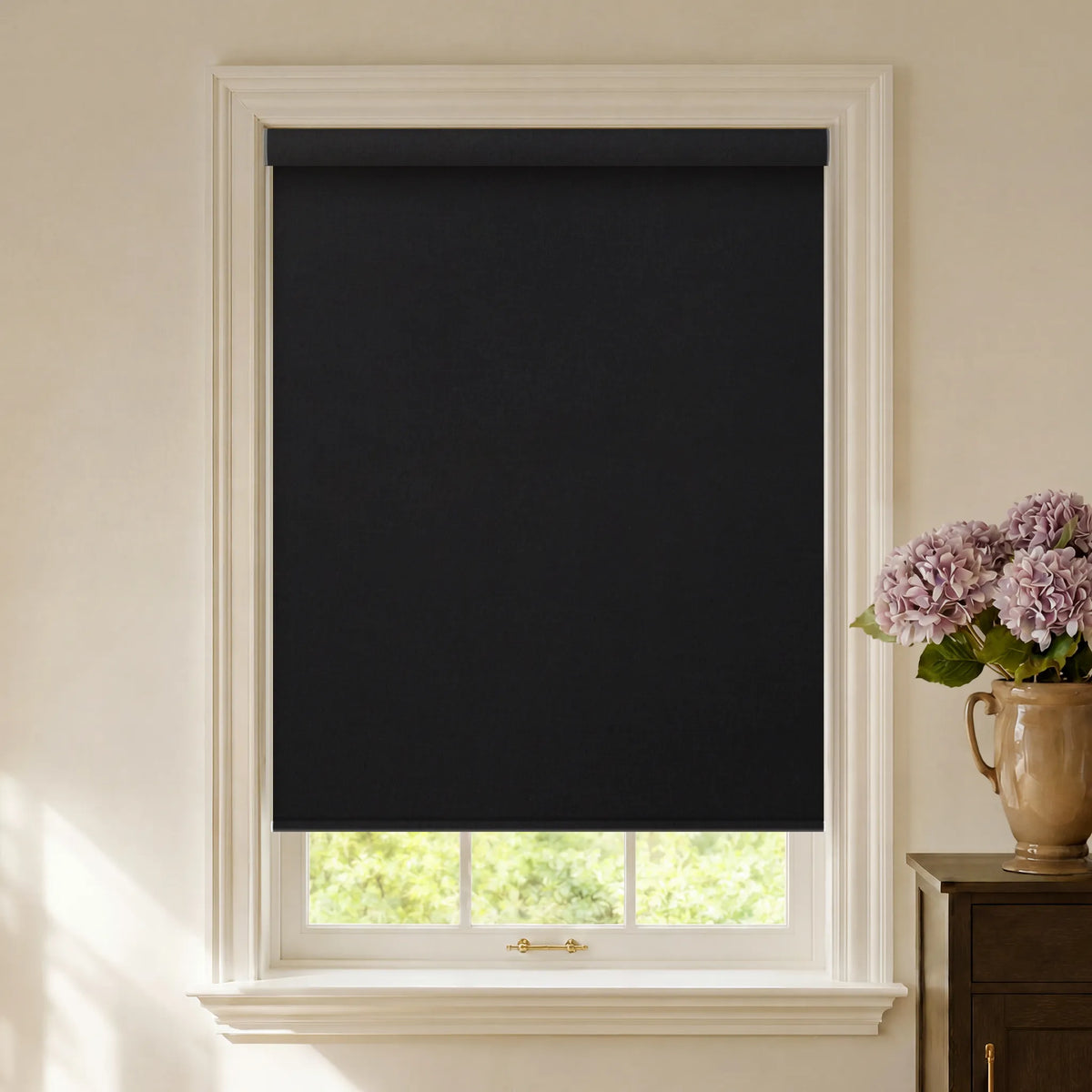
Place a blackout roller or lined Roman shade closest to the glass, then add the decorative layer. Use plain linen-look panels for modern farmhouse or floral and lace-trimmed curtains for cottagecore. Keep the blackout layer visually quiet.
Kitchen
Cafe curtains preserve daylight and bring cottagecore character through gingham, small florals, or embroidery. Modern farmhouse kitchens suit a simple Roman or textured roller shade. Near sinks and cooking areas, use washable materials and avoid long, absorbent curtains.
Dining Room
Pair a tailored shade with solid panels for modern farmhouse or use botanical curtains and relaxed folds for cottagecore. Repeat one nearby wood tone, metal finish, or upholstery color at the window.
Bathroom
Prioritize privacy and moisture resistance. Faux wood blinds and suitable roller or Roman-shade fabrics can provide a natural appearance without the maintenance of untreated wood or linen. Avoid fabric that will remain damp near a tub or shower.
Home Office or Reading Nook
A light-filtering shade can reduce glare without making the room dark. Choose a flat Roman or clean roller shade for modern farmhouse, or a soft floral and relaxed folds for cottagecore. Test the fabric when screen glare is strongest.
Quick Ways to Build Either Look
- Begin with warm white, oatmeal, flax, or soft beige.
- Combine one woven surface, one soft fabric, and one wood or metal finish.
- Use tailored folds for modern farmhouse and gathers, tiebacks, or cafe lengths for cottagecore.
- Let the inner shade control glare, privacy, or darkness and the outer curtain provide character.
- View fabric samples in morning and evening light before ordering.

Graywind Solutions for Natural Style and Modern Comfort
- Roller Shades | Nature Series: Wheat, Quarry, Terrazzo, Barkwood, and Truffle fabrics create an organic woven look for modern farmhouse living rooms, dining rooms, and home offices. The light-filtering fabric softens glare but does not provide full blackout.
- Roman Shades | Light Filtering: Floral White, Floral Beige, and Matelasse fabrics suit cottagecore bedrooms, reading nooks, and dining rooms. The soft folds provide more decorative character than a flat roller shade.
- Manual-Motorized Roller Shades: Textured Linen Beige and Jacquard options complement modern farmhouse interiors. They combine manual pull operation with motorized and app control, providing a practical fallback for frequently used windows.
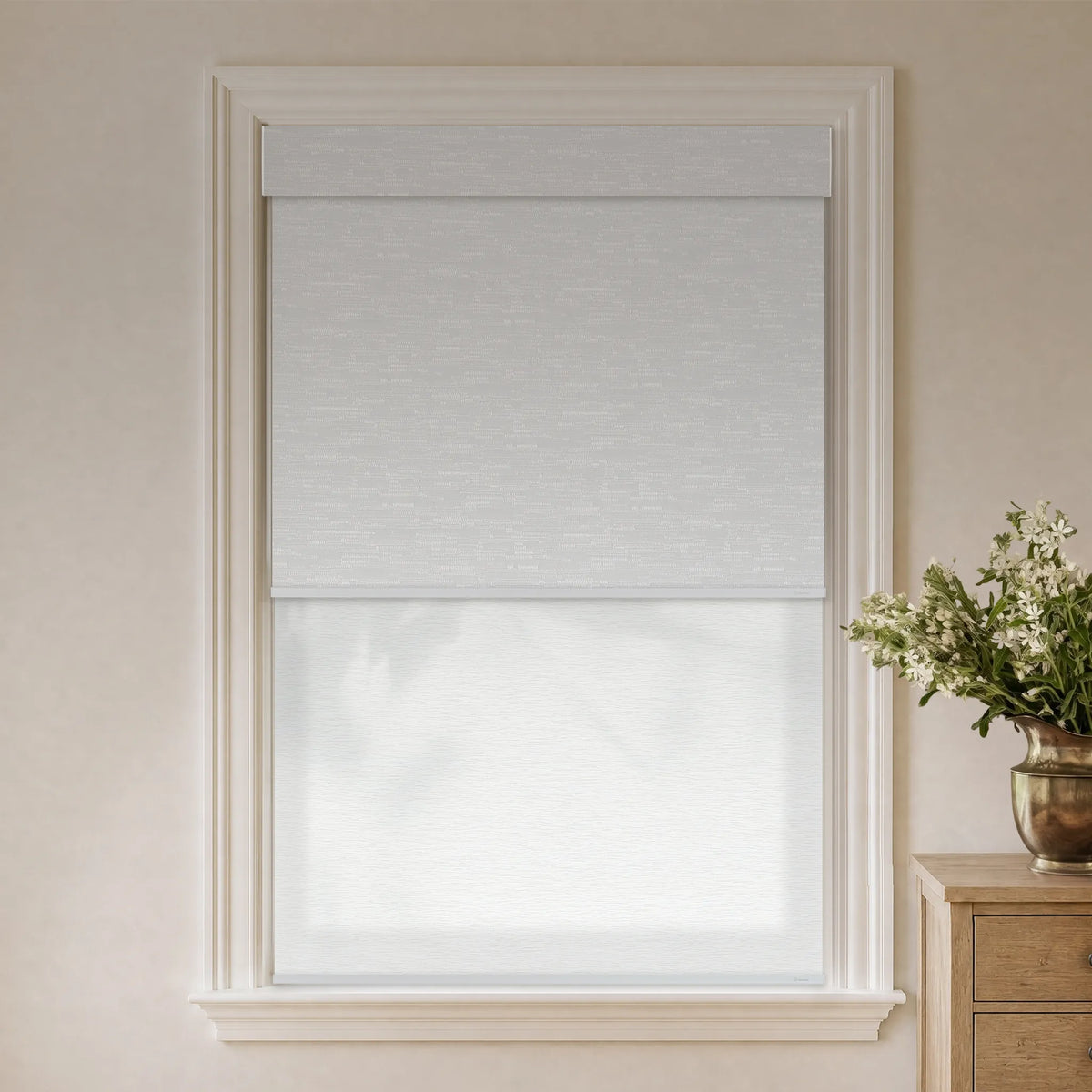
- Dual Roller Shades: Independent light-filtering and blackout layers support bedrooms and multipurpose rooms. The streamlined headrail suits modern farmhouse, while cottagecore curtains can be added as the decorative outer layer.

Use natural-textured light filtering in shared spaces, moisture-tolerant materials in kitchens and bathrooms, blackout layering in bedrooms, and cordless operation where children or pets are present.