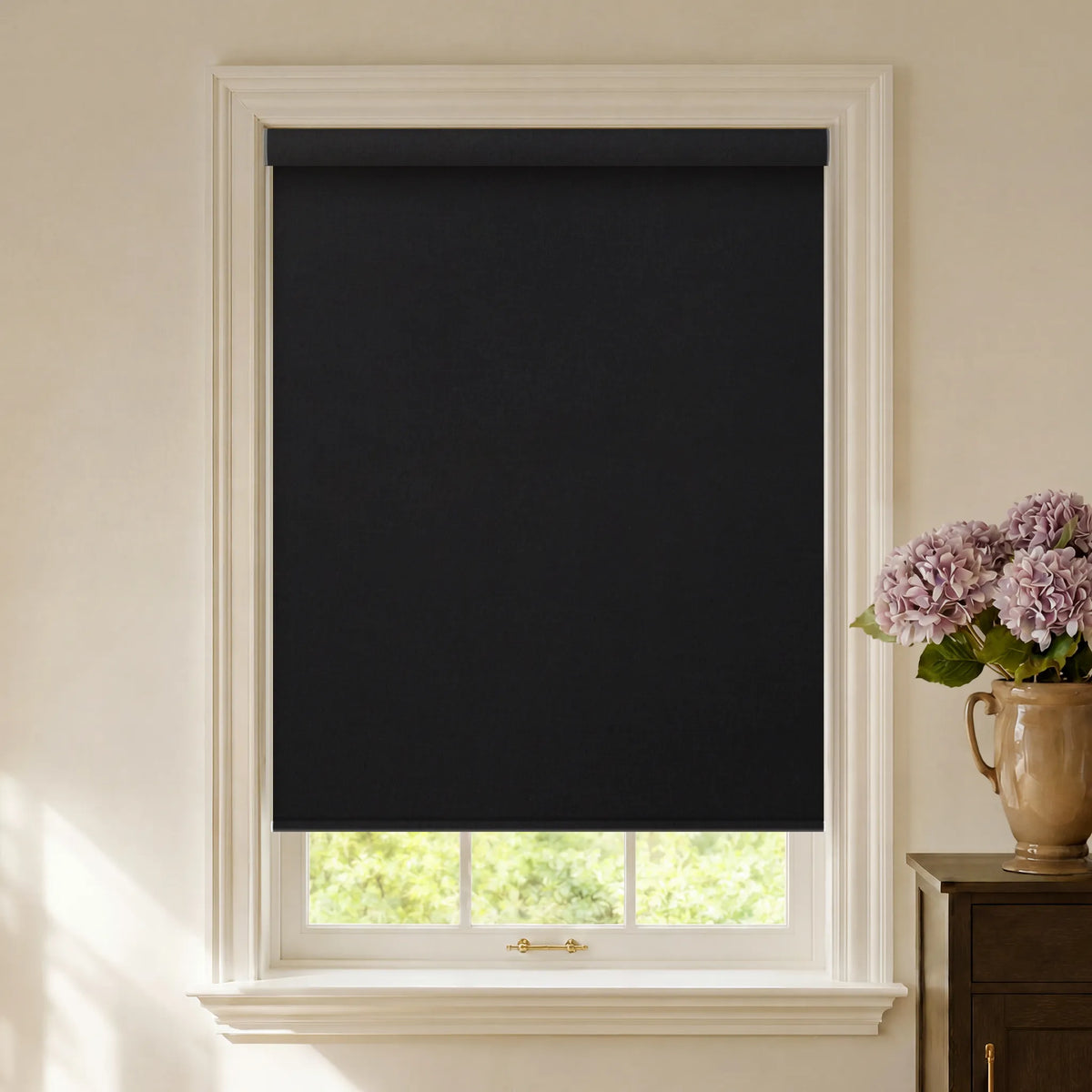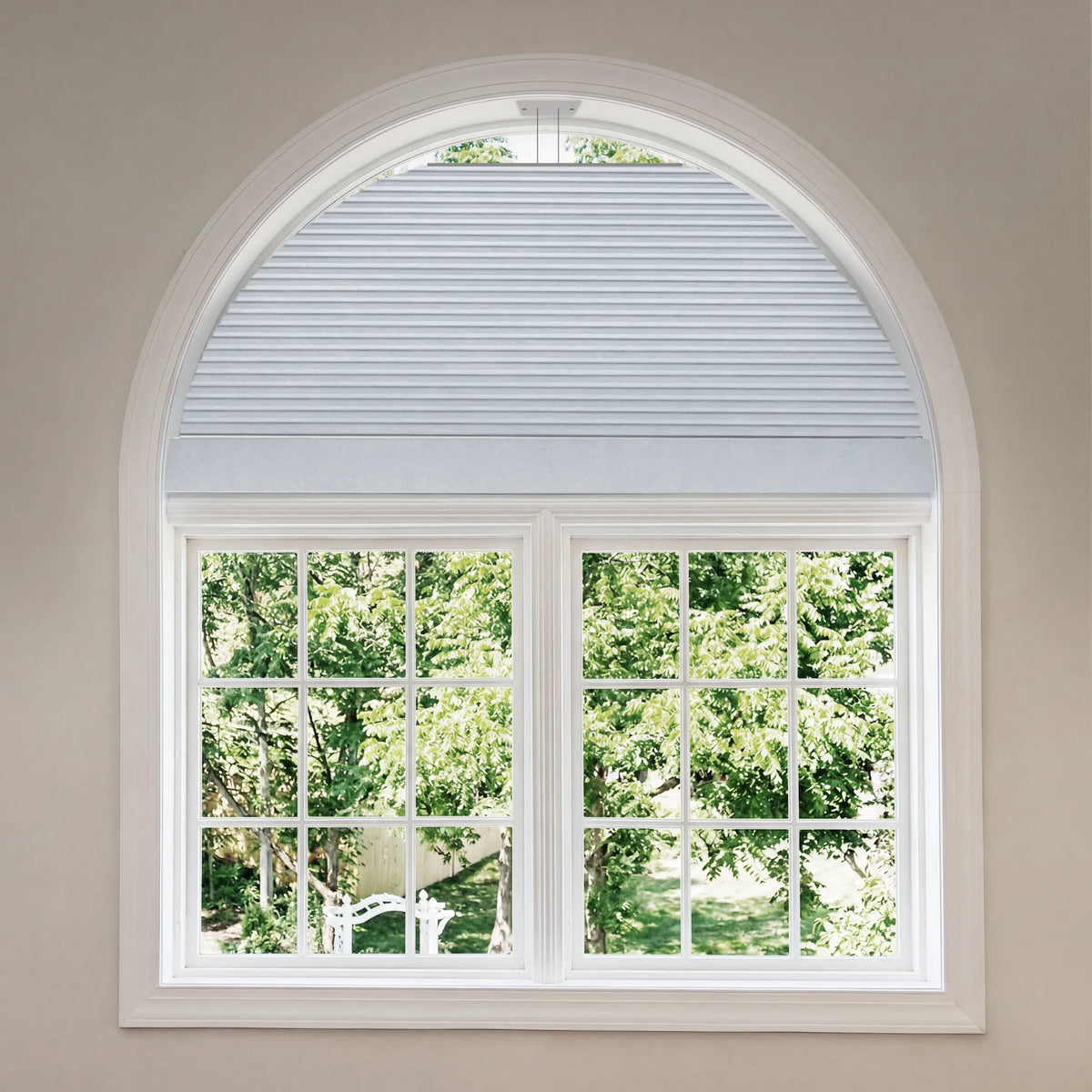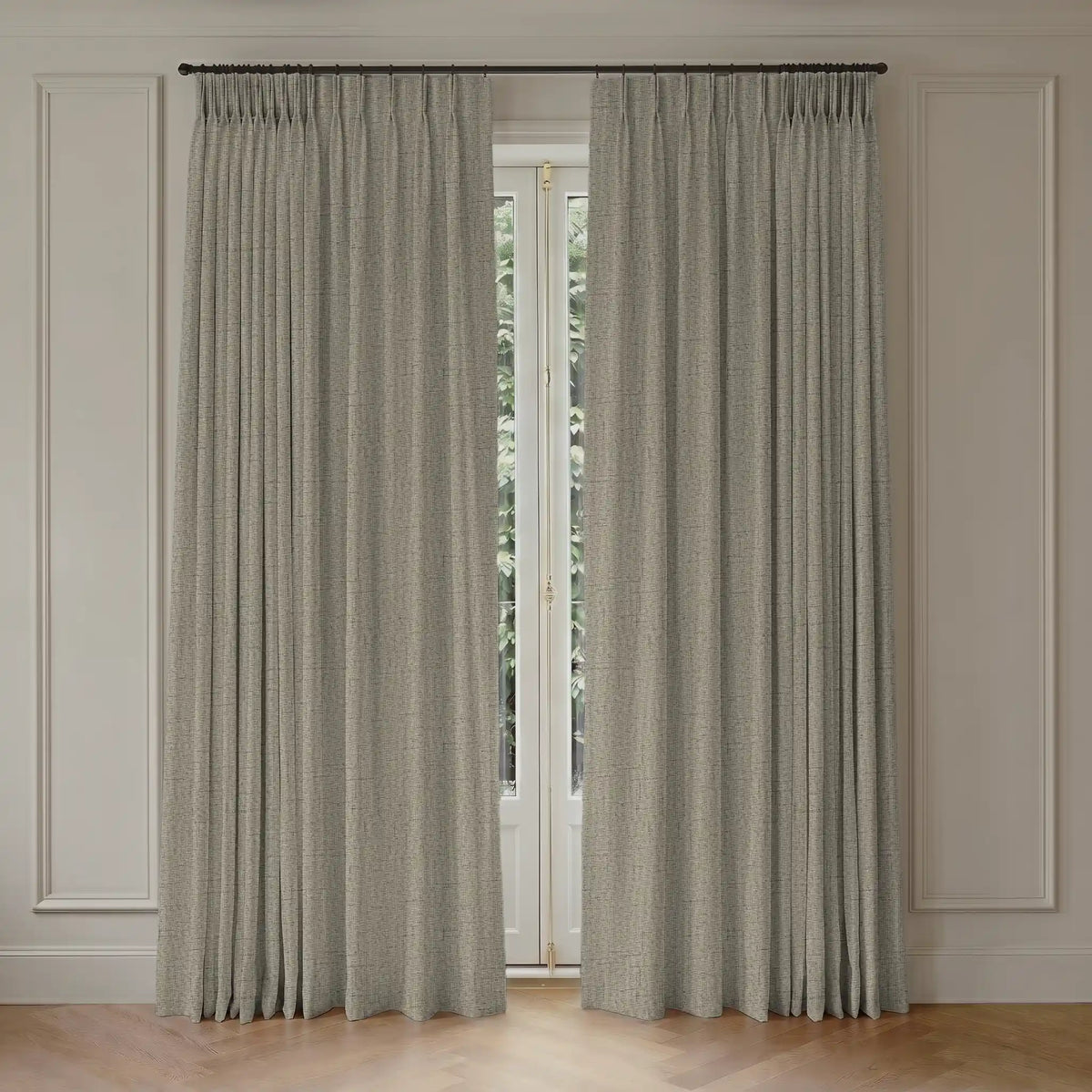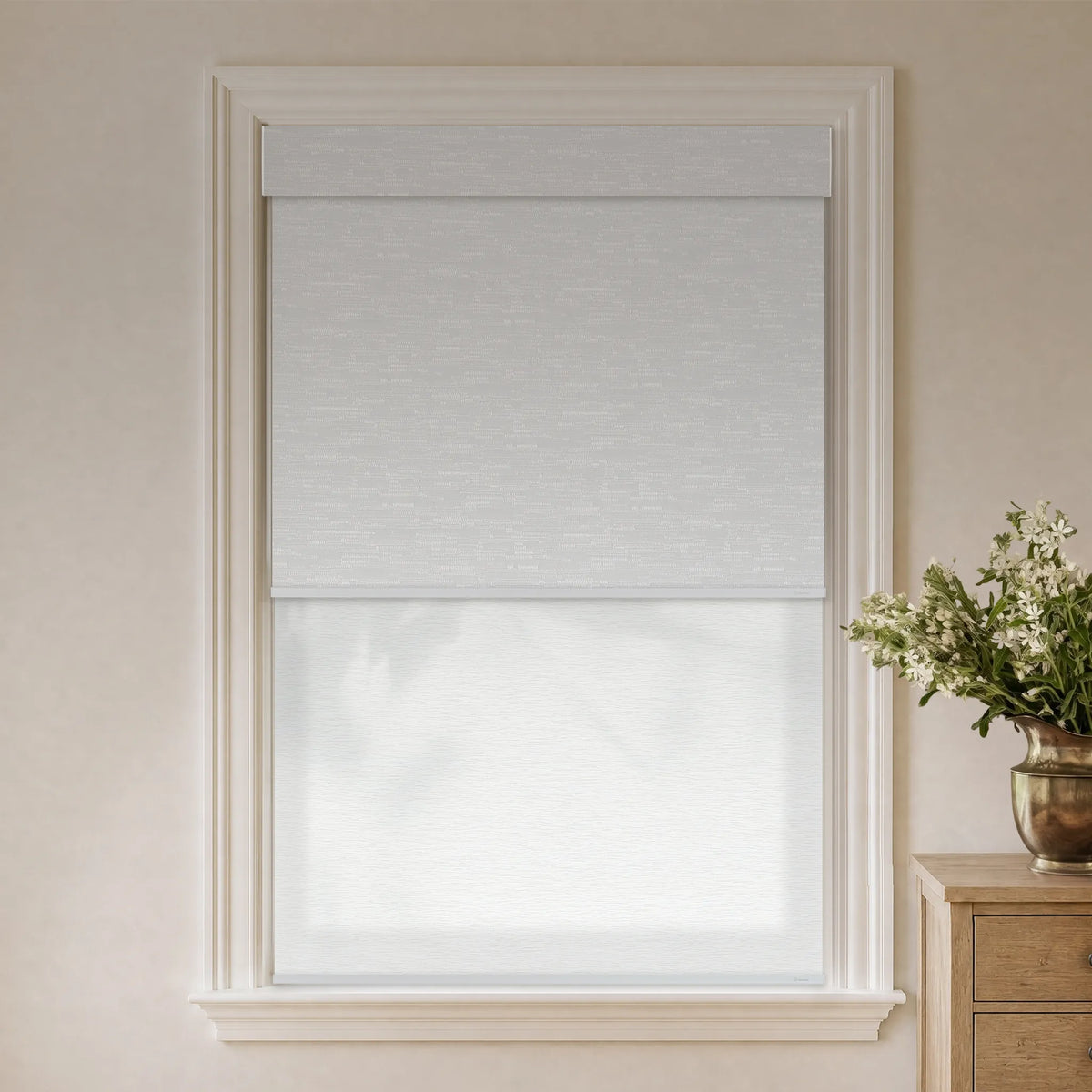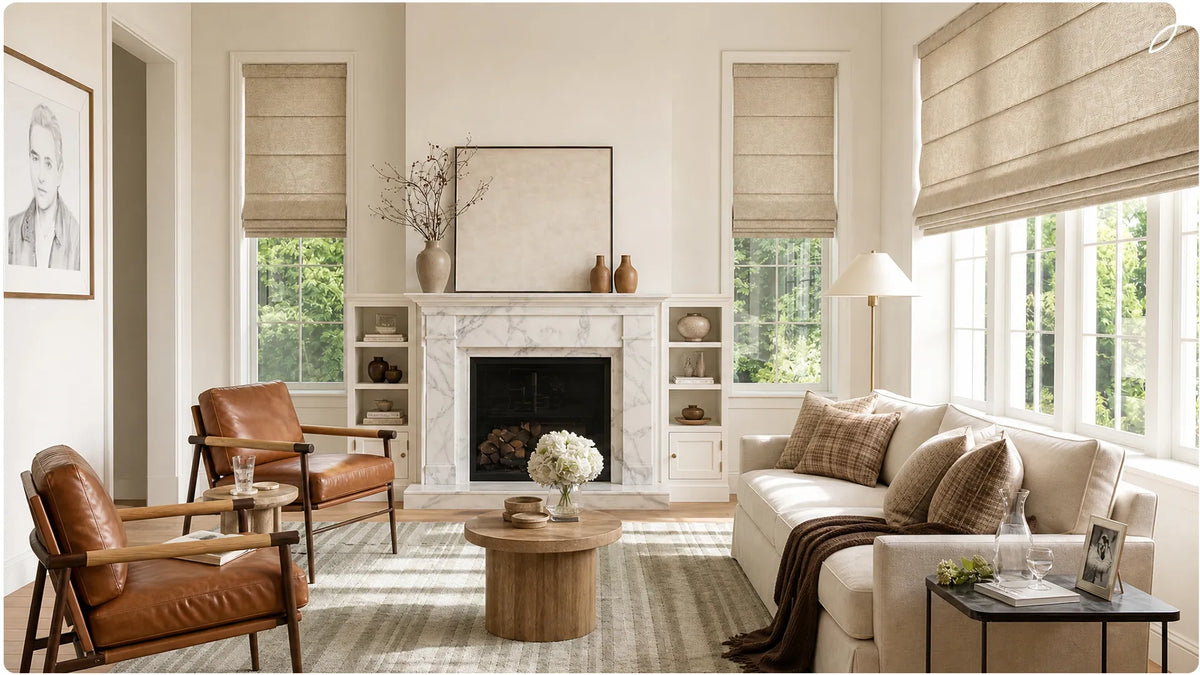
Roman shades combine the softness of curtains with the compact operation of a shade. That versatility also makes them more complex to specify than a basic roller shade: the face fabric affects the folds, daylight, operating weight, and cleaning needs, while the liner, lift system, and mount change performance again. To choose Roman shades confidently, make four decisions in order: fabric, light-control level, operating system, and custom fit. Then check the complete configuration against the room rather than selecting each feature in isolation.
What Are Roman Shades Made Of?
A Roman shade is a layered system whose parts determine how evenly it hangs and folds.
Face fabric. The visible layer may be cotton, linen, polyester, a blend, or a woven natural material such as bamboo, jute, reed, or grass. The face fabric supplies color and texture, but its weight and flexibility also affect fold definition.
Lining. A separate backing can improve privacy, reduce light, protect the face fabric from strong sunlight, or add thermal resistance. Options include no lining, privacy lining, blackout lining, and interlining. Some blackout textiles use acrylic foam coatings or PVC-containing layers, but composition varies by supplier. If material content, indoor-air preferences, or disposal matters to you, request the technical specification rather than assuming every blackout liner is made the same way.
Structural parts. A typical shade includes an aluminum headrail, a metal or wood bottom rail, lift cords or tapes, and sometimes plastic or metal battens. Component quality and spacing matter more as the shade becomes wider or heavier.
Six Roman Shade Styles Compared
|
Style |
Appearance and best use |
Tradeoff |
|
Flat |
Smooth when lowered; shows large prints and clean solids clearly. Works in modern and transitional rooms. |
Wrinkles or uneven pattern alignment are easy to see. |
|
Batten-front or ribbed |
Horizontal battens create crisp, regular sections. Useful when a tailored architectural look is wanted. |
Visible ribs interrupt large motifs. |
|
Batten-back or plain fold |
Battens support the folds from behind, leaving a cleaner face. A versatile choice for frequent use. |
Construction details vary, so inspect a full-size sample if possible. |
|
Hobbled or waterfall |
Rounded loops remain visible when closed, adding depth to formal or traditional rooms. |
Uses more fabric and creates a bulkier raised stack. |
|
Relaxed |
The lower edge forms a gentle center curve. Suits bedrooms, dining rooms, and softer casual interiors. |
The asymmetric drape is less suitable for very wide shades or strict blackout goals. |
|
London or balloon |
Side pleats create pronounced swags and a decorative silhouette. Best as a design feature on windows opened less often. |
More decorative than practical for high-frequency adjustment; the stack is substantial. |
Woven-wood Romans are sometimes treated as another style, but the distinction is primarily material. Their bamboo, reed, jute, or grass construction adds texture and natural color variation. A liner may be necessary for privacy.

How to Compare Roman Shade Fabrics
Cotton
Cotton has a matte hand and takes prints well. Medium-weight cotton suits flat and structured folds, but may crease, fade, or change dimension more readily than a synthetic. Lining helps stabilize it.
Linen
Linen offers visible slubs and a relaxed character. Natural variation and wrinkling are part of the look; choose a linen blend for similar texture with greater dimensional stability.
Polyester
Polyester is widely used because it is durable, relatively wrinkle-resistant, and economical. It can imitate linen or woven textures while holding regular folds. Manufacturing may involve dyes or other processing aids, depending on the product. Ask for chemical-content documentation when that is a priority.
Blends
Cotton-polyester and linen-polyester blends balance texture with easier care and more consistent folding. Check fiber percentages: two “linen look” fabrics may behave differently.
Woven Natural Materials
Bamboo, jute, reeds, and grasses filter daylight through irregular gaps. Natural variation is expected, and unlined open weaves provide limited nighttime privacy.
Before ordering, view a large sample at the window in morning light, afternoon light, and after dark. Small swatches can hide pattern-scale changes, translucency, and undertone shifts.

Which Roman Shade Lining Should You Choose?
|
Lining |
Choose it when |
Know before ordering |
|
Unlined |
You want the lightest look and the face fabric already provides enough privacy. |
Seams and lift components may show through; light control is limited. |
|
Privacy lining |
You want softened daylight and reduced visibility into the room. |
It is not blackout, especially when interior lights are on at night. |
|
Blackout lining |
Bedrooms, nurseries, or media rooms need stronger darkness and privacy. |
Edge gaps can still admit light; an outside mount usually gives broader coverage. |
|
Thermal interlining |
Comfort and a fuller drape matter on exposed windows. |
Added weight and bulk require a suitable headrail and lift system. |
An inside mount normally leaves small side gaps, while an outside mount can overlap the frame. Confirm handle clearance, trim, and raised stack.
Manual, Cordless, or Motorized Control?
Cordless manual control keeps the window visually clean and is practical for reachable, moderate-size shades. Confirm that the lift system is rated for the shade's finished weight.
Continuous-loop chain control can make heavier shades easier to position, but the loop must be properly tensioned and installed in accordance with current safety requirements. The U.S. Consumer Product Safety Commission recommends cordless window coverings where young children are present.
Motorized control suits tall windows, grouped shades, heavy fabrics, and frequent adjustment. Compare power source, remote options, smart-home compatibility, hub requirements, charging access, and grouping. Compatibility depends on the selected motor.
Top-down bottom-up control helps street-facing rooms admit daylight above eye level while retaining lower-window privacy. It is especially useful in bedrooms, bathrooms outside splash zones, and home offices.
How to Choose Roman Shades by Room
Living Room
Choose flat, plain-fold, or lightly hobbled shades in a light-filtering fabric. A stable blend handles frequent use; linen or woven material adds texture. Add privacy lining for street-facing rooms.
Bedroom and Nursery
Prioritize darkness, privacy, and cordless operation. Flat or structured folds with blackout lining stack more predictably than decorative styles. Consider an outside mount for broader coverage.
Dining Room
Relaxed, hobbled, or London styles suit decorative schemes. Medium-weight cotton, linen blends, or textured polyester hold shape without excessive bulk. Choose lining for evening privacy.
Home Office or Study
Use a flat or ribbed style. Light-filtering fabric can reduce screen contrast without darkening the room. Top-down bottom-up operation balances daylight and privacy on street-facing windows.
Kitchen and Bathroom
Keep fabric away from sinks, cooktops, and condensation. Polyester or a performance blend is easier to maintain than absorbent linen or cotton. Use a wipeable treatment in direct splash zones.
Common Buying Mistakes
- Selecting a fold style before checking how much glass the raised stack will cover.
- Expecting blackout fabric to eliminate light around the edges.
- Using a heavy liner with a lift system not designed for the total weight.
- Judging privacy from a daylight sample without testing it at night.
- Ignoring pattern placement across several adjacent windows.
- Choosing an inside mount without enough depth or handle clearance.

Choosing Graywind Roman Shades
Graywind Roman shades are made to ordered dimensions and offered in blackout, light-filtering, semi-sheer natural-look, sheer, and top-down bottom-up configurations. The collection is most relevant when you want soft fabric folds with motorized operation rather than a manual decorative Roman.
For sleep spaces or media rooms, Graywind Motorized Roman Shades in Blackout use polyester face fabric and are designed for stronger light control and privacy. The current product page lists a 20–99-inch width range, a 28–120-inch height range, and a 1 7/8-inch minimum inside-mount depth. Because side light can remain, confirm whether an inside or outside mount better matches the room-darkening goal.
Light-filtering, sheer, and semi-sheer options suit living rooms, dining rooms, and studies where the fabric should soften rather than eliminate daylight. Top-down bottom-up Roman shades are a better fit when privacy at eye level is as important as daylight from above.
Remote, app, voice, and smart-home functions depend on the selected motor and accessories. Review the Graywind Smart and Control Guide before ordering, then use the measuring guide to verify depth, dimensions, and mount type. Order fabric samples first and evaluate them on the actual window; opacity, color, and texture can change considerably between daylight and evening lighting.
The best specification is the one that resolves the room's hardest constraint first. Decide on privacy and light control, then fold style, face fabric, lining, and operation—in that order.