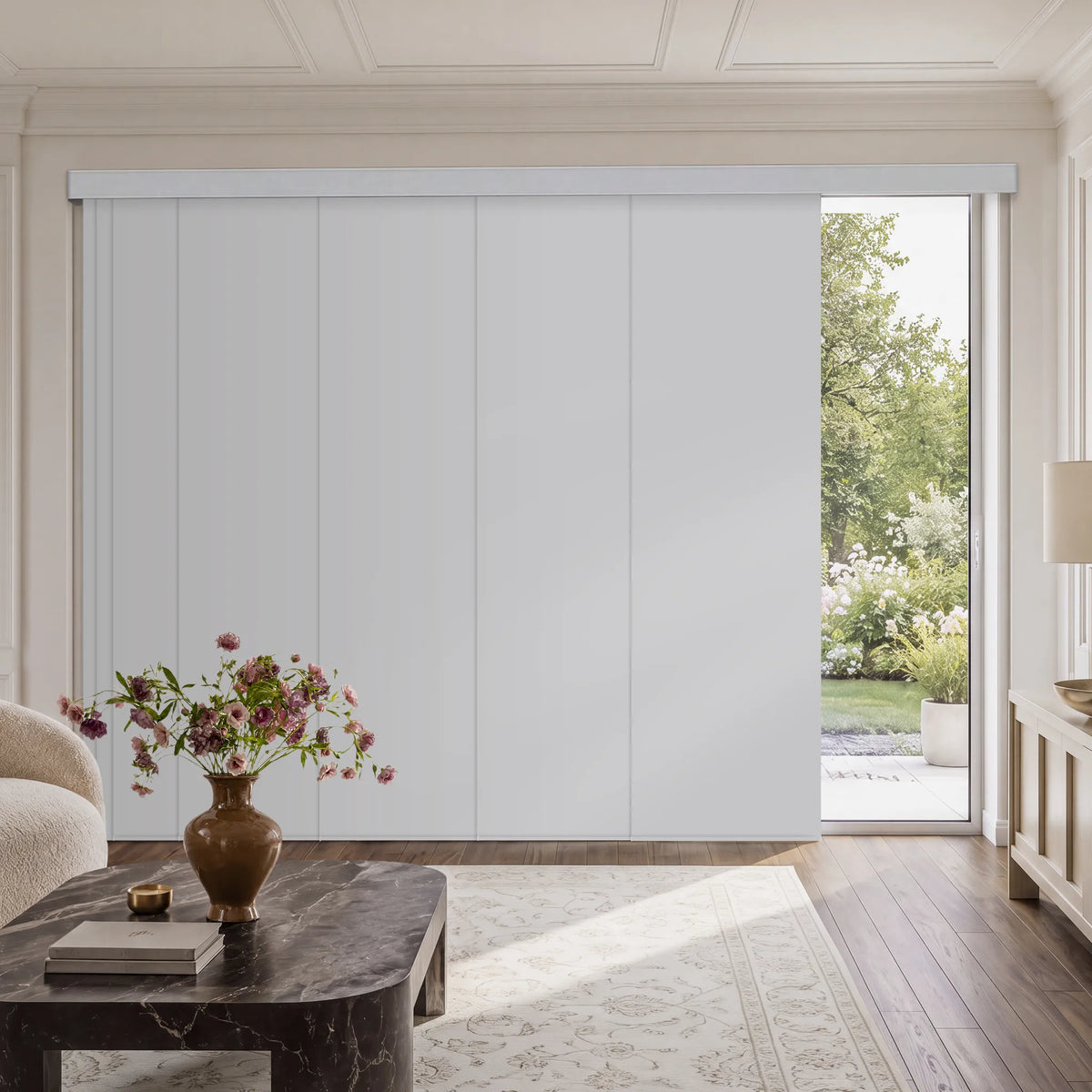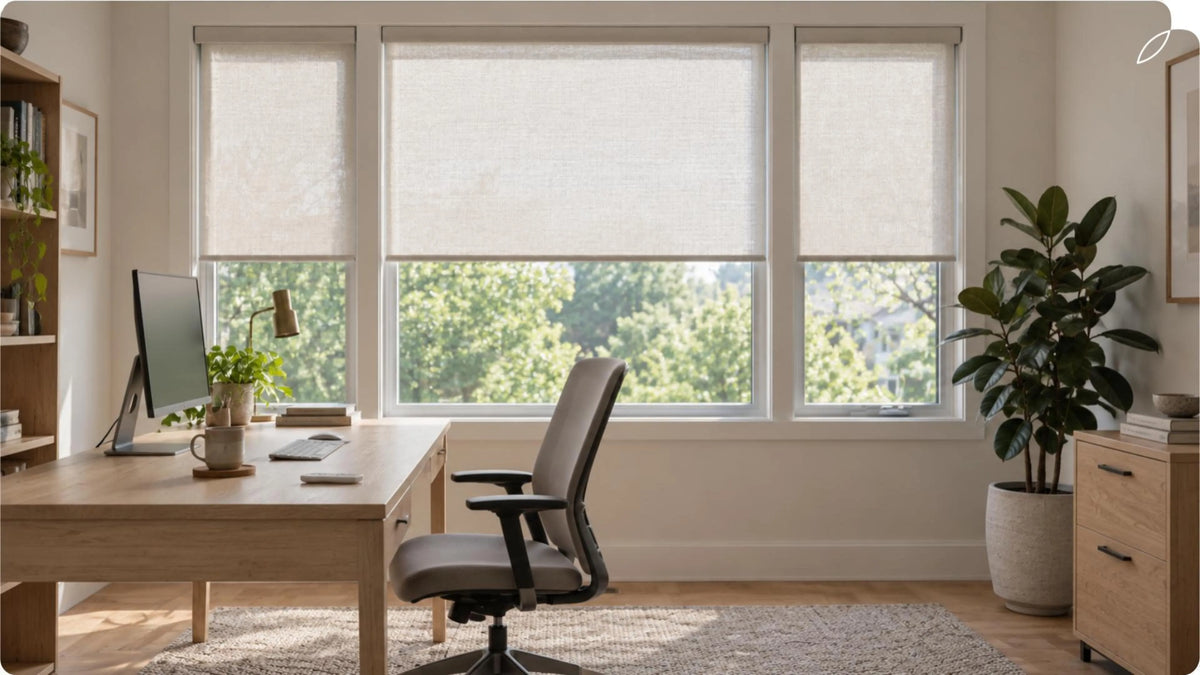
Window glare can quietly drain a productive afternoon. The solution is not necessarily a darker room; it is better control of direct light and contrast. Repositioning the desk helps, but a light-filtering window treatment is often the most practical long-term fix. It diffuses harsh sunlight before it reaches the monitor, keeps useful daylight in the room, and reduces the bright-window-versus-dark-screen contrast that makes your eyes work harder.
Why an Uncovered Window and Heavy Curtains Both Fall Short
An uncovered window preserves daylight, but it also lets the sun move across your desk unchecked. When direct light lands on a glossy or semi-gloss screen, text can become harder to distinguish. Even if the beam misses the monitor, a bright window behind or beside it can create a large difference in brightness across your field of view. You may compensate by squinting, leaning forward, raising screen brightness, or repeatedly shifting your gaze.
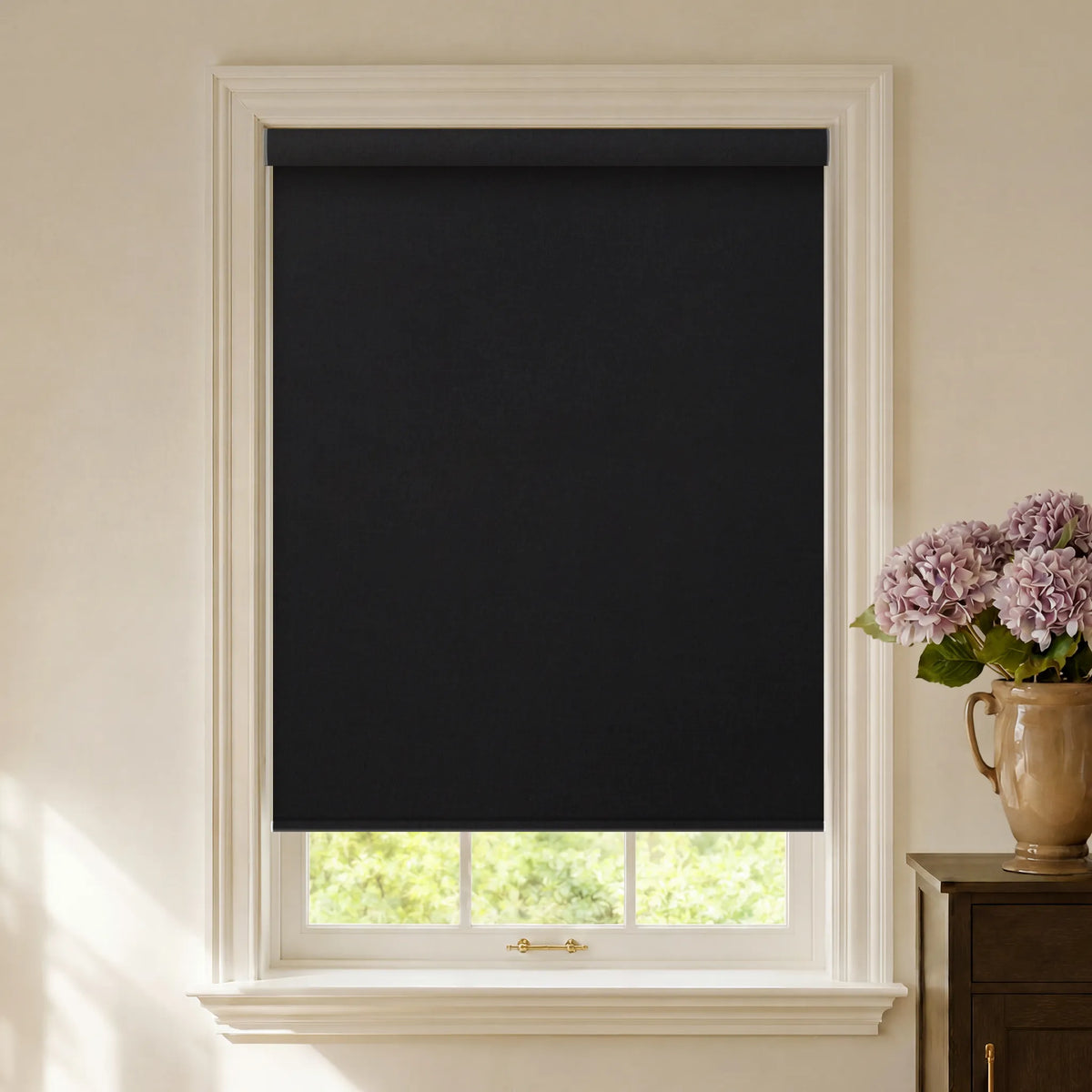
Heavy blackout curtains solve one problem by creating another. They can eliminate direct sunlight, yet closing them for an entire workday may leave the office dim and visually flat. You then rely on electric lighting, lose your connection to changing daylight, and may find the room less pleasant to occupy. Blackout fabric is useful for media rooms, bedrooms, and exceptionally severe exposure, but it is often more control than a daytime office needs.
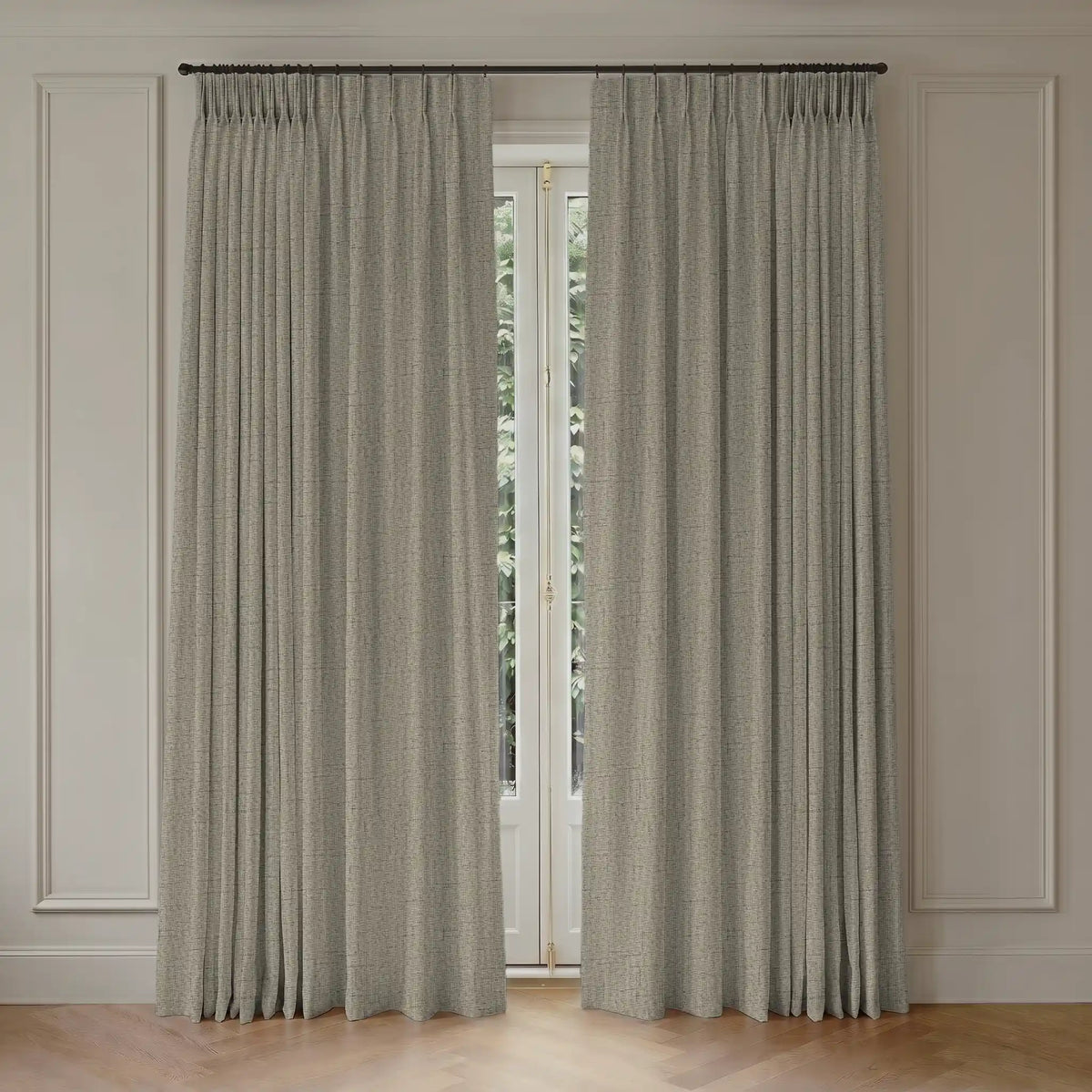
Standard decorative curtains can be equally unpredictable. When fully open, they provide almost no glare control. When closed, a dense fabric may block too much light, while a loose sheer may leave bright patches on the screen. A home office needs a middle setting, not an all-or-nothing choice.
What Is Screen Glare, Exactly?
Screen glare is unwanted light that reduces visibility or causes visual discomfort. It usually appears in two related ways:
- Reflected glare: A window, lamp, or bright surface appears as a reflection on the display.
- High-contrast glare: The monitor sits against a much brighter window or surrounding area, forcing your eyes to adapt between very different brightness levels.
The U.S. Occupational Safety and Health Administration identifies reflected light from windows and other sources as a workstation concern. Its Computer Workstations eTool recommends controlling window light with blinds or drapes and positioning screens to reduce reflections.
Research supports the practical concern. In a controlled study of 16 people reading on a computer screen, more adverse glare conditions produced slower reading, largely because readers fixated longer on the text. The study did not establish a universal 20% loss in reading or comprehension, so that number should not be treated as a general rule.
The defensible takeaway is simpler: glare can measurably interfere with reading performance, even under moderate conditions.
If you feel unusually depleted by 3 p.m. on a sunny day, lighting may be contributing - especially if the discomfort changes with the sun's position. It is not proof that glare is the only cause, but it is a useful pattern to test.

How to Choose a Shade for a Computer Room
Match the fabric to the window's exposure
North-facing rooms and windows without direct sun may need only a light, open weave. East- or west-facing offices often receive low-angle sunlight that is harder to manage. Test samples at the hour when glare is worst, not only at midday.
Decide how much view you want to keep
Light-filtering fabric prioritizes soft daylight and privacy. Solar fabric uses an open weave to reduce glare while preserving more daytime view-through. A lower openness factor generally provides more sun control and less view, but color, fit, and manufacturer specifications also matter.
Check privacy after dark
Translucent fabric can obscure details during the day yet reveal silhouettes when interior lights are brighter than outdoors. A street-facing office may need a denser fabric or a layered treatment.
Measure for edge light
An inside-mounted roller shade can leave narrow gaps at the sides. Those gaps may be irrelevant in a living room but distracting when a bright stripe lands on a monitor. Confirm mounting depth, finished fabric width, window hardware clearance, and whether an outside mount is practical.
Choose adjustable control
Glare changes throughout the day, so the useful feature is not simply "open" or "closed." Look for precise positioning. Motorization and schedules can help on tall windows or in rooms where the troublesome sun arrives at a predictable hour, but manual shades can work just as well when they are easy to reach.
Where Graywind Fits
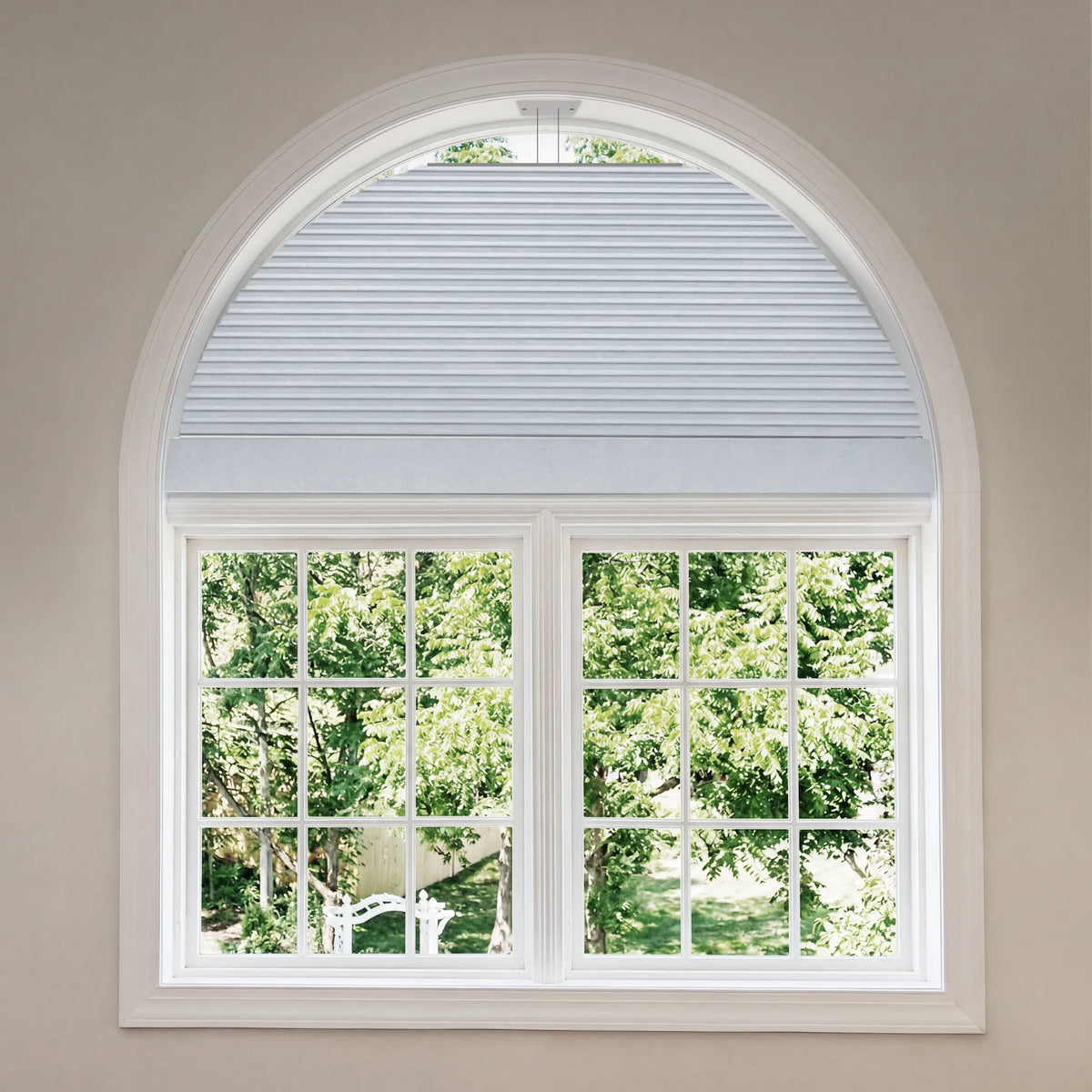
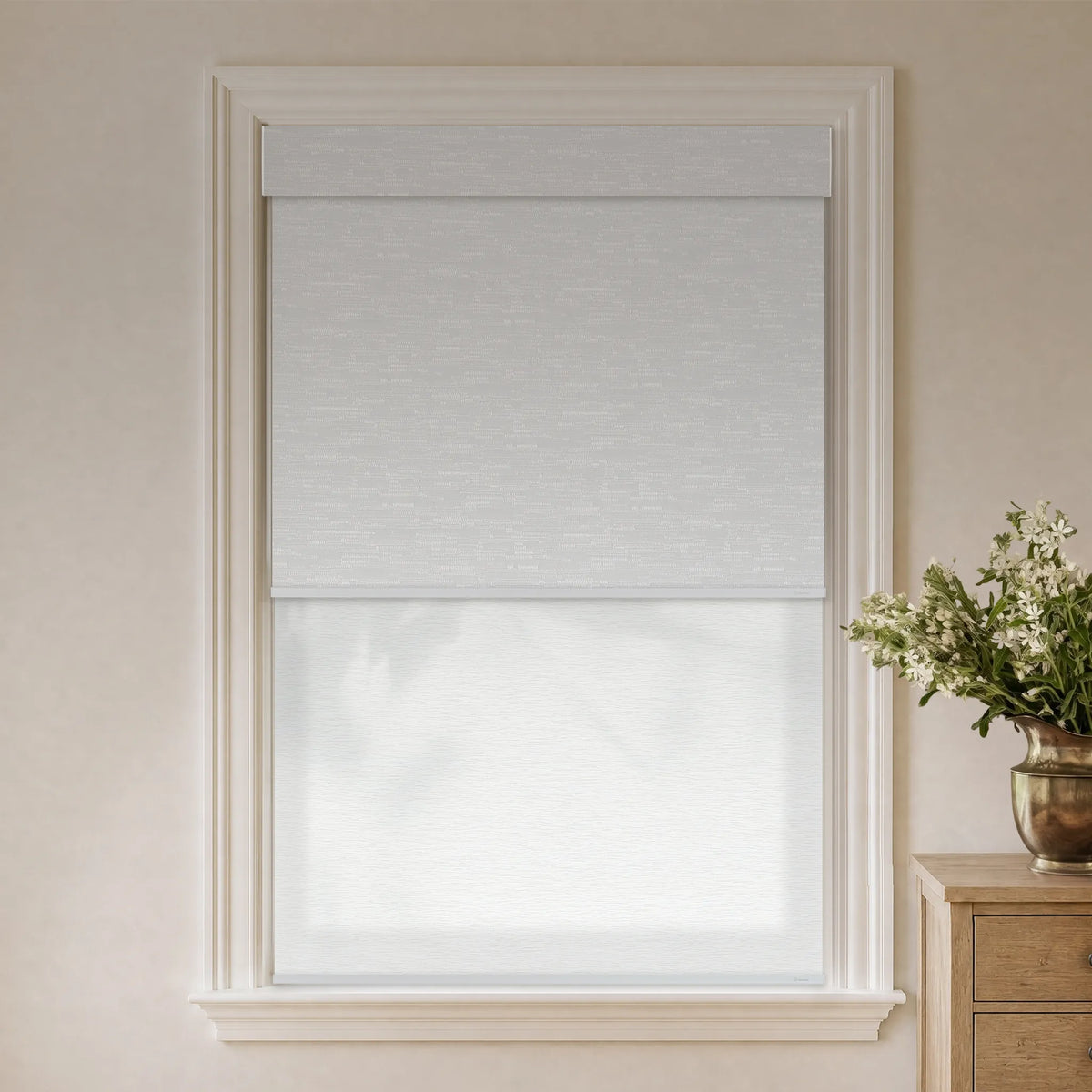
Graywind offers four useful formats for home offices, each solving glare in a different way. Motorized Dual Roller Shades combine two independent fabrics in one system. Use the light-filtering layer during normal work hours, then lower the blackout layer when low-angle sun becomes severe or stronger privacy is needed. This range is helpful in multipurpose rooms, although the layered hardware requires more mounting space than a single shade.
Zebra Blinds use alternating sheer and solid bands. Aligning the bands admits softened daylight; overlapping them increases coverage. Their incremental adjustment suits offices where glare shifts throughout the day. They are less appropriate when complete darkness is required, and nighttime privacy should be checked with the room lights on.
Shangrila Sheer Shades place adjustable fabric vanes between sheer layers. Tilting the vanes changes the balance among diffused light, outside view, and privacy, while the sheer construction creates a softer visual effect than a flat roller. They fit offices where appearance and flexible daylight control matter together, but light-filtering versions are not blackout shades and may reveal silhouettes after dark.
Roller Shades provide the simplest profile of the four. A single flat fabric panel diffuses sunlight and creates a clean background for video calls. Roller shades work well when the goal is consistent filtered light rather than repeated fine adjustment. Strong west-facing exposure may still require a denser or solar fabric.

For any format, order swatches and hold them vertically against the actual glass when glare is strongest. Check fabric density, color, nighttime privacy, mounting depth, and possible edge gaps. Motor, app, schedule, hub, and voice-control options depend on the selected configuration, so confirm compatibility before ordering. The right Graywind option is the one that keeps the display readable without removing more daylight than the room can comfortably spare.