

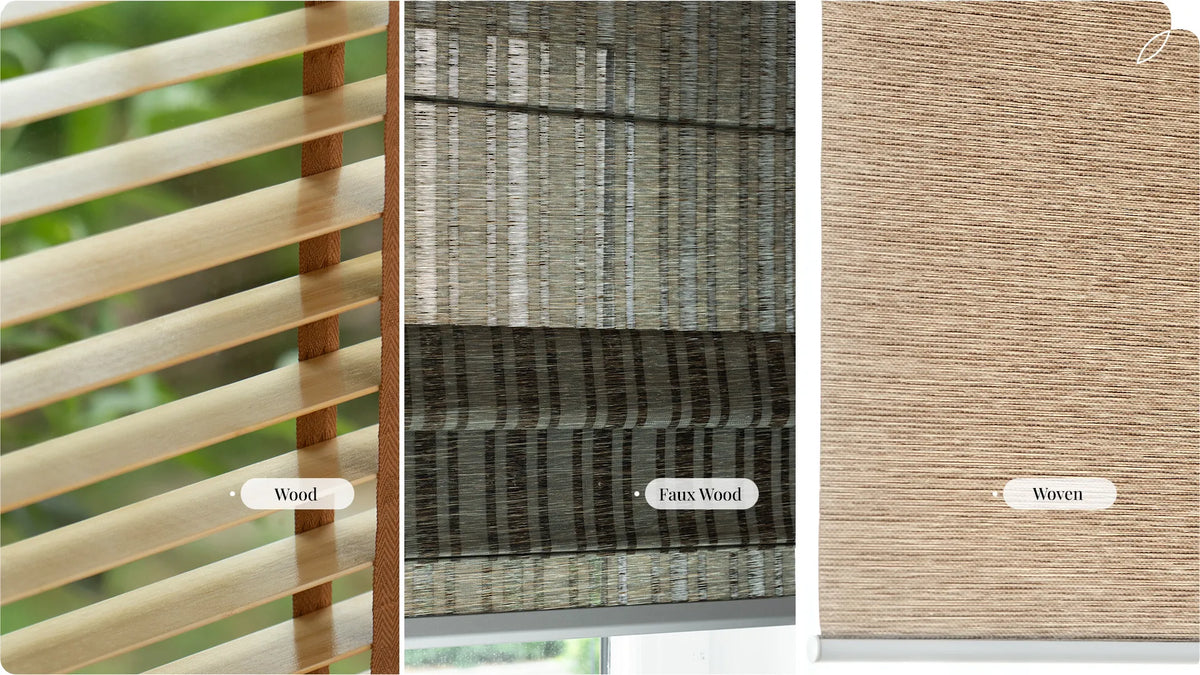
Textured window treatments add visible depth and a more tactile finish to a room, but the right material depends on where the treatment will be installed. Wood blinds provide authentic grain and precise slat control in dry, stable rooms. Faux wood blinds offer a similar structured look with better resistance to moisture and easier cleaning. Woven wood shades soften daylight through natural fibers and suit rooms where atmosphere matters more than exact light adjustment. This guide compares their materials, care needs, limitations, and best uses so you can choose a treatment that fits both the room and your daily routine.
What Are Textured Window Treatments?
Textured window treatments have a surface, weave, grain, or pattern that creates visual depth instead of appearing completely flat. Texture can come from natural hardwood, molded composite slats, woven plant fibers, or patterned fabric. It affects more than appearance. The material also influences how the treatment filters light, responds to humidity, collects dust, and coordinates with furniture and finishes.
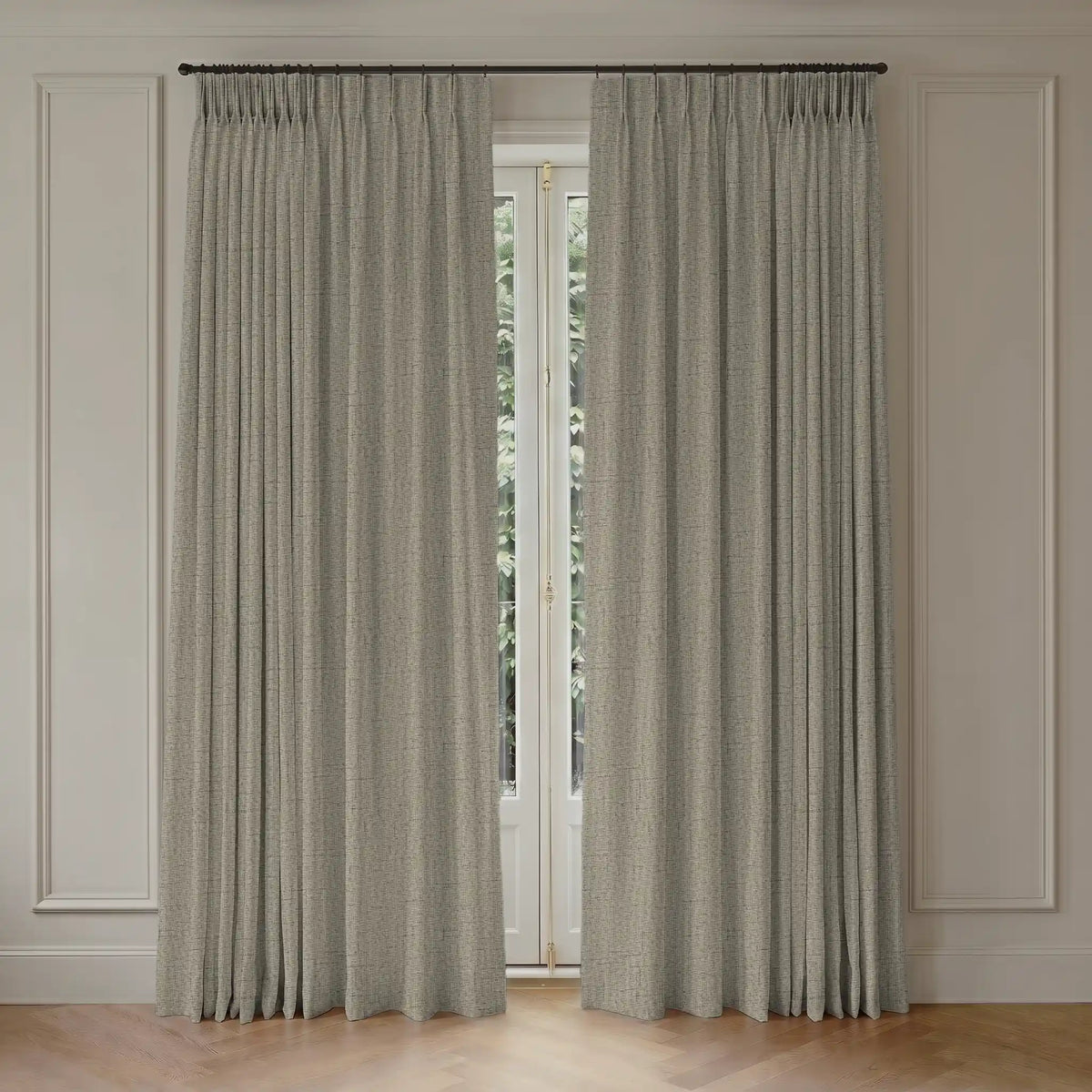
Wood and faux wood blinds use adjustable slats, so their texture is paired with precise control over light and privacy. Woven wood shades use a continuous woven surface, which creates softer light but offers less directional control. Textured fabric window treatments can provide another option when you want a woven look with a specific light-filtering or blackout level.
Wood Blinds
Wood blinds are made from real hardwood slats. Natural grain and small variations in tone give each blind a distinct appearance, making wood a strong choice for interiors that use warm materials, traditional millwork, or refined natural finishes.
Advantages
- Real wood grain adds warmth and visible material depth.
- Tilting slats provide precise control over daylight, glare, and privacy.
- Some finishes can be repaired or refinished, depending on the wood and coating.
- Wood coordinates naturally with flooring, furniture, trim, and built-in cabinetry.
Limitations
- Moisture and repeated temperature changes can cause warping, swelling, or finish damage.
- Strong direct sunlight may fade or discolor some stains over time.
- Wood requires careful dusting and cleaning products approved for its finish.
- Wide or tall blinds can be heavy, so mounting conditions and operating hardware matter.
Best For: Living rooms, dining rooms, libraries, bedrooms, and home offices with controlled humidity.

Faux Wood Blinds
Faux wood blinds are typically made from PVC, vinyl, composite wood, or a combination of synthetic and wood-based materials. Embossed grain and matte finishes help them reproduce the appearance of painted or stained wood while improving resistance to everyday moisture.
Advantages
- Faux wood generally handles humidity and splashes better than natural wood.
- Most finishes can be wiped with a soft damp cloth, following the manufacturer's care instructions.
- The material is available in a broad range of painted and wood-look colors.
- It can provide the clean structure of horizontal blinds with less finish maintenance.
Limitations
- Scratches or chips cannot usually be refinished in the same way as real wood.
- Grain patterns may look more uniform than natural wood when viewed closely.
- Some composite slats are heavier than real wood, especially across wide windows.
- Prolonged heat or harsh cleaning products can still affect certain finishes.
Best For: Kitchens, bathrooms, laundry rooms, basements, coastal homes, and other areas exposed to humidity or occasional splashes.

Woven Wood Shades
Woven wood shades, often called bamboo shades, are made from materials such as bamboo, reeds, grasses, jute, or blended natural fibers. Their open or irregular weave creates visible texture and allows daylight to pass through with a warm, diffused effect.
Advantages
- Natural fibers introduce variation in color, weave, and surface texture.
- Filtered daylight creates a softer atmosphere than hard slats.
- The material works well with modern organic, coastal, rustic, and relaxed interiors.
- Different weave densities allow you to choose a more open or more private appearance.
Limitations
- Natural fibers can change color or shape when exposed to moisture and strong sunlight.
- Open weaves may not provide complete nighttime privacy without a liner.
- Material variation is part of the look, so color and weave may not be perfectly uniform.
Best For: Living rooms, bedrooms, sunrooms, dining rooms, and home offices where humidity is controlled and soft daylight is preferred.

Wood vs Faux Wood vs Woven Wood Shades
| Feature | Wood Blinds | Faux Wood Blinds | Woven Wood Shades |
|---|---|---|---|
| Main Material | Natural hardwood | PVC, vinyl, or composite material | Bamboo, reeds, grasses, jute, or blended fibers |
| Moisture Resistance | Low to moderate | High, depending on construction | Low to moderate |
| Light Control | Precise slat adjustment | Precise slat adjustment | Soft filtered light, with less directional control |
| Privacy | Adjustable through slat angle | Adjustable through slat angle | Depends on weave density and liner |
| Maintenance | Gentle dusting and finish-safe care | Dusting and light damp cleaning | Gentle dusting or vacuuming with a brush attachment |
| Appearance | Authentic grain and warm tones | Consistent wood-look colors and finishes | Organic weave and natural variation |
| Relative Cost | Usually higher | Usually moderate | Varies by fiber, weave, liner, and construction |
| Best Rooms | Living rooms, bedrooms, dining rooms, offices | Kitchens, bathrooms, basements, laundry rooms | Living rooms, bedrooms, sunrooms, offices |
Graywind's Textured Window Treatments
Graywind offers motorized textured window treatments across five product categories:
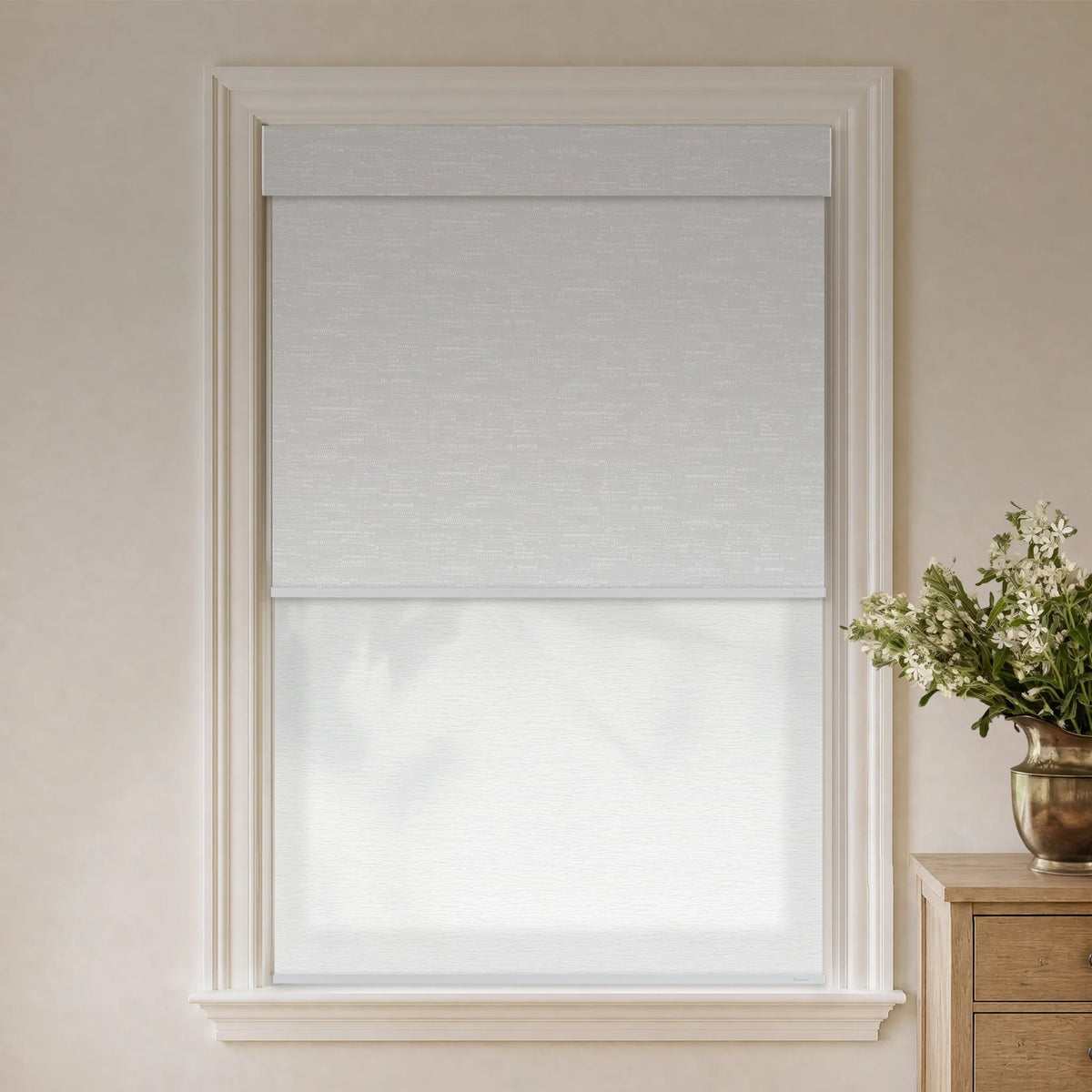
Roller Shades – Available in:
- Jacquard woven fabric (Jacquard White/Grey/Coffee), 100% blackout with waterproof back layer
- Designer Frequency fabric (Nero/Sand), 100% blackout
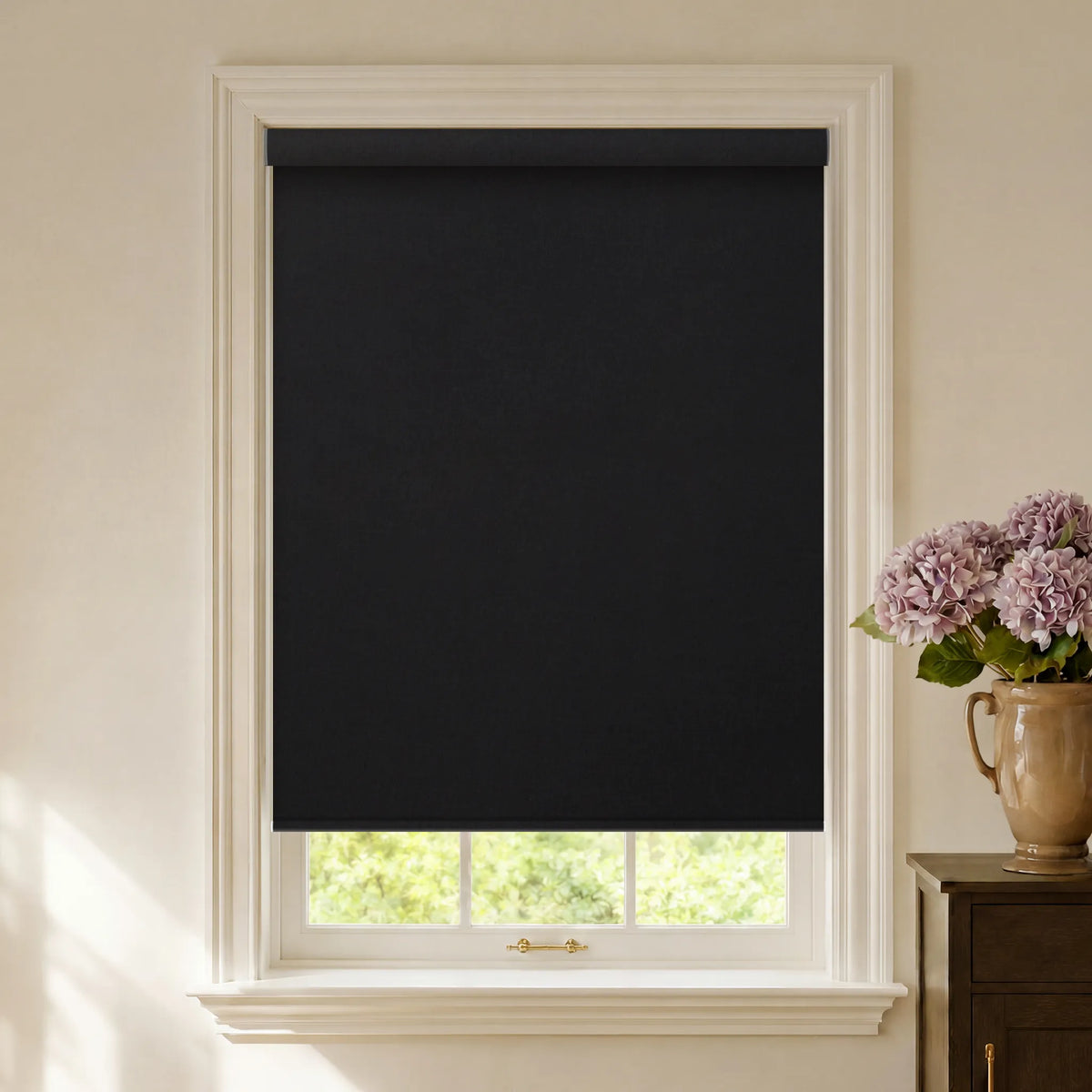
- Linen textured fabric (Linen Beige), 60% dimout
Vertical Blinds – Triple-weaved textured fabric, 100% blackout with UV protection and thermal insulation. Slats feature same-colour surfaces on both sides.
Roman Shades – Available in Matelasse White textured fabric with soft quilted appearance, 100% blackout.
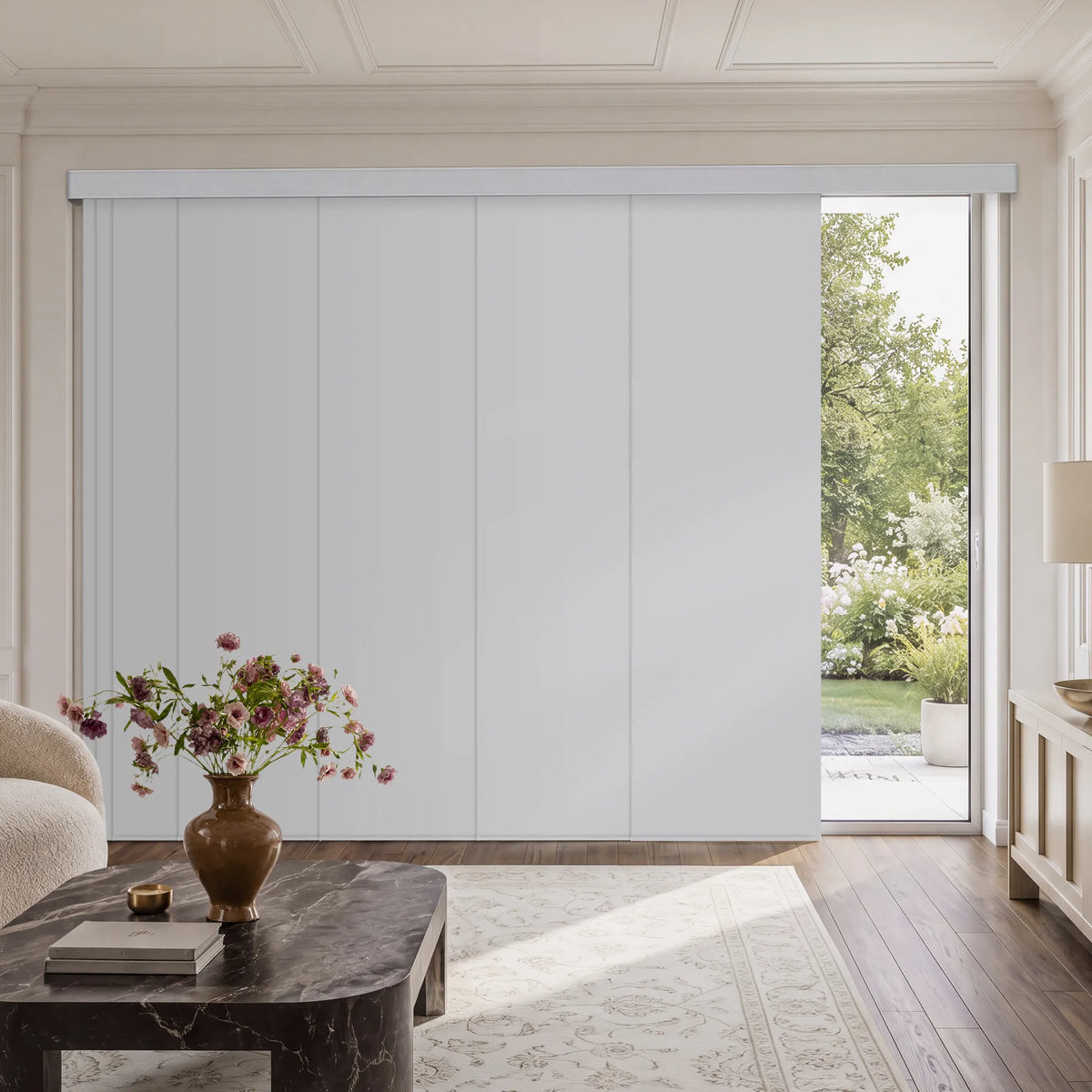
Sliding Panels – Available in Dimout Jacquard (Jacquard Grey/Coffee, 60% dimout) and Dimout Linen (light-filtering) fabrics, suitable for sliding glass doors .
Zebra Blinds – Alternating sheer and textured slats, 80% blackout.

Choosing between wood, faux wood, and woven wood textures ultimately depends on your priorities. For authentic warmth in low-humidity spaces, wood blinds deliver timeless beauty. For durability and easy maintenance -- especially in kitchens and bathrooms -- faux wood blinds are the clear winner. And for eco-friendly, natural texture with filtered light, woven wood shades create a relaxed, inviting atmosphere.


1 comment
I have 4 windows in my staircase, 2 are 32 × 64 and the other 2 are 24 × 55. Difficult to open close them so looking into motorized/remote control. The existing are 2" faux wood white, inside mounting. The balance of the house has the 2" faux wood manual blinds and evidentually would like to replace but not at this time. Which style blind would you suggest? Thank you!