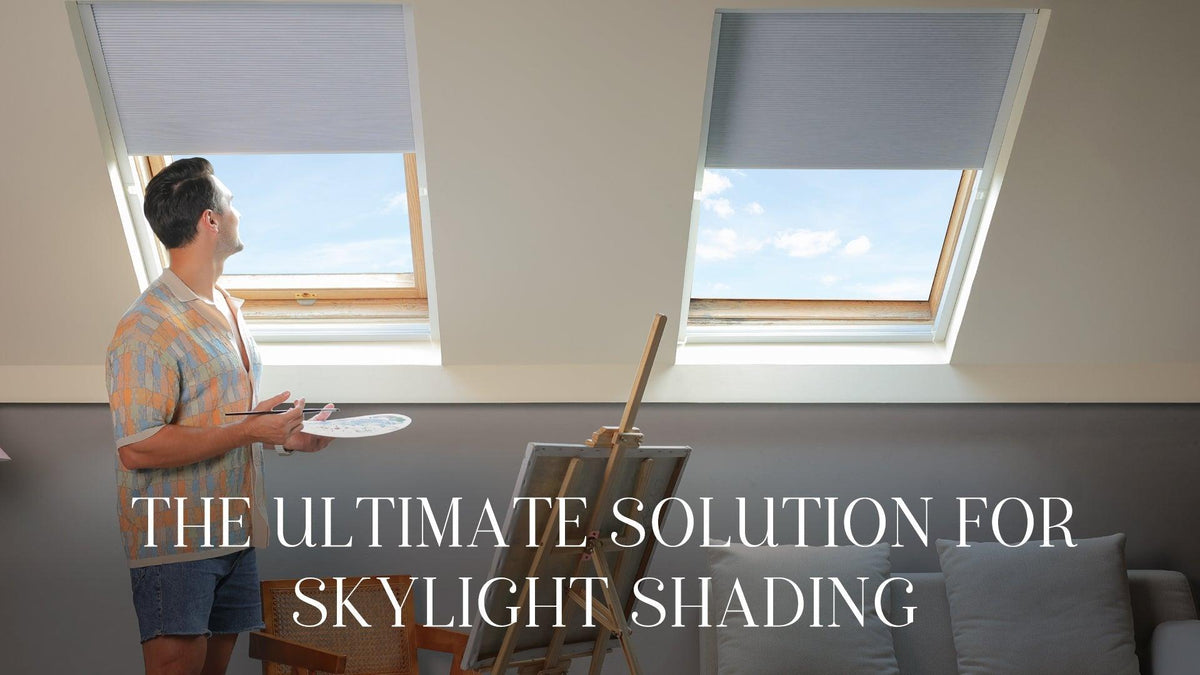
The most effective way to shade a skylight is to use a purpose-built treatment that stays supported across sloped or horizontal glass. Skylight shades are a strong choice when heat control and insulation matter, while blackout fabric is better for bedrooms and media rooms that need greater darkness. For high or inaccessible skylights, motorized operation removes the need for a ladder or extension pole. Before choosing a shade, confirm the skylight dimensions, mounting depth, light-control goal, power source, and compatibility with the window’s angle and opening mechanism.
Why Skylights Need a Different Shading Solution
Skylights admit daylight from above, where sunlight can reach floors, furniture, screens, and work surfaces more directly than light entering through many vertical windows. This can create several practical problems:
- Strong solar heat gain during warm weather
- Glare on televisions, laptops, and reading surfaces
- Fading or discoloration of furnishings and flooring
- Early morning light in bedrooms
- Difficult manual operation on high ceilings
- Heat loss through the glass during colder weather
A conventional shade made for a vertical window may hang away from sloped glass, sag, shift unevenly, or leave large uncovered areas. A skylight treatment therefore needs more than suitable fabric. It also needs a guiding or tensioning system that keeps the material positioned as it opens and closes.
If you are unsure whether the opening is technically a skylight or an operable roof window, review the differences between roof windows and skylights before selecting a treatment.
What Are the Main Ways to Shade a Skylight?
The right solution depends on whether the priority is daylight diffusion, room darkening, insulation, accessibility, or exterior heat interception.
| Skylight shading option | Best suited to | Main limitation |
|---|---|---|
| Light-filtering pleated shade | Kitchens, living rooms and studios | Softens light but does not create darkness |
| Blackout cellular shade | Bedrooms, nurseries and media rooms | Removes most useful daylight when fully closed |
| Motorized skylight shade | High or hard-to-reach windows | Requires a suitable power and control configuration |
| Solar-charged motorized shade | Locations without convenient wiring | Charging performance depends on light exposure and compatibility |
| Exterior awning or screen | Strong solar heat before it reaches the glass | More complex installation and exposure to weather |
| Removable interior cover | Occasional or temporary shading | Limited appearance, convenience and adjustability |
For most finished residential interiors, a guided cellular shade provides a practical balance of stable overhead coverage, insulation, and a clean appearance.
How Cellular Skylight Shades Help Manage Heat
Cellular shades contain folded pockets that trap air. This trapped air slows heat transfer near the glazing, making cellular construction more insulating than a flat, unsupported sheet of fabric.
For a skylight, performance depends on three connected elements:
- Fabric construction: Cellular pockets add an insulating layer.
- Surface treatment: A reflective or aluminum-coated inner layer can help manage incoming solar energy.
- Fit and guidance: Side rails keep the material close to the opening and reduce exposed areas.
A shade does not change the skylight’s glass rating, eliminate all heat transfer, or replace proper glazing and roof insulation. It is an adjustable interior layer that helps manage the conditions created by the window.
For a broader explanation of honeycomb construction, see how cellular shades support home comfort and insulation.

Why Side Rails Matter on Sloped and Horizontal Windows
Gravity pulls an unsupported shade downward. On a vertical window, that force helps the fabric hang naturally. On a sloped or horizontal skylight, it can pull the material away from the glass.
Side rails or tensioned guides help:
- Keep the fabric aligned with the window
- Support movement across a non-vertical surface
- Reduce sagging and shifting
- Limit uncovered gaps along the sides
- Maintain more consistent tension during operation
The rails must still be installed squarely. An uneven frame, inaccurate measurement, or misaligned mounting point can cause the bottom rail to travel unevenly. Adjustable leveling features can correct small differences, but they should not be treated as a substitute for accurate measurement.
Motorized Control for Hard-to-Reach Skylights
Motorized operation allows homeowners to adjust elevated skylight shades without a manual pole. The built-in rechargeable motor can be controlled with a compatible remote, making everyday light control easier for windows installed above normal reach.
The motor normally requires USB charging every three to six months, depending on usage. An optional solar panel provides supplemental charging from natural light, reducing the frequency of manual charging without requiring additional power wiring.
Alexa and Google Home control are available through the supported hub configuration. Available remote, charging, and smart-home options depend on the selected motor setup, so compatibility should be confirmed before ordering. Graywind's smart control guide provides additional information about the available control systems.
What to Check Before Choosing Skylight Shades
Consider the following requirements before selecting a configuration:
- Confirm that the skylight dimensions fall within the available size range.
- Check that the window frame provides sufficient inside-mount depth.
- Decide whether USB charging or supplemental solar charging better suits the window location.
- Confirm compatibility between the selected motor, remote, hub, and smart-home platform.
- Choose blackout fabric only when stronger room darkening is appropriate for the space.
More Comfortable Control of Overhead Light
Graywind Smart Skylight Shades are designed for hard-to-reach windows where blackout coverage, insulation, glare reduction, and motorized control are priorities. Blackout cellular fabric helps manage overhead sunlight, while aluminum side rails support stable operation across non-vertical glass. Rechargeable power and optional solar charging make the shades more practical for elevated installations.
Follow the manufacturer's rounding and deduction instructions rather than adjusting the measurements yourself. Graywind provides a dedicated measuring guide for skylights and specialty windows.