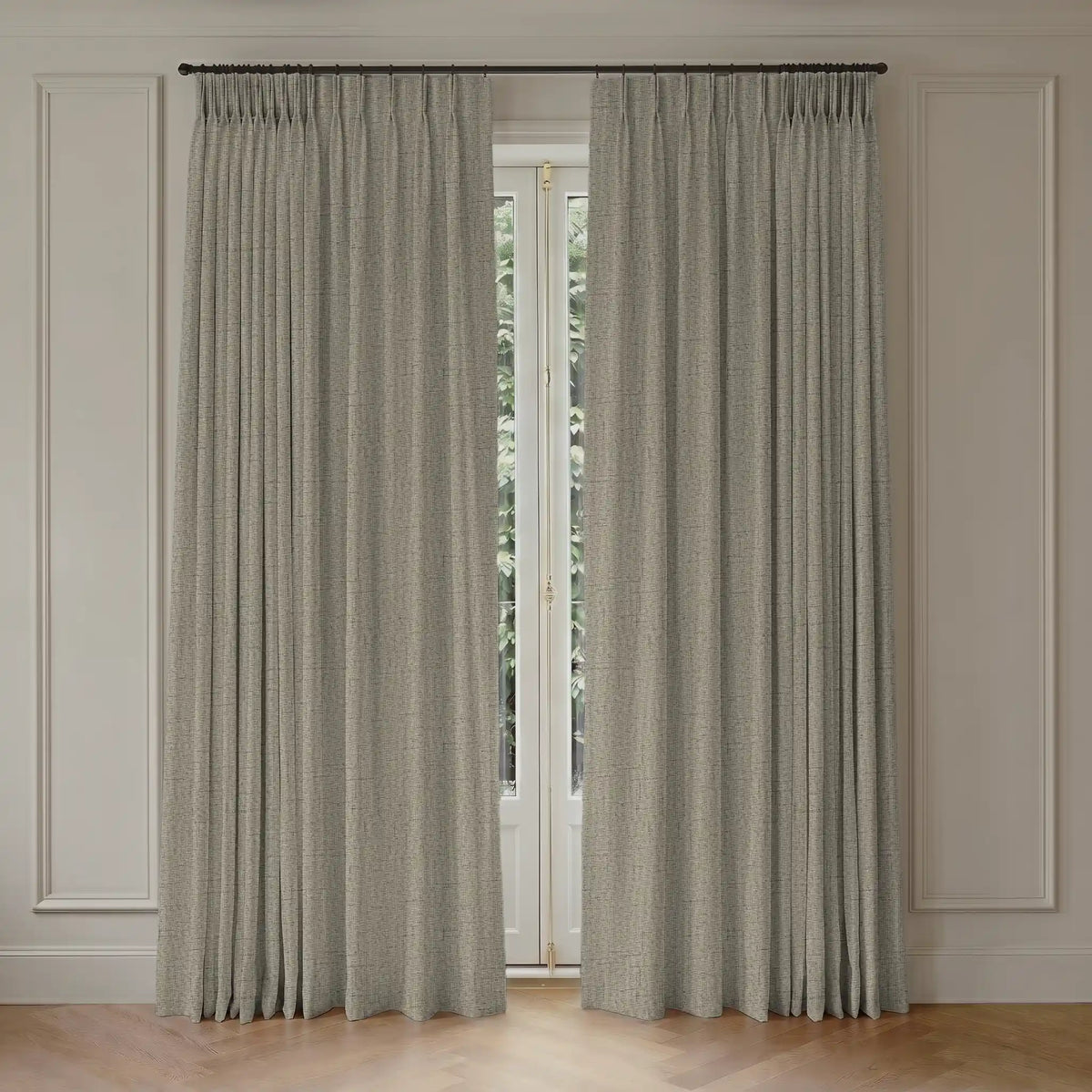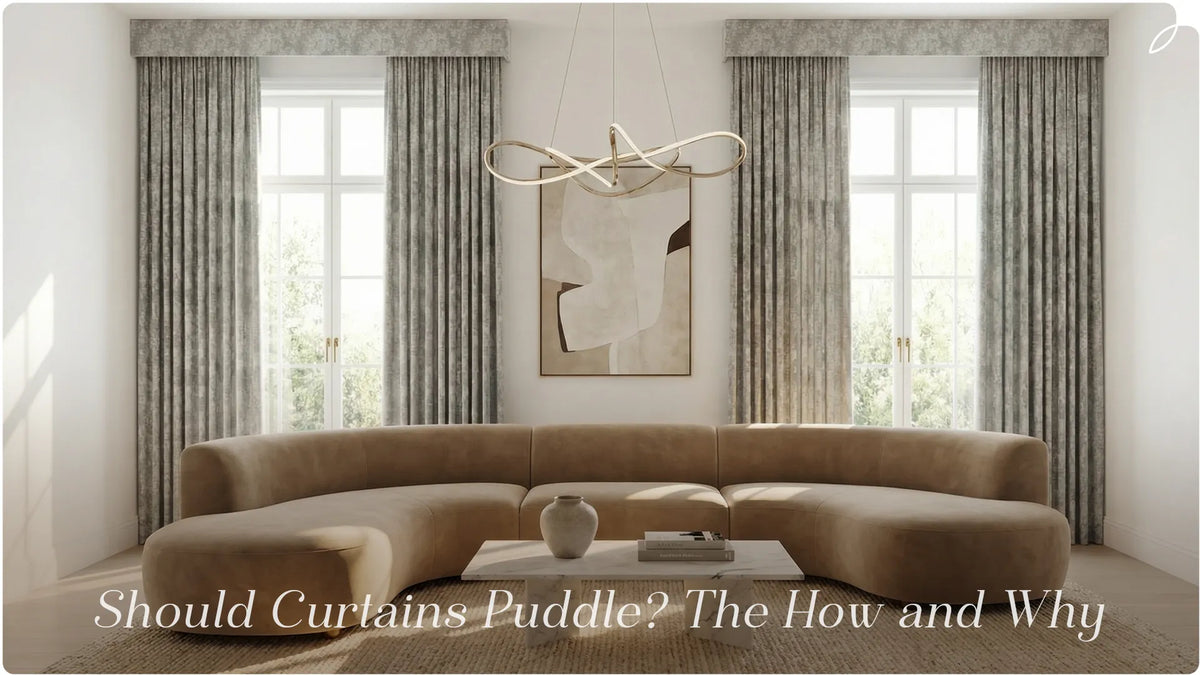
Curtains can puddle on the floor, but they do not need to. A puddled hem creates a formal, decorative effect, while a curtain that just touches the floor looks cleaner and is easier to maintain. Floating curtains are usually the most practical option for busy rooms, children, pets, and frequent cleaning. The right choice depends on the room, fabric, floor level, and the amount of maintenance you accept. This guide compares floating, kiss-the-floor, and puddled curtain so you can select a length intentionally rather than letting inaccurate measurements decide the result.
How to Choose the Right Curtain Length
Measure from the curtain rod, track, or hook attachment point to the intended finished position. The exact starting point depends on the heading and hardware, so follow the Graywind curtain measuring guide for the selected configuration.
Also consider ceiling height, room proportions, floor level, cleaning, and whether the curtain will open frequently. Measure at more than one point because an uneven floor can change how the hem sits.

3 Main Curtain Length Styles: Pros, Cons, and Visual Impact
The No-Stack or Floating Curtain
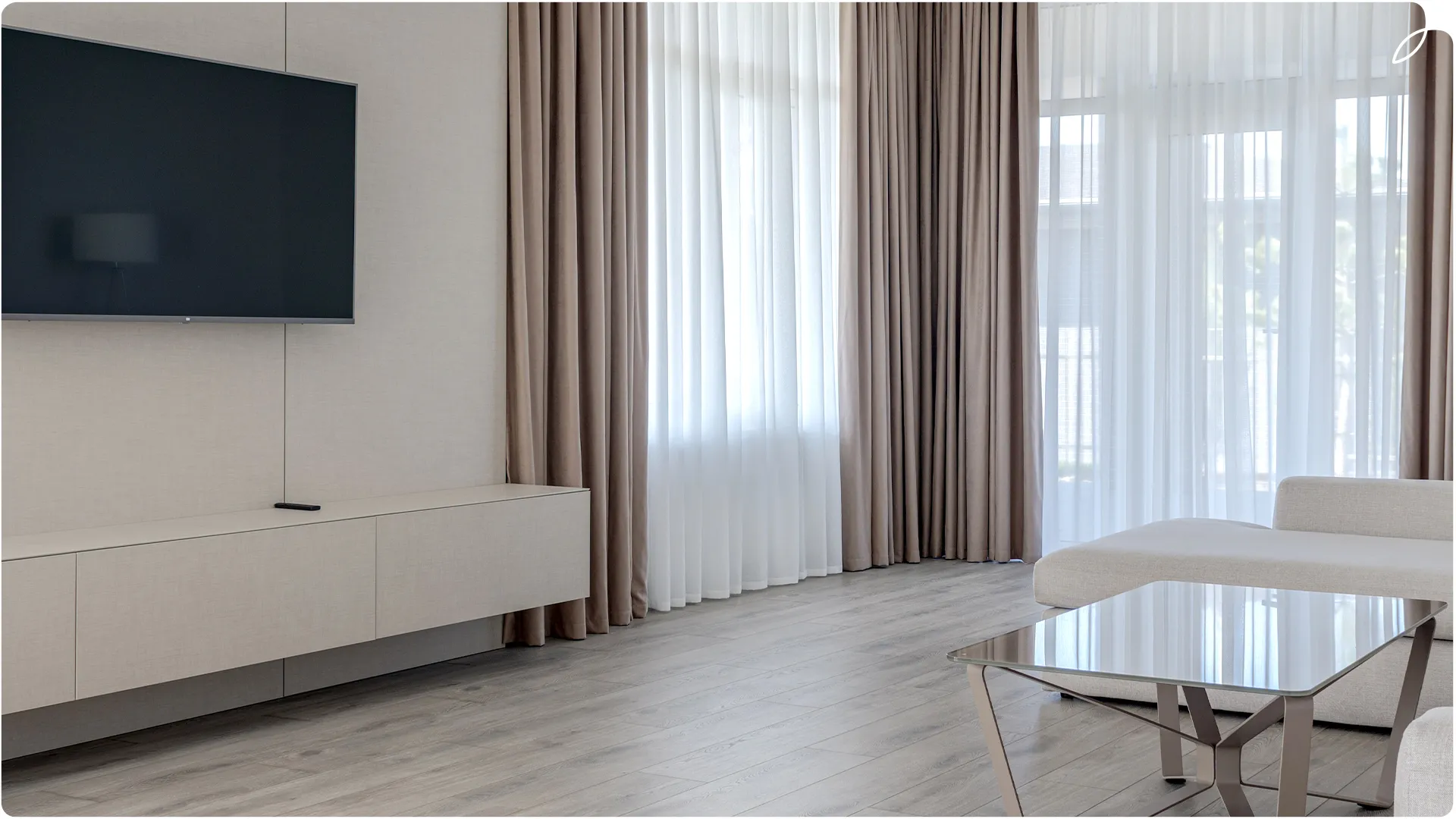
What is a floating curtain? The hem stops approximately 1/2 inch to 1 inch above the floor.
Pros: The fabric avoids direct floor contact, collects less dust and pet hair, and leaves room for cleaning. The result is crisp and tailored.
Cons: A gap that is too large may look like a measuring mistake. This style requires enough precision to keep the spacing consistent.
Ideal for: High-traffic areas, homes with children or pets, and modern or minimalist rooms.
The Light Touch or Kiss-the-Floor Curtain
What does it mean when curtains kiss the floor? The hem meets the floor without forming a visible fold or stack.
Pros: This length creates a continuous vertical line while remaining easier to maintain than a puddle. It works with contemporary and traditional interiors.
Cons: Accurate measurement is essential. Small floor variations may cause one section to touch while another floats.
Ideal for: Living rooms, bedrooms, dining rooms, and offices where a polished floor-length appearance is preferred.
The Classic Puddle or Puddled Curtain
What are puddled curtains? They include approximately 2 to 8 inches of additional fabric that rests in folds on the floor.
Pros: The extra fabric adds softness, texture, and a more formal or romantic appearance.
Cons: Puddled fabric collects more dust, requires regular arranging, and can create a tripping or snagging risk. It is less practical in high-traffic rooms.
Ideal for: Formal living spaces and bedrooms with classic, romantic, vintage, Hollywood glam, or Bohemian styling.

Is Puddling Curtains in Style?
Puddled curtains are not automatically outdated. Their current use is usually more selective than the dramatic puddles associated with traditional interiors. A slight 2-to-4-inch puddle can add softness without overwhelming the room, while 6 inches or more creates a stronger traditional statement.
The effect should look deliberate. If the fabric barely reaches the floor in some places and bunches in others, the result is more likely to resemble incorrect sizing than intentional styling.
How to Choose a Curtain Length
Consider these factors before ordering:
- Lifestyle: Choose a floating or kiss-the-floor length for homes with pets, children, frequent cleaning, or high traffic.
- Formality: A kiss-the-floor hem provides restrained elegance, while a puddle creates greater visual drama.
- Maintenance: Floating curtains require the least floor-level care. Puddled curtains require the most cleaning and arranging.
- Architecture: Tall rooms can support additional fabric visually. Standard-height rooms often benefit from the uninterrupted line of a floating or kiss-the-floor curtain.
- Puddle depth: Use 2 to 4 extra inches for a softer puddle. Choose 6 inches or more only when a dramatic, traditional effect suits the room.
Fabrics That Work with Puddled Curtain
Fabric weight and drape determine whether the puddle forms controlled folds or looks disordered.
- Heavy fabrics: Velvet, heavy silk, brocade, and jacquard create substantial, defined folds.
- Fluid fabrics: Linen, matte satin, and soft cotton produce a looser, more relaxed puddle.
Avoid fabric that is too stiff to fold naturally or too light to stay arranged. Before ordering, use Graywind fabric swatches to assess weight, texture, and drape in the room.

Achieve the Right Length with Graywind Smart Curtains
Float, kiss-the-floor, and puddled styles all depend on correct measurements and a suitable fabric. Graywind custom smart curtain is made according to the dimensions and configuration submitted during ordering.
Motorization controls horizontal opening and closing. It does not change or program the finished curtain length. For a puddled motorized curtain, consider how the extra fabric will move across the floor and whether the folds will need rearranging after operation.
Motor and Control
- Rechargeable motor: Provides flexible placement where continuous wired power is unavailable. Zigbee connection requirements depend on the Alexa or Google setup and whether a compatible hub is built in or added.
- Hardwired motor: Provides continuous power and may support compatible app and voice-control options. Direct electrical wiring should be completed by a qualified professional.
Review the Graywind Smart and Control Guide before choosing a motor, hub, app, or voice-assistant setup.
Curtain Series for Different Needs
- Blackout curtains: Reduce light through the fabric and support stronger privacy. Overall room darkening also depends on the track, fullness, installation, and light gaps.
- Light-filtering curtains: Soften daylight and glare while keeping the room brighter. A kiss-the-floor length gives them a clean finish in living areas.
- Sheer curtains: Create a light, flowing appearance but provide limited nighttime privacy. Floating and kiss-the-floor lengths keep the hem easier to maintain.

Choose the curtain length before submitting the final measurements. For most frequently used rooms, floating or kiss-the-floor curtains provide the strongest balance of appearance and upkeep. Reserve puddling for spaces where its decorative effect justifies the additional care.