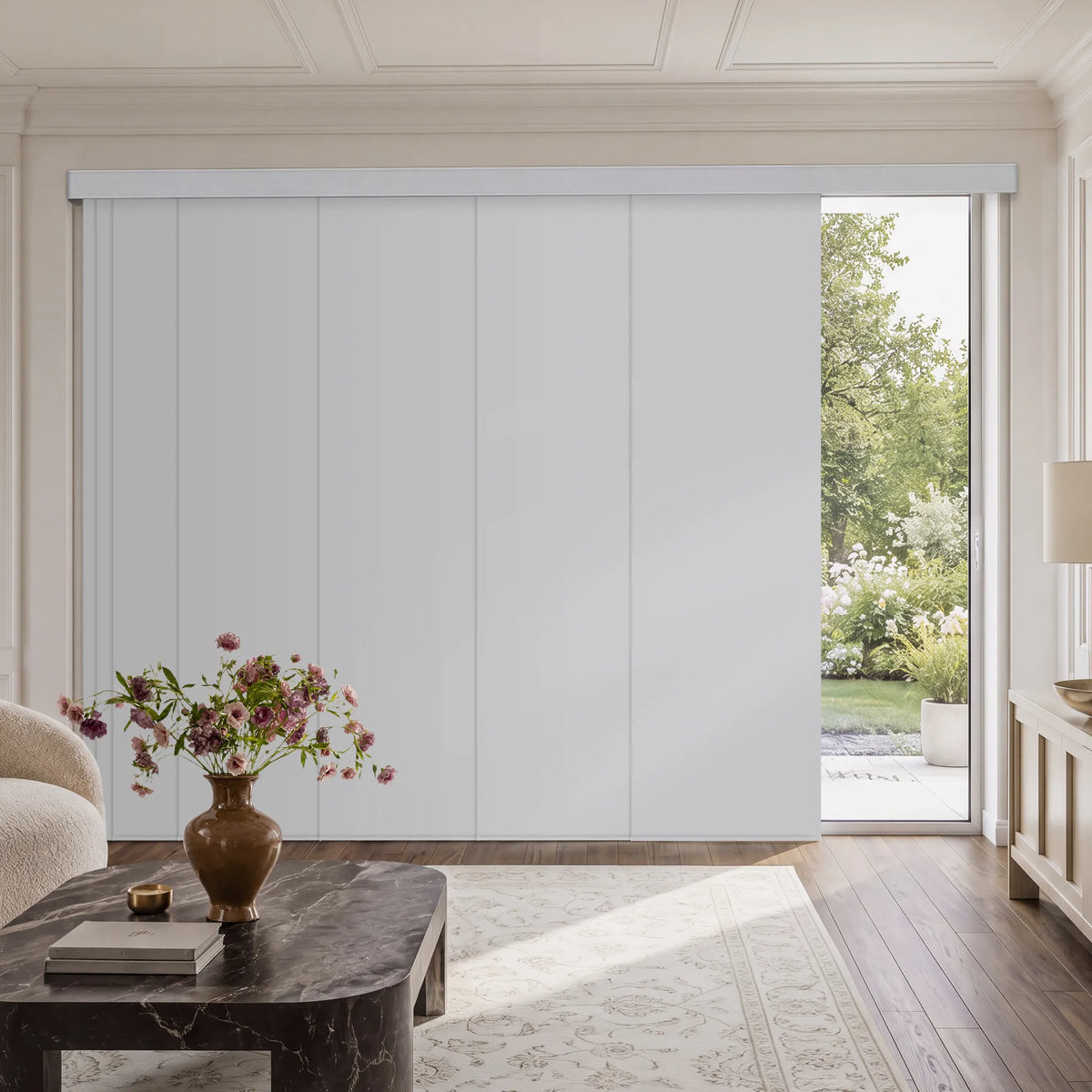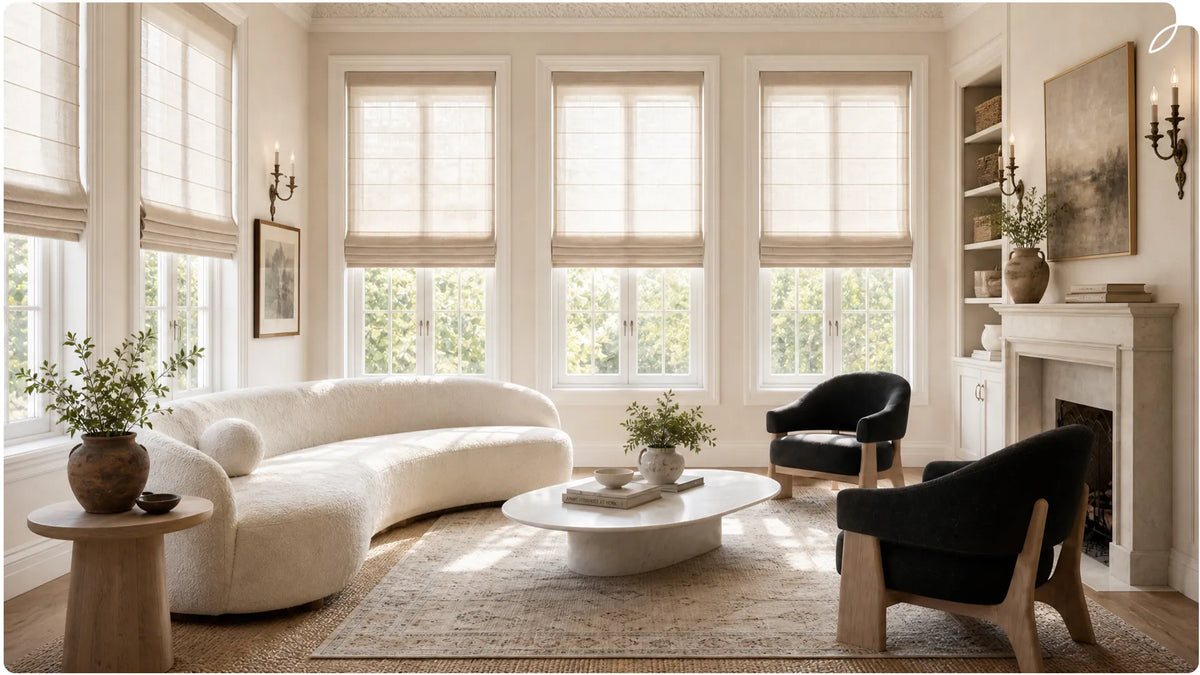
Yes, you can sometimes see through sheer shades, but the level of visibility changes with the light. During a bright day, sheer fabric can soften the view into a home because the outdoors is usually brighter than the room. At night, interior lighting reverses that contrast, making people, movement, and furnishings easier to see from outside.
Fabric density, color, shade position, viewing distance, and the brightness on each side of the window all affect privacy. Sheer shades are useful for daylight control and daytime screening, but they should not automatically be treated as a complete nighttime privacy solution.
What Do Sheer Shades Look Like From Outside?
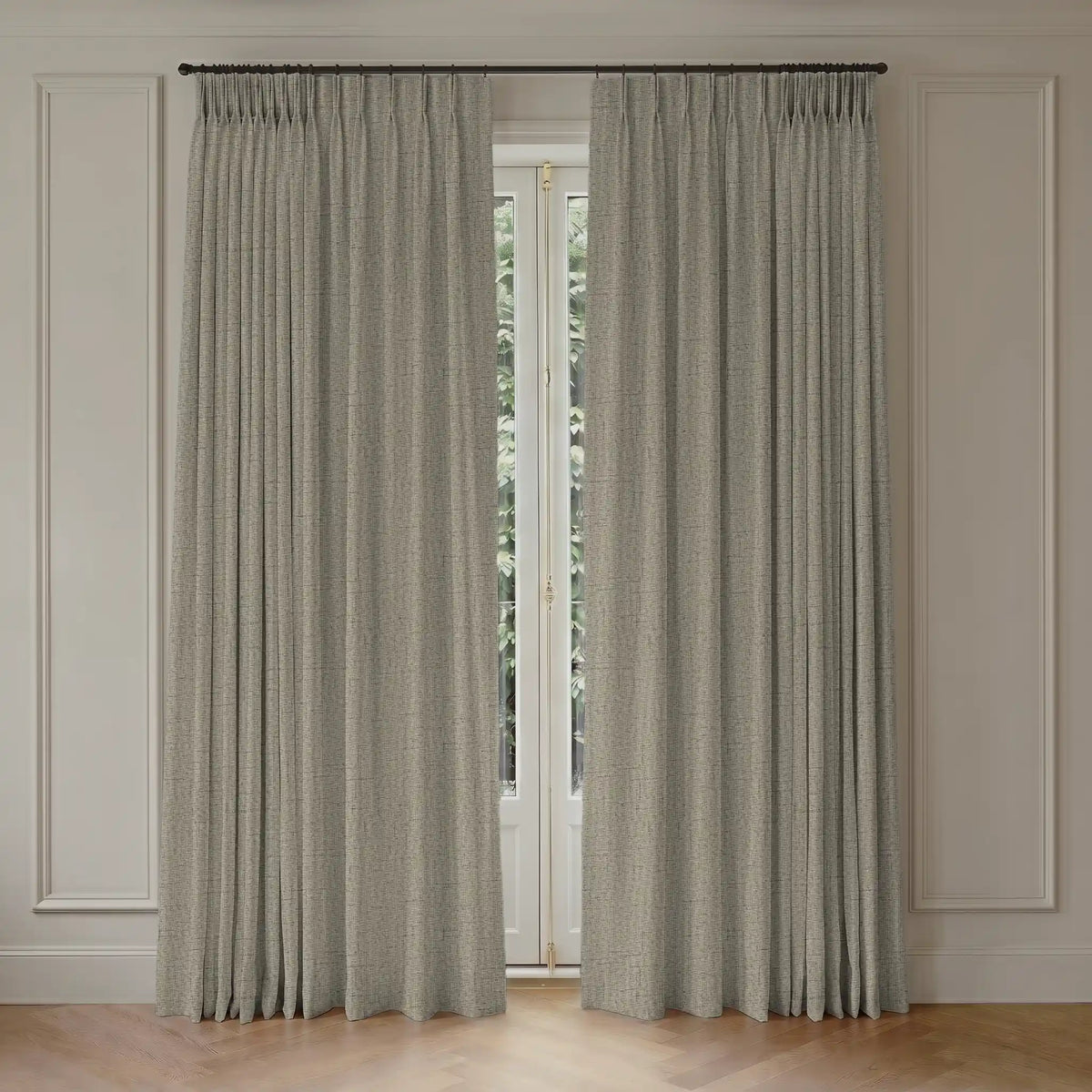
Sheer shades diffuse light instead of completely blocking it. Depending on their construction, they may use translucent fabric, layered sheer panels, or adjustable fabric vanes suspended between sheer layers.
From inside, this construction can preserve soft daylight and a partial outdoor view. From outside, it may blur details within the room rather than hide them completely. The result is visual screening, not guaranteed privacy.
It is also important to distinguish between three levels of visibility:
- Detailed visibility: Facial features, objects, colors, and room details can be identified.
- Silhouette visibility: People and movement are visible, but details are softened.
- Light and shadow visibility: An observer may notice that someone is present without seeing a clear outline.
A sheer shade can shift between all three conditions as the surrounding light changes.
Why Sheer Shades Provide More Privacy During the Day
In most daytime conditions, sunlight makes the exterior of the window brighter than the interior. An observer outside sees more light reflected from the glass and shade surface, while the darker room behind the fabric becomes less visually prominent.
This brightness difference makes it more difficult to distinguish interior details. A densely woven sheer may provide reasonable daytime screening while still admitting natural light.
However, daytime privacy is not absolute. Visibility can increase when:
- The room is brightly lit on an overcast day.
- The window is shaded by a porch or deep overhang.
- A person stands immediately beside the glass.
- The observer is close to the window.
- The fabric has an especially open weave.
- The sheer vanes or bands are in their most open position.
A useful rule is that sheer shades provide their strongest screening when the side occupied by the viewer is brighter than the side being viewed.

Why Sheer Shades Become More Transparent at Night
After sunset, the light relationship reverses. Interior lamps illuminate the room, while the outdoors becomes relatively dark. The sheer fabric remains visible, but it can no longer conceal the brighter space behind it effectively.
This creates the fishbowl effect: occupants may see only a dark window or their own reflection, while someone outside can see into the illuminated room. Standing inside and looking at the glass is therefore not an accurate nighttime privacy test.
With the lights on, sheer shades may reveal:
- Human silhouettes and movement
- Furniture positioned near the window
- The general layout of the room
- Clothing colors or other details through an open weave
- Activity near windows and glass doors
The effect becomes stronger when a person stands between a bright lamp and the shade because the light creates a more defined silhouette.
To check actual privacy, turn on the room lights after dark and inspect the window from outside at several distances and angles.
Four Factors That Affect Visibility Through Sheer Shades
Fabric Density and Weave
A fabric with tightly spaced yarns reduces visibility more effectively than a loose, open weave. Texture also matters. Layered threads, slubs, or irregular woven surfaces scatter light and make interior details harder to distinguish.
A very fine transparent sheer preserves more of the outdoor view but offers less privacy. A denser light-filtering sheer softens the view more strongly, although it may admit less direct light.
For layered sheer shades, vane position also changes coverage. Open vanes preserve a clearer view, while tilted or closed vanes place more fabric between the viewer and the room.
Light and Dark Colors
Light-colored sheers reflect and diffuse more daylight, creating a bright, softened window surface. White, ivory, and pale beige fabrics often make interior details less noticeable from outside during the day.
Darker sheers can provide a clearer outward view because the eye looks past the darker threads more easily. This is why dark solar-screen fabrics often maintain better view-through than similarly constructed white fabrics. The tradeoff is that a dark or high-contrast fabric may make silhouettes easier to recognize under certain nighttime lighting conditions.
Color alone does not determine privacy. A tightly woven pale fabric may screen the room better than a loosely woven dark one, while a dense dark fabric may outperform both. Fabric density and openness should be evaluated together with color.
Shade Position and Installation Distance
A shade mounted close to the glass presents fewer side angles through which someone can look. When the fabric sits farther into the room, gaps between the shade, window frame, and wall may expose portions of the interior.
Inside-mounted shades can also leave narrow edge gaps. These gaps may be noticeable from an outdoor side angle even if the fabric itself provides adequate screening. An outside mount can increase overall coverage, but it must extend sufficiently beyond the opening.
For layered sheer or zebra designs, small changes in alignment can alter visibility. The fabric should be fully lowered, and the vanes or solid bands should be properly overlapped when stronger privacy is needed.
Distance From the Window
The closer a person or object is to the shade, the more visible its outline may become. Someone standing directly beside the window can cast a clear silhouette, while the same person several feet into the room may appear only as an indistinct shadow.
Outdoor viewing distance matters as well. A passerby across the street may see little more than light and movement, while someone standing near the glass may identify more detail. Street-facing bedrooms and ground-floor bathrooms therefore require stronger privacy than upper-floor living spaces with limited outside access.
Comparing Shade Opacity and Privacy Levels
"Light filtering" and "blackout" describe different fabric behaviors, but neither term should be interpreted without considering edge gaps and installation.
|
Opacity Level |
Daylight |
Daytime Privacy |
Nighttime Privacy |
Best Suited To |
|
Transparent sheer |
Maximum natural light and view |
Low to moderate |
Low |
Decorative layering and low-exposure windows |
|
Dense sheer |
Soft, diffused daylight |
Moderate |
Low to moderate |
Living and dining rooms |
|
Light filtering |
Brightness without a clear view |
Moderate to high |
Moderate to high, depending on fabric |
Offices, kitchens, and living spaces |
|
Room darkening |
Substantially reduced light |
High |
High |
Bedrooms and media rooms that do not require full darkness |
|
Blackout |
Fabric blocks transmitted light |
Very high |
Very high |
Bedrooms, nurseries, and privacy-sensitive rooms |
Blackout fabric does not always create a completely dark room. Light may remain around the sides, top, or bottom of the shade. These installation gaps usually affect darkness more than visibility through the fabric itself.
Where Do Sheer Shades Work Best?
Sheer shades work well where daylight, glare control, and a softened outdoor view matter more than complete seclusion. Common locations include living rooms, dining rooms, upper-floor windows, and windows facing private yards.
They are less suitable as a stand-alone treatment for:
- Ground-floor bedrooms facing a sidewalk
- Bathrooms with direct neighboring views
- Rooms used after dark with the lights on
- Entry doors with glass panels
- Windows positioned close to shared outdoor areas
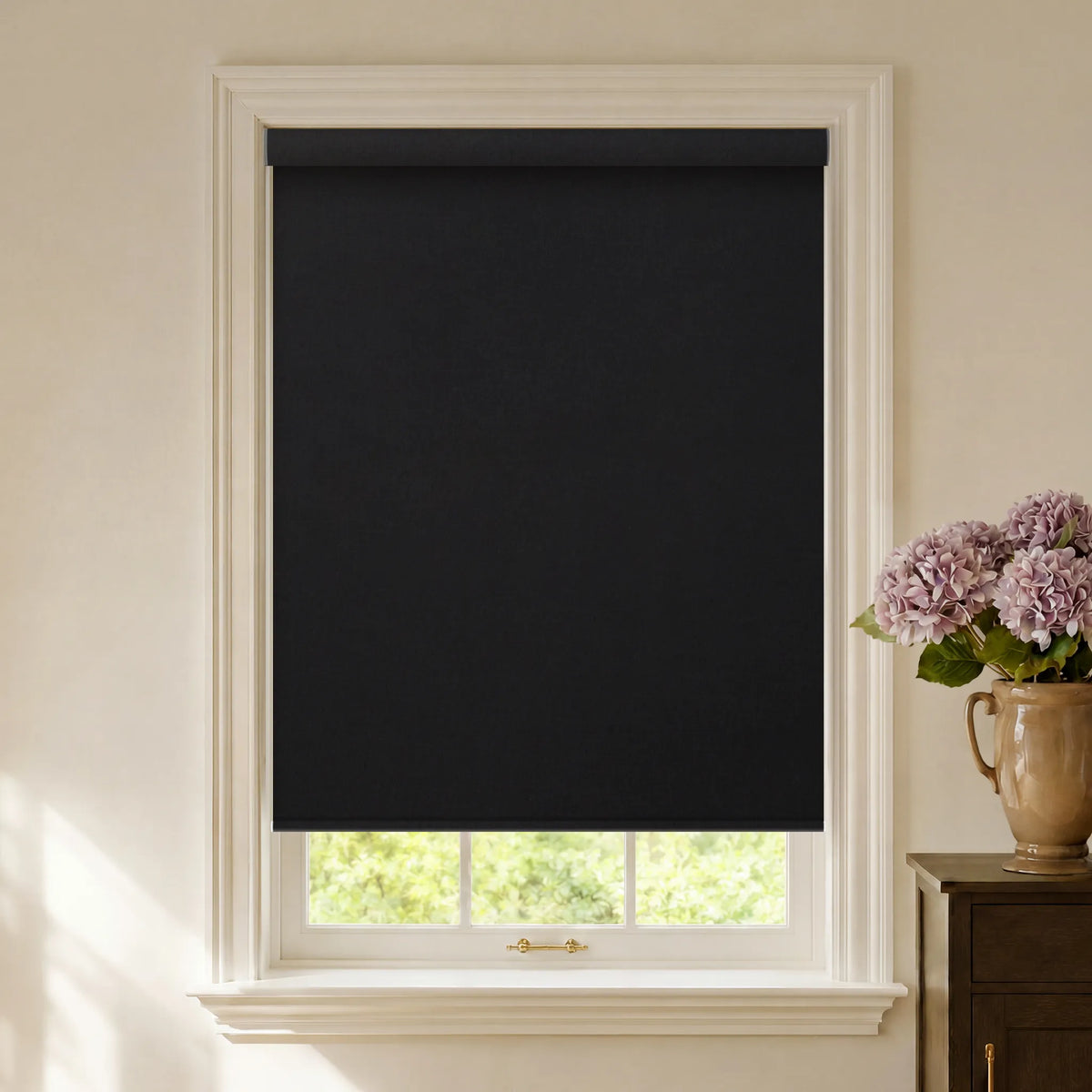
In these spaces, pair the sheer layer with a blackout or room-darkening treatment. Layering allows the window to remain bright during the day without relying on the same fabric for nighttime privacy.
How to Test Sheer Fabric Before Ordering
Do not judge a sheer fabric only under showroom lighting or against a solid display board. Test a swatch directly at the window under the conditions in which it will be used.
Check it:
- In direct and indirect daylight.
- On a cloudy afternoon.
- After dark with the room lights on.
- From inside and outside the home.
- With a person standing beside the window and farther into the room.
- From straight ahead and from side angles.
If the room is not accessible from outside, place a phone camera on the exterior side of the glass or ask another person to inspect the window. This provides a more realistic privacy check than looking at the shade from inside.
Graywind Smart Solutions for Day and Night Privacy
For rooms that need soft daylight and dependable evening coverage, Graywind offers motorized systems with more than one privacy level.
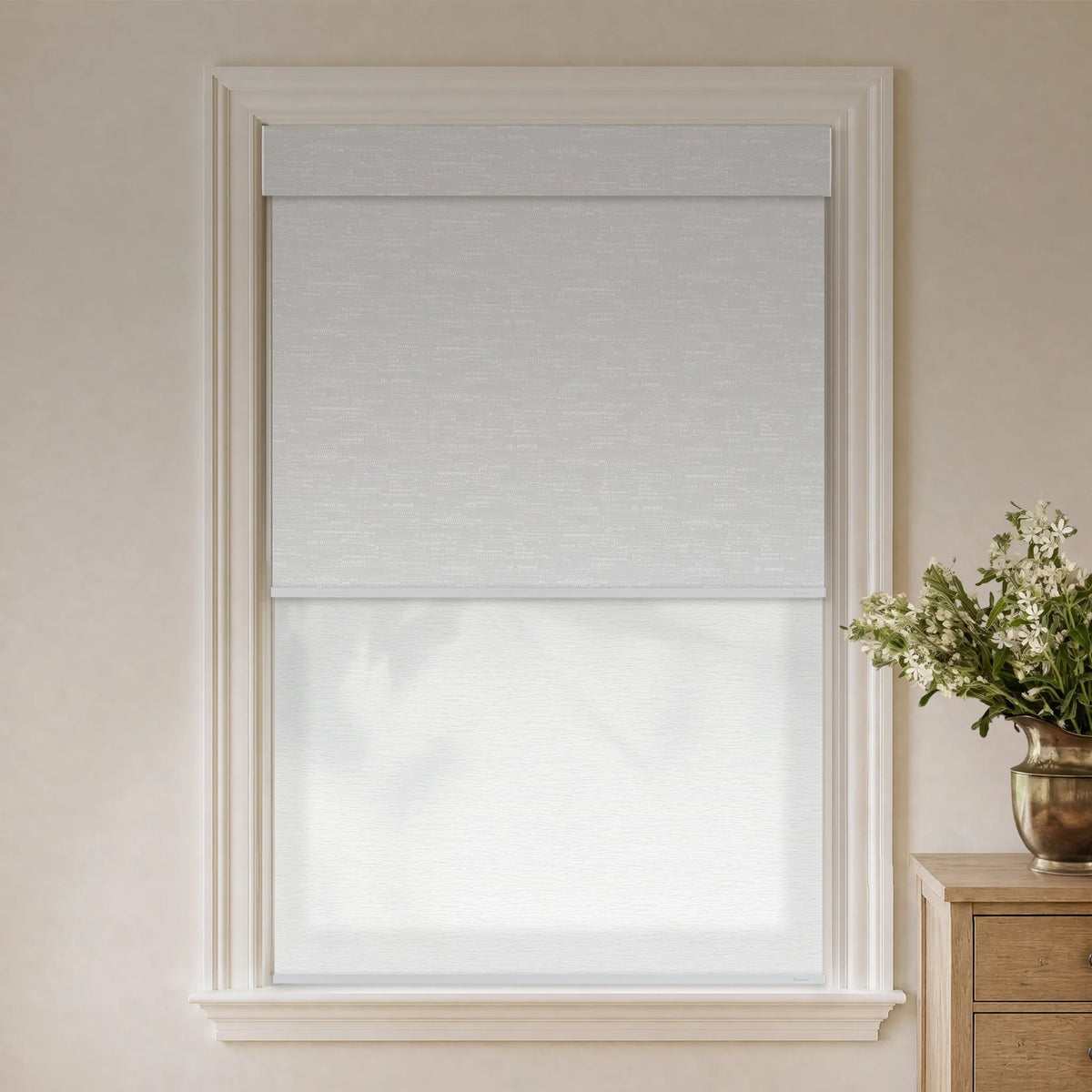
Graywind Motorized Dual Roller Shades combine an independently controlled light-filtering or sheer layer with a blackout layer. The lighter fabric can manage daylight, while the blackout shade provides stronger nighttime coverage.
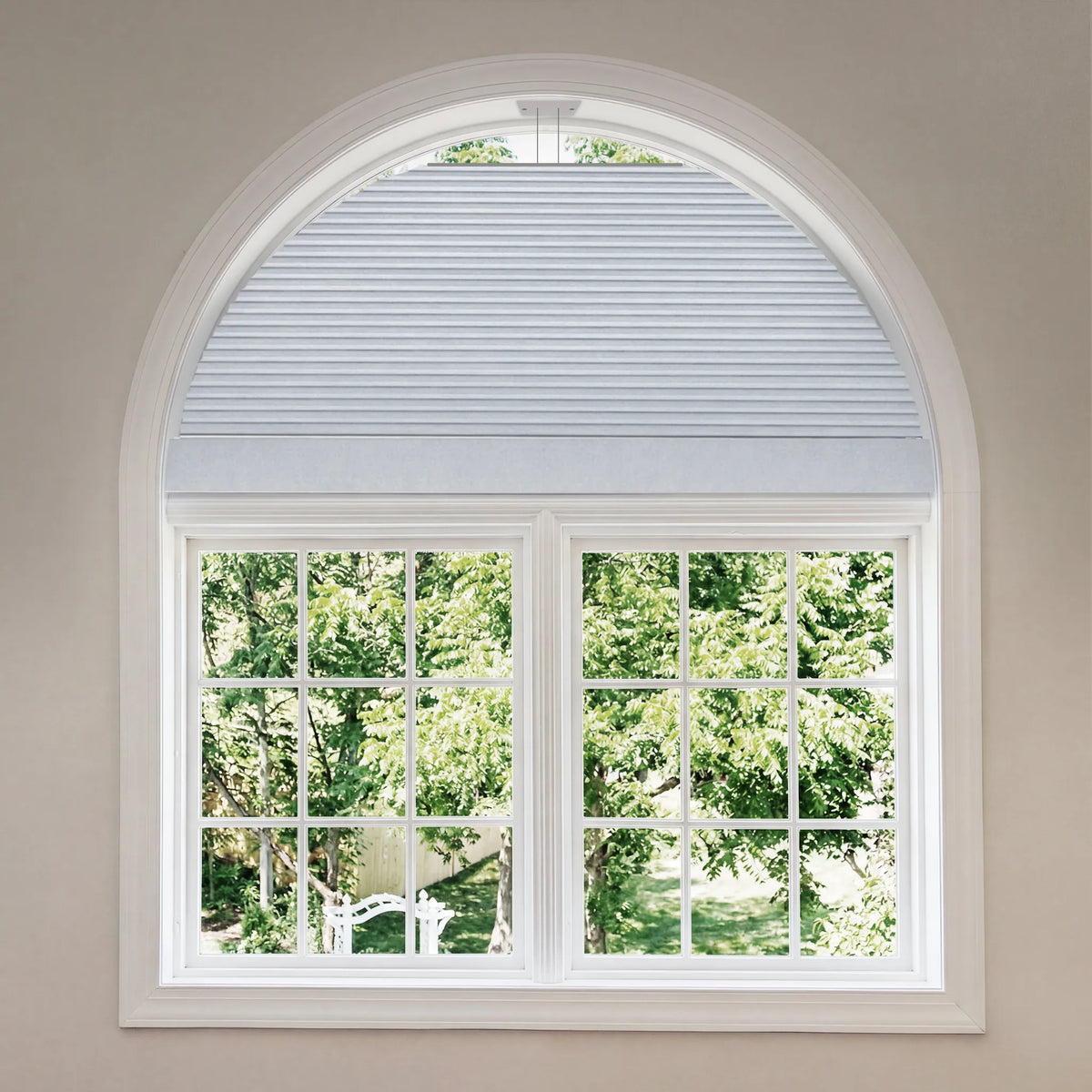
Graywind Motorized Day Night Cellular Shades combine light-filtering and blackout cellular fabrics in one shade. They suit bedrooms and multipurpose rooms that need a brighter daytime setting and greater privacy at night.
Graywind Motorized Zebra Blinds use alternating sheer and solid bands. Aligning the bands admits more light and view, while overlapping the solid sections increases privacy. Because nighttime coverage varies by fabric and alignment, choose a blackout layer when complete evening privacy is essential.

Compatible motor configurations may support remote, app, voice, or scheduled adjustments. Confirm the selected motor and accessories before ordering.