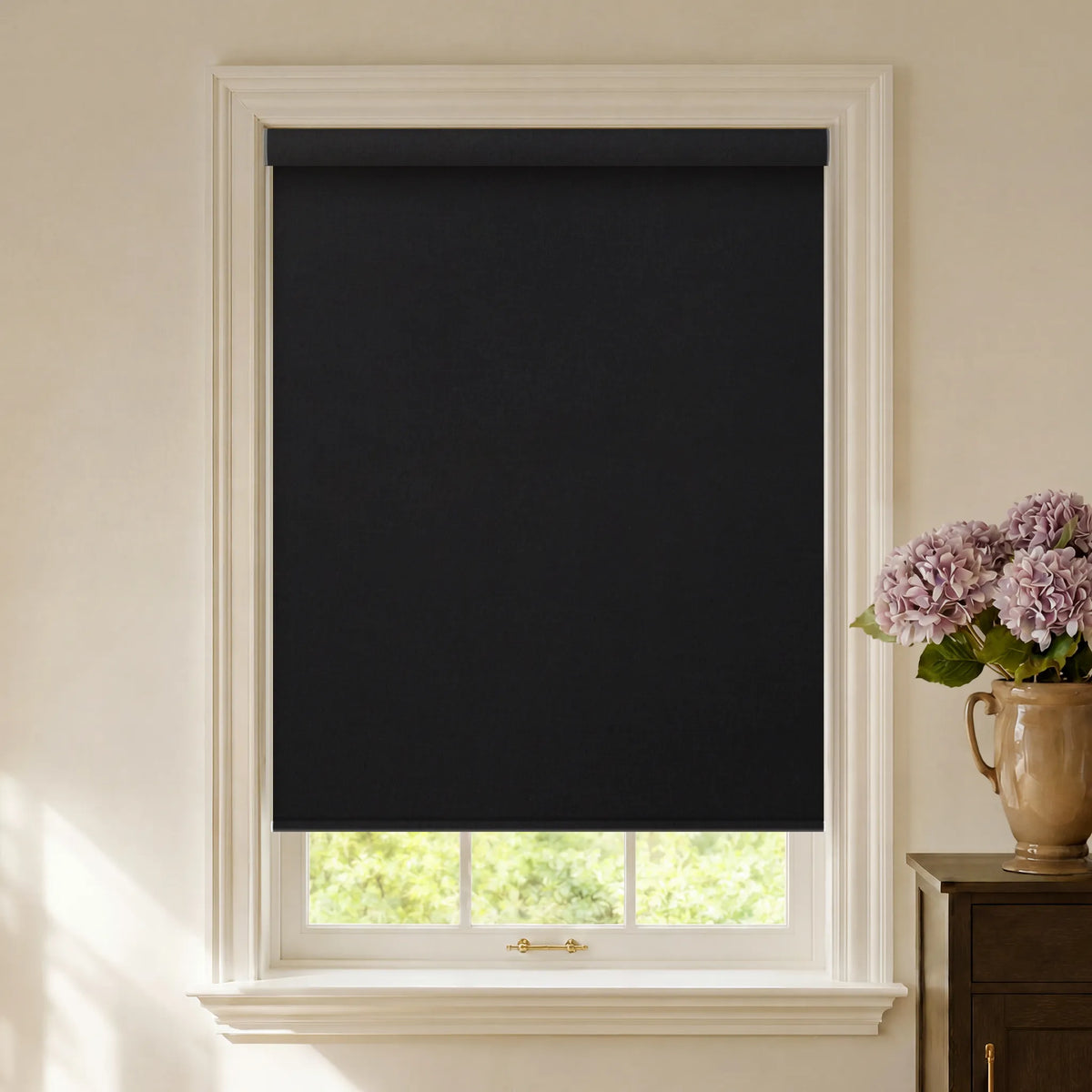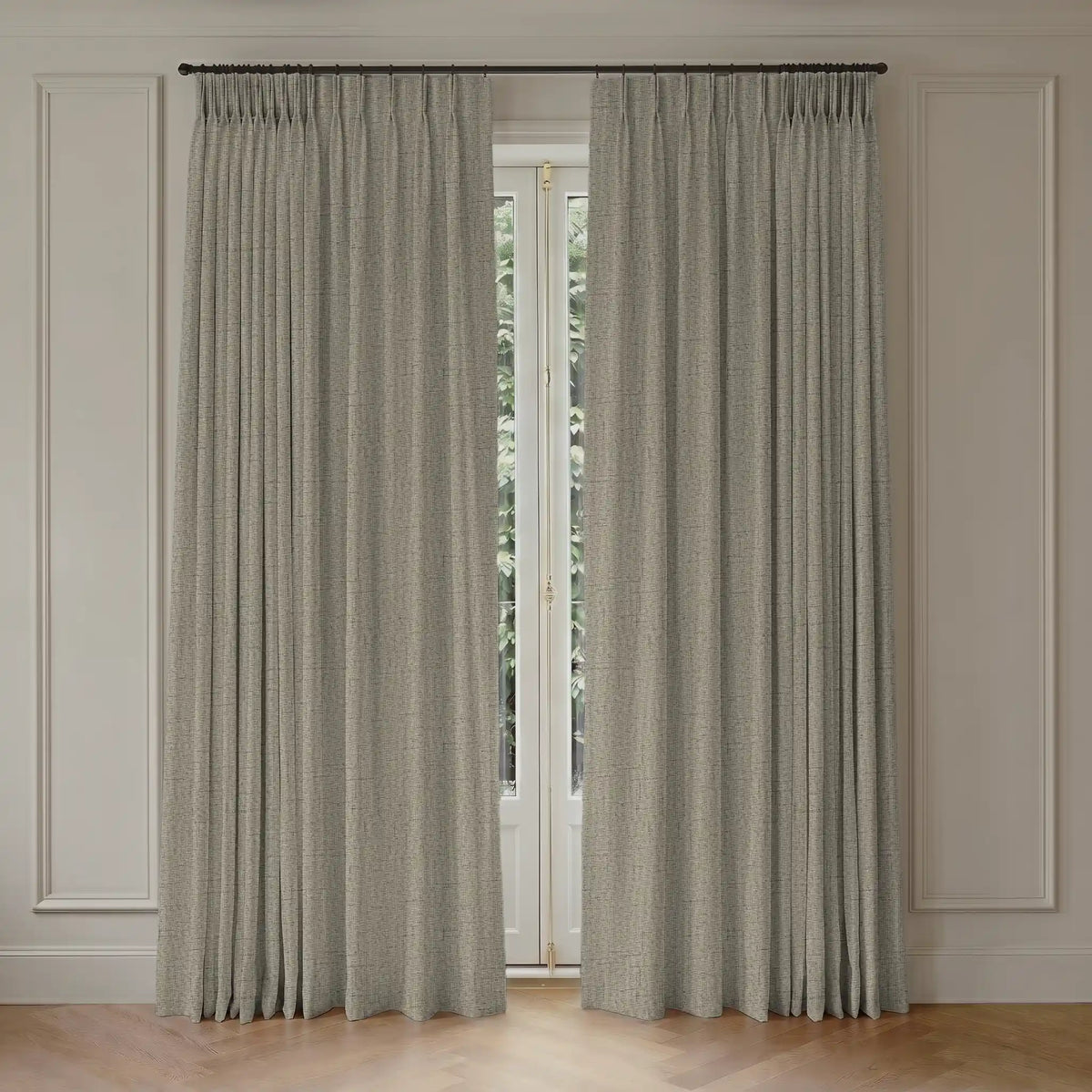
To mix and match curtains successfully, build the window around two clear layers: a light base layer for softened daylight and privacy, and a heavier decorative layer for stronger coverage and visual weight. The layers should contrast in texture but coordinate in color, pattern, scale, and length. Sheer curtains paired with blackout drapes are the most familiar example, but shades or blinds can also serve as the base. Careful hardware placement and custom sizing keep the finished treatment balanced instead of bulky or mismatched.

How to Mix and Match Curtains: Core Principles
Contrast Materials to Create Depth
Material contrast gives a layered window treatment depth and definition.
- Light and heavy: Pair a soft sheer curtain with a substantial blackout curtain. The sheer layer filters daylight, while the heavier layer adds privacy and room darkening.
- Natural and smooth: Combine the relaxed texture of linen or cotton with a smoother fabric such as polyester or velvet to create a deliberate contrast.
- Transparent and opaque: Layer a transparent or semi-sheer fabric with an opaque curtain to balance daylight, openness, and privacy.
Coordinate Color for Balance and Focus
There is no single rule for curtain color, and curtains do not always need to be lighter or darker than the walls. The right choice depends on the effect you want.
- Same color family: Choose curtains from the wall color family in a lighter or darker shade for a cohesive look.
- Moderate contrast: Use a curtain color that stands apart from the wall without overwhelming the room.
- Neutral foundation: White, beige, and gray work well as flexible base colors for layered combinations.
- Light and dark: Light curtains can make a compact room feel more open, while dark curtains add warmth and drama.
Use Patterns with Restraint
If one layer has a pattern, keep the other layer solid so the design has a clear focal point. Match the pattern scale to the space: large florals suit wider windows and spacious rooms, while smaller prints work better on compact windows. Colors within the pattern should also echo other elements in the room.
Plan Curtain Length and Layering
Curtain length changes the visual structure of the window.
- Puddled: Curtains touch the floor and gather slightly for a soft, flowing effect.
- Just touching: Curtains end at the floor for a clean, modern finish.
- Different layer lengths: A sheer layer can extend slightly beyond the blackout curtain, but the difference should look intentional.

A Step-by-Step Guide to Layering Curtains
Step 1: Choose the Base Layer
The base layer handles softened daylight and everyday privacy.
- Sheer curtains: Filter harsh light while preserving an open feeling.
- Blinds: Provide precise light control and a structured, modern look.
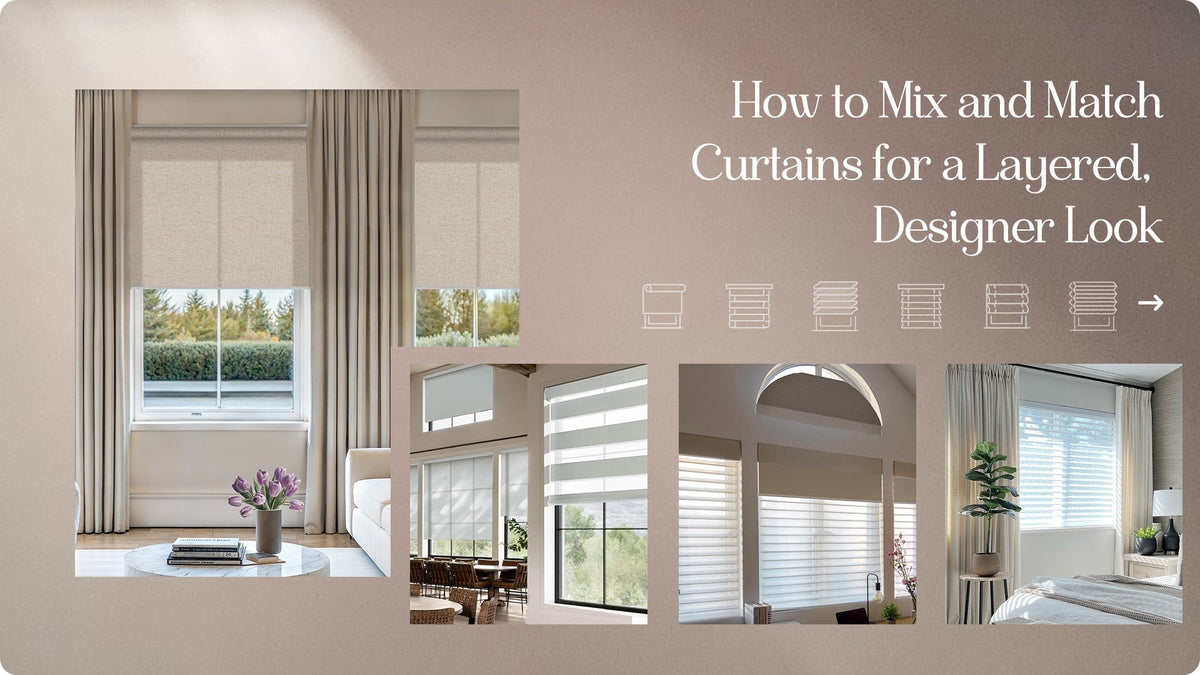
- Shangrila shades: Combine soft sheer panels with adjustable fabric vanes for diffused light and flexible privacy.
Keep this layer simple and neutral so it coordinates easily with the outer treatment.
Step 2: Select the Functional or Decorative Layer
The outer layer establishes the main style and strengthens light control.
- Light-blocking needs: Bedrooms generally need greater coverage, while living rooms can use medium light control.
- Style: Coordinate the fabric color, texture, and pattern with the room.
- Season: A lighter fabric can suit summer, while a heavier curtain creates a warmer winter look.
Step 3: Add Decorative Details
Small details make the arrangement feel finished.
- Tiebacks: Hold curtains open and add a decorative accent.
- Valances: Conceal the top of the track while adding a traditional or decorative finish.
- Decorative rods: Bring another visible design element to the window, even when the curtains are closed.

Common Layering Mistakes and How to Fix Them
Mistake 1: Too Many Layers or Patterns
More than two main layers or competing patterns can make the window look crowded.
Fix: Use two main layers. If one is patterned, keep the other solid.
Mistake 2: Conflicting Materials
Two similar medium-weight fabrics, such as different satin finishes, may look accidental rather than coordinated.
Fix: Create a clear contrast between a light or sheer layer and a heavier opaque layer.
Mistake 3: Poor Hardware Placement
A rod installed directly above the window frame can make the ceiling appear lower and the window look smaller.
Fix: Position the rod closer to the ceiling and extend it 3-6 inches beyond each side of the frame when wall space allows. This helps the open curtains frame the window rather than cover it.
Create a Layered Look with Graywind
Graywind's Custom Curtains collection includes sheer, light-filtering, room-darkening, and blackout options in solid, textured, patterned, and satin fabrics. The range supports a light base layer, a stronger functional layer, or a decorative outer curtain. Neutral shades can blend with the wall, while deeper colors and patterned fabrics can create a focal point.
Graywind Mix-and-Match Combinations
Shangrila Shades and Curtains
Pair Shangrila shades with white or light gray linen-look curtains. The shade softens incoming light, while the curtains add visual weight and additional coverage.
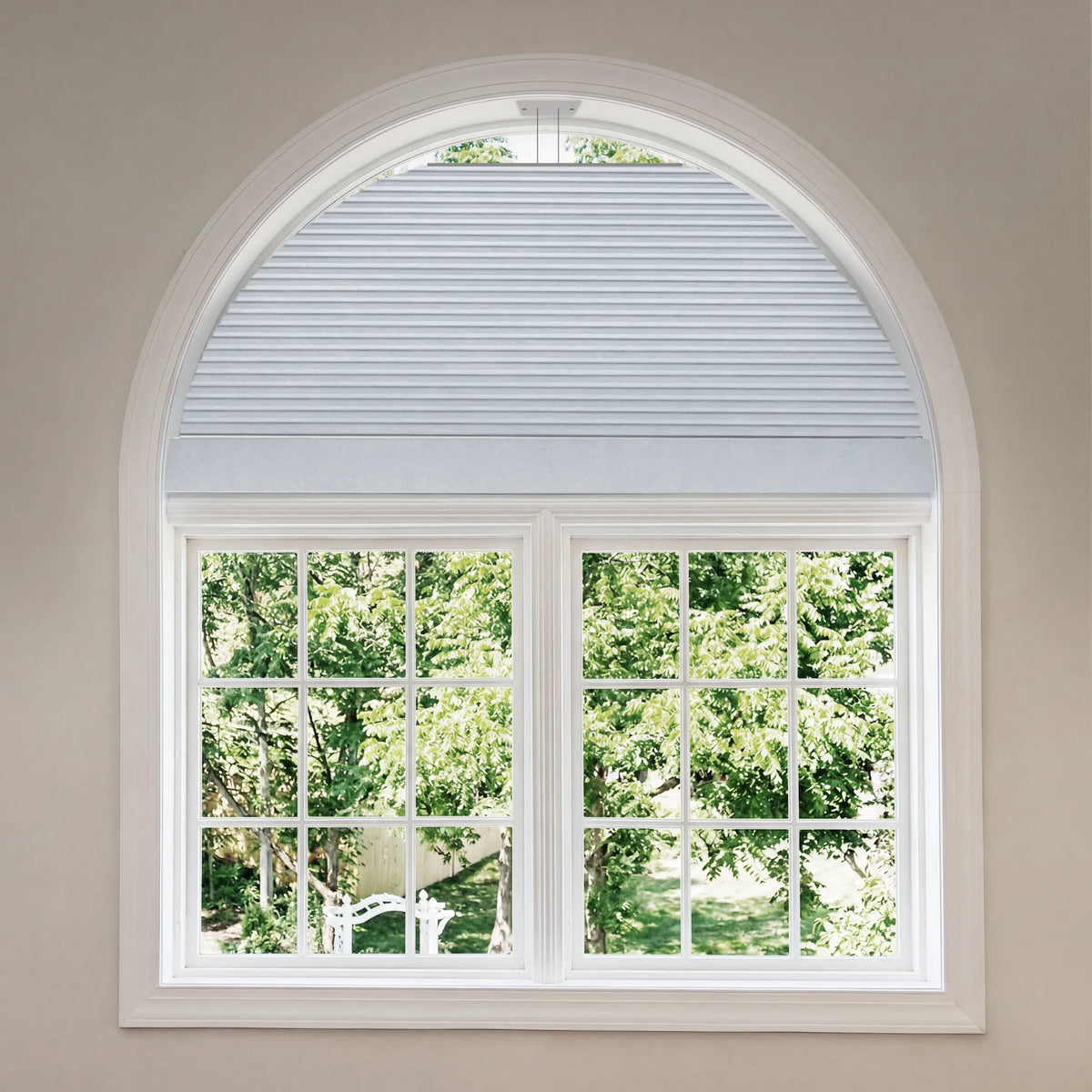
Arch Cellular Shades and Roller Shades
Use custom Motorized Arch Cellular Shades on a specialty-shaped upper window and coordinate them with roller shades on the rectangular windows below. Repeating a related color helps connect the different shapes and keeps the overall window design consistent.
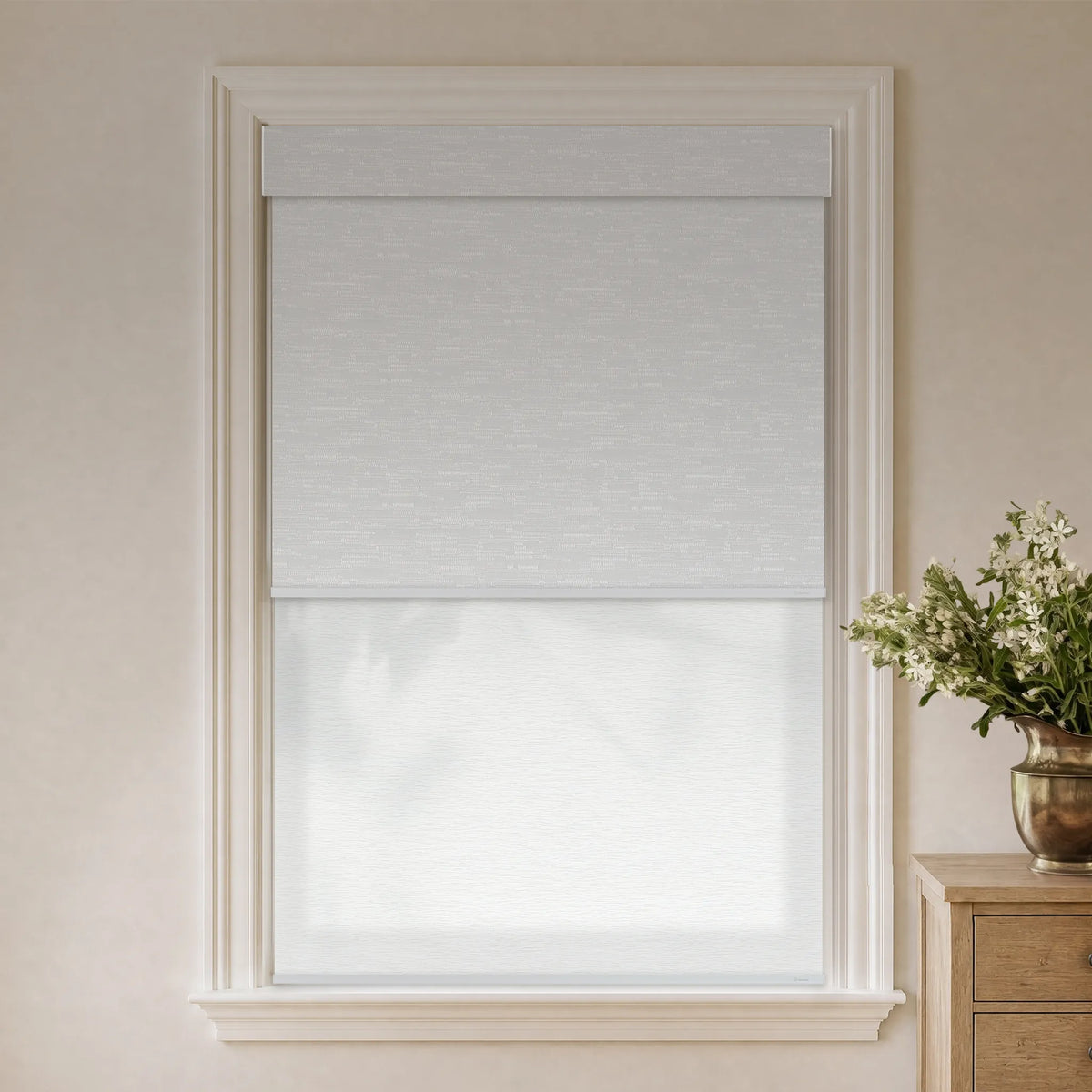
Roman Shades and Designed Curtains
Pair off-white Roman shades with Designed Curtains. The Roman shade provides everyday light control, while the patterned outer curtain adds a more decorative finish.
Custom Sizing for Coordinated Layers
Custom sizing helps each layer work with the window and with the other treatment. It allows you to:
- Size each layer to the window proportions.
- Coordinate colors and materials.
- Adjust curtain length for the intended drape.
- Maintain consistency across multiple windows.
Standard and specialty-shaped windows require different measuring methods. Review the Graywind measuring guides before ordering so the selected layers align properly.

Ready to refine your windows? Explore Graywind Custom Curtains and coordinate them with shades that suit your room.