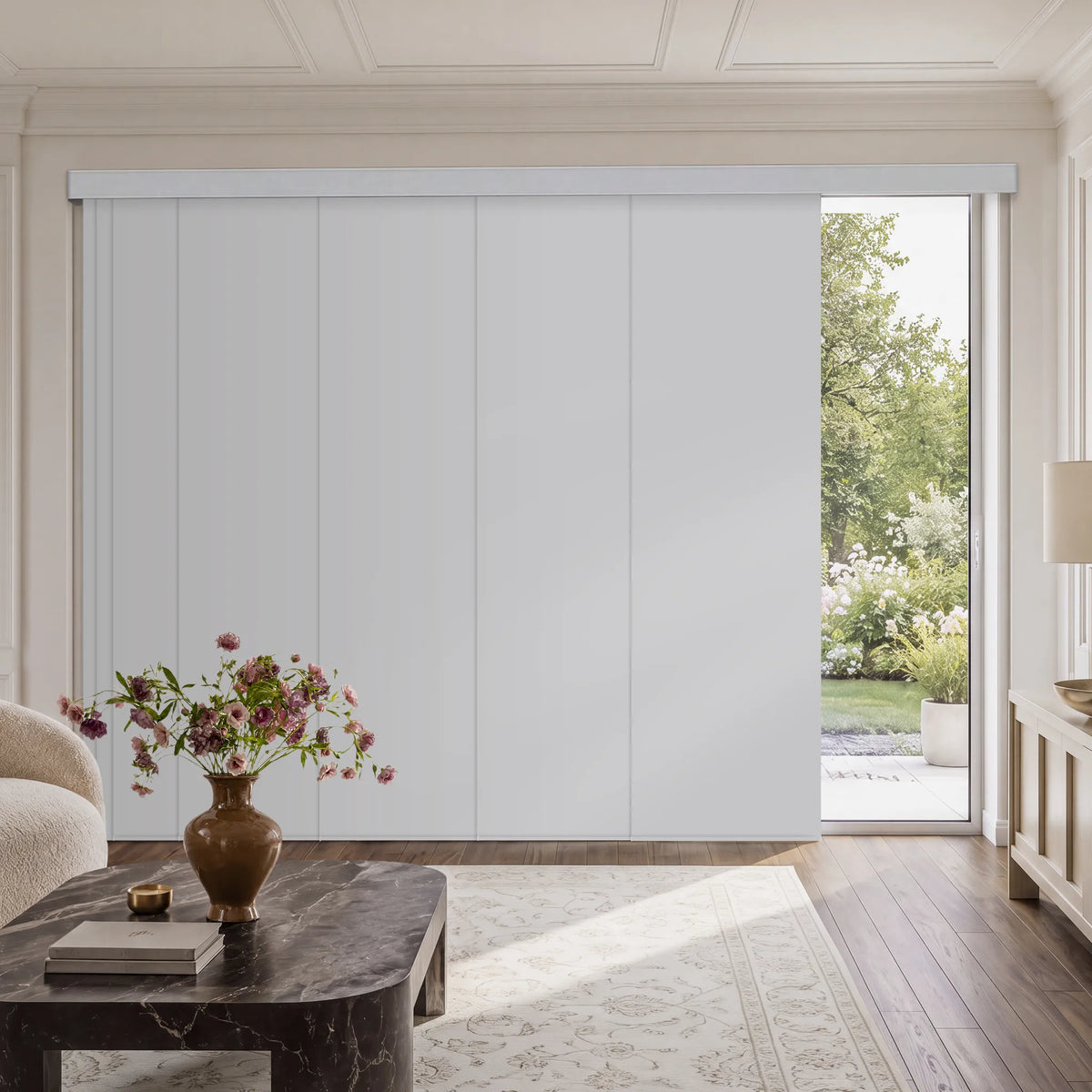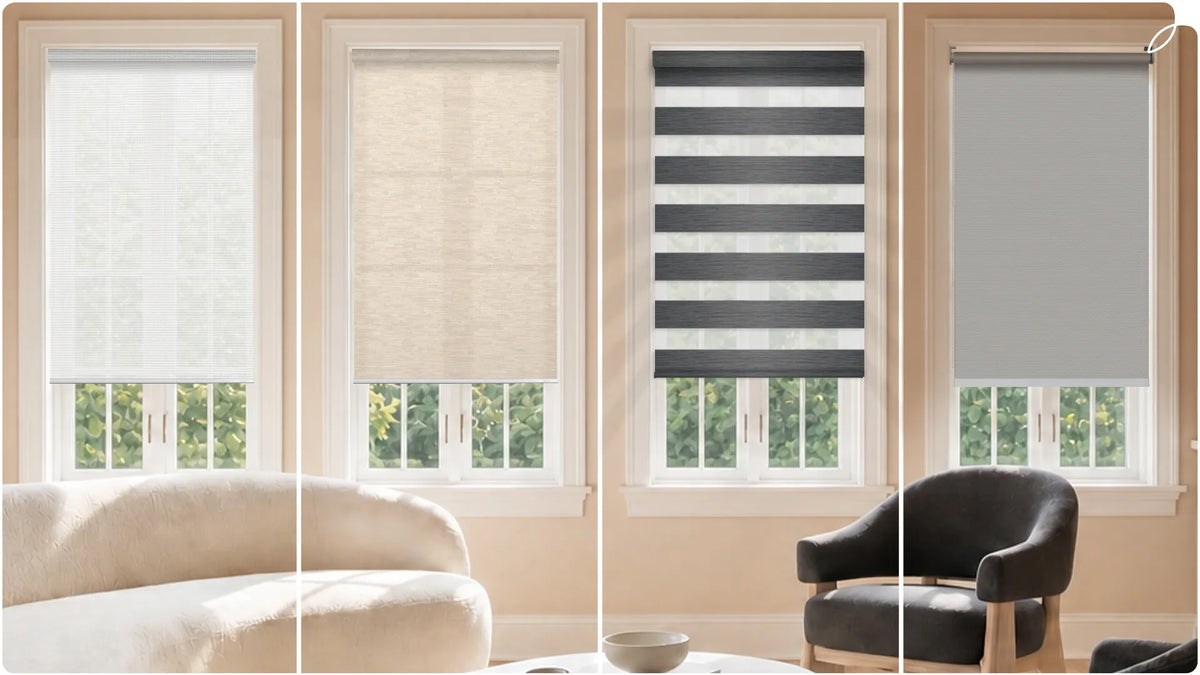
Sheer, light-filtering, room-darkening, and blackout window treatments sit on an opacity spectrum. Sheers admit the most daylight and offer the least privacy. Light-filtering fabrics diffuse sun while hiding many daytime details. Room-darkening materials noticeably dim a space and provide stronger privacy, but they are not designed to make it fully dark. Blackout fabric is opaque; however, light can still appear around an uncovered frame. The right level depends on when you use the room, whether the window faces neighbors, and how much glow or glare you can tolerate.
Sheer vs Light Filtering vs Room Darkening vs Blackout at a Glance
|
Level |
Light |
Daytime Privacy |
Nighttime Privacy |
Best Rooms |
|
Sheer |
Brightest; soft diffusion |
Low to moderate |
Weakest; figures and activity may show |
Living and dining rooms away from close views |
|
Light filtering |
Bright glow; reduced glare |
Moderate to strong |
Moderate; blurred silhouettes may show |
Kitchens, offices, living rooms |
|
Room darkening |
Dim; some glow remains |
Strong |
Strong, but test the fabric and gaps |
Guest rooms, TV rooms, nurseries |
|
Blackout |
No light through the material |
Strongest |
Strongest when coverage is complete |
Bedrooms, nurseries, media rooms |
These are categories, not universal percentages. Two products with the same label may perform differently. Compare a full-size sample at the actual window in daylight and after dark.
What Creates Each Light-Control Level?
Opacity starts with how much open space exists between yarns. A loose weave transmits more light and view; a dense weave transmits less. Fiber thickness, fabric color, and the number of layers also change the result. Manufacturers may add a colored middle yarn, foam coating, bonded backing, or separate liner to increase opacity.
Construction matters too. A cellular shade encloses air pockets; a Roman shade overlaps fabric in folds; a curtain places extra material at pleats; and a blind leaves joints between slats. Judge the finished treatment, not an unlined swatch or a category name alone.
How the Four Opacity Levels Work
Sheer: Maximum Daylight, Minimum Screening
Sheer fabric uses fine yarns with visible openings. It softens hard sunlight and can blur an outside view during the day, especially when outdoors is brighter than indoors. It does not reliably hide a room.
After sunset, the brightness relationship reverses. With interior lights on, a person outside may see silhouettes, movement, and sometimes recognizable activity. Use sheers alone where nighttime privacy is unimportant, or add an opaque second layer for bedrooms, bathrooms, and street-facing windows.

Light Filtering: Brightness With More Separation
Light-filtering fabric is more closed than a sheer but still translucent. It spreads daylight across the room, lowers sharp contrast, and obscures interior detail during the day. The effect can range from an airy glow to a fairly dense privacy screen.
Can you see through light-filtering shades at night? Usually not as a clear scene, but a lit room may project soft shadows or outlines through some fabrics. That is adequate for many living spaces, yet not a safe assumption for a bathroom or a ground-floor bedroom. Test the chosen color and weave from outdoors after dark.

Room Darkening: A Dim Room, Not a Black Room
Room-darkening treatments use a tighter, heavier, or multilayer material. They suppress more ambient light and glare than light-filtering options, making screens easier to view without committing the room to darkness. They normally obscure direct views in both directions, although strong backlighting can reveal faint shapes in some products.
The term is not a promise of a fixed transmission rate. If daytime sleep or projection quality depends on darkness, request performance details and examine edge coverage before treating room darkening as equivalent to blackout.

Blackout: Opaque Material, Installation-Dependent Darkness
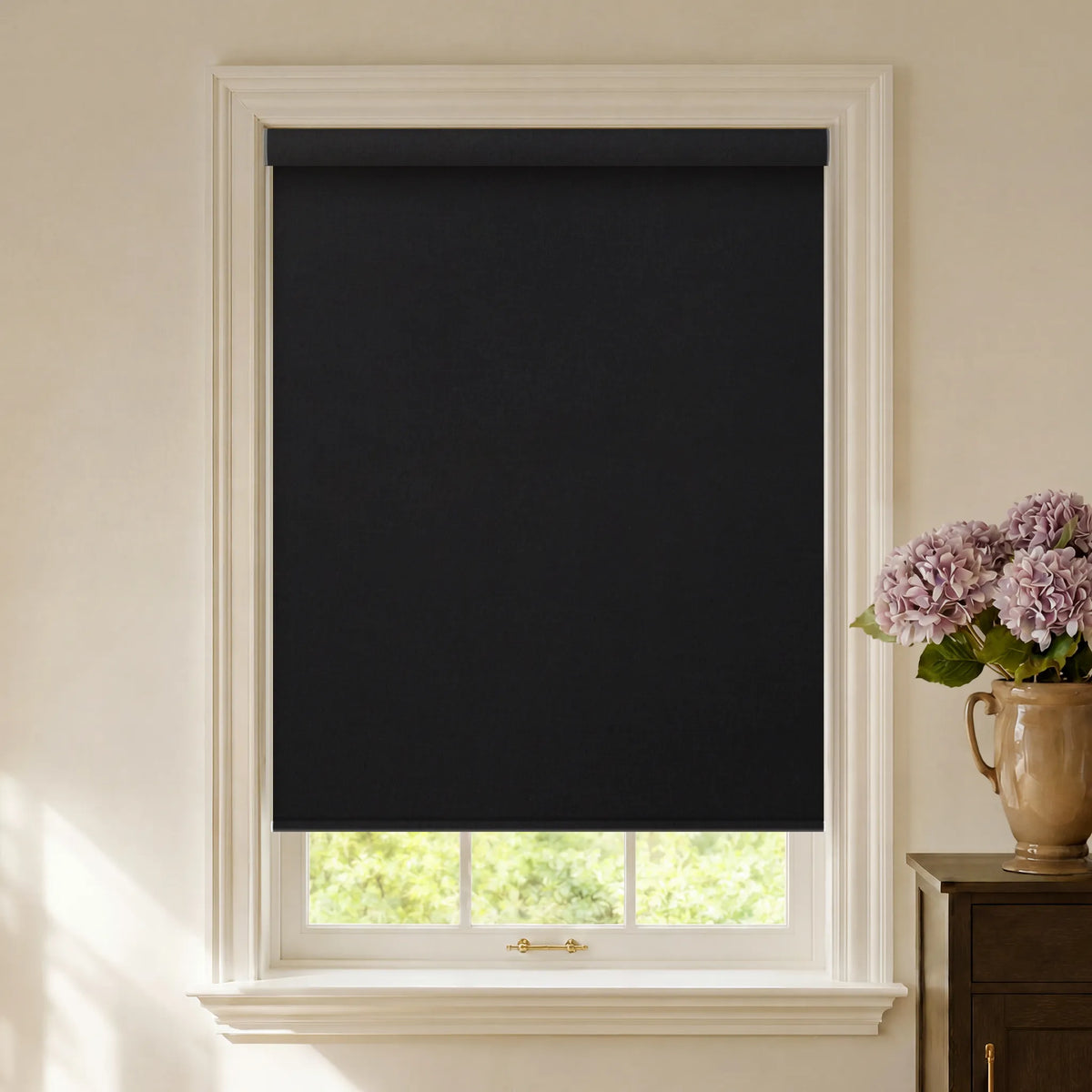
Blackout fabric uses an opaque weave, coating, backing, or liner so light and views do not pass through the material. This provides the strongest privacy, including when lights are on at night, and suits sleep or media spaces.
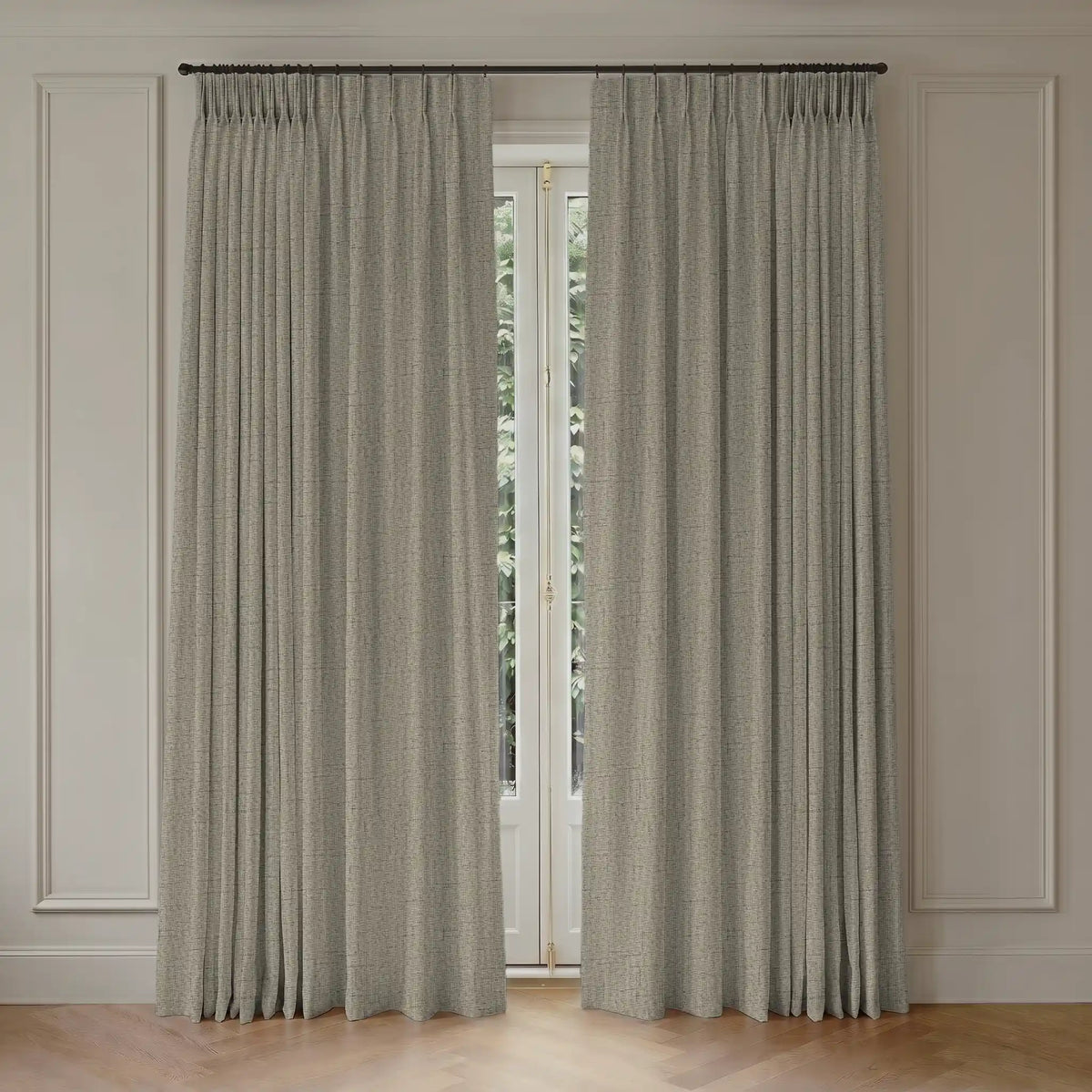
Blackout material does not automatically create a pitch-black room. Roller shades need clearance beside the fabric, curtain panels may separate at the center, and light can escape above or below the treatment. An outside mount with generous overlap, a wraparound rod, side channels, or layered coverage can reduce those leaks.

Other Factors That Change Light and Privacy
- Brightness contrast: People see toward the brighter side. Daytime privacy can disappear after indoor lights come on.
- Mount and overlap: An outside-mounted shade can cover more frame than an inside mount. Curtains need enough width, center overlap, and wall return.
- Color: Dark fabric often appears more private when backlit, while pale translucent fabric produces a brighter glow. Construction still matters more than color alone.
- Window direction: East and west windows receive low-angle sun; south-facing rooms may need stronger glare control. Streetlights can affect bedrooms all night.
- Viewing distance and angle: A fabric that hides details from the sidewalk may reveal more to someone standing near the glass.
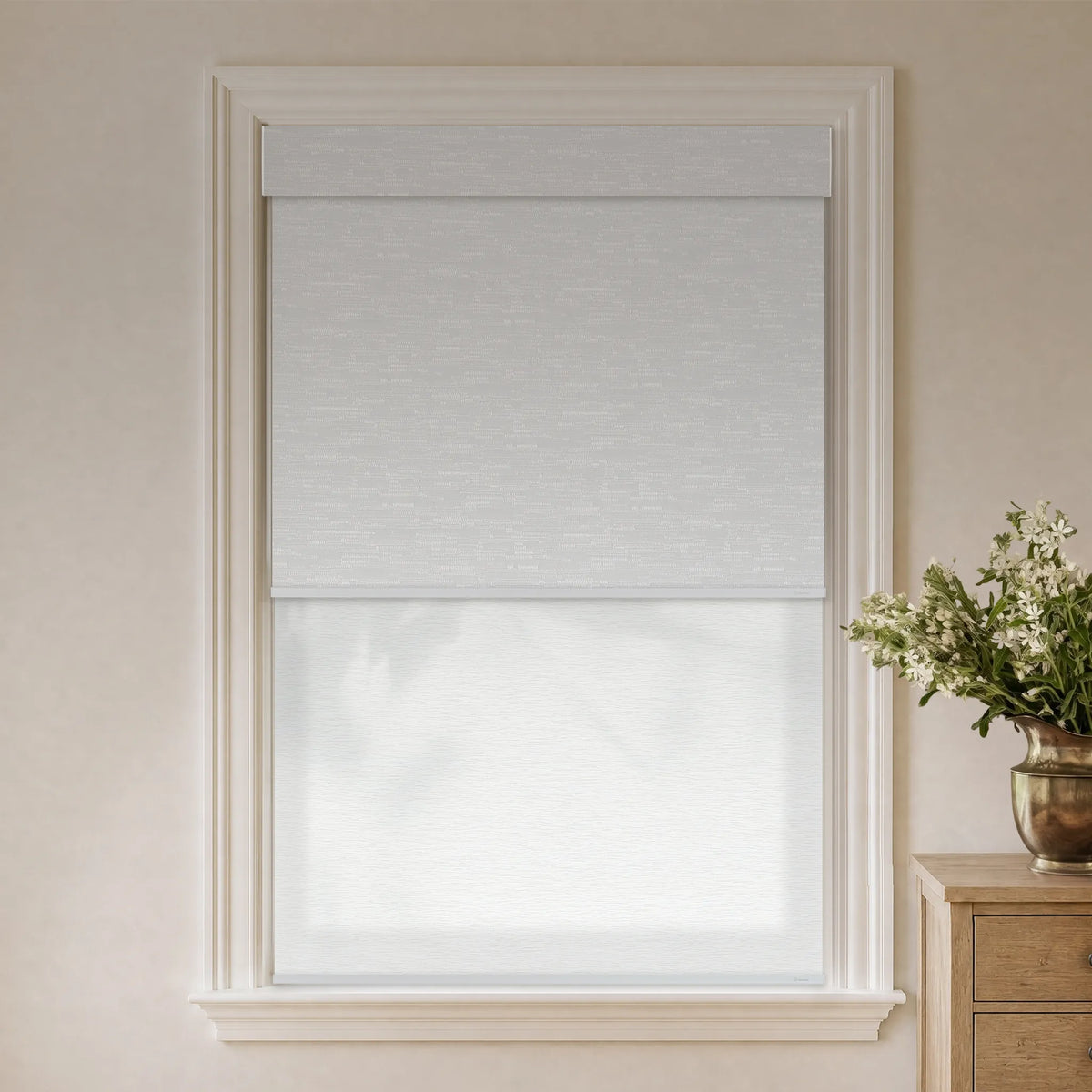
- Adjustable designs: Tilting vanes, top-down bottom-up shades, and dual layers can change privacy without choosing one fixed level all day.
How to Choose the Right Opacity by Room
Start with the room's most demanding moment, not its brightest photograph.
- Map the view. Note sidewalks, neighboring windows, ground-floor sightlines, and interior lights near the glass.
- Name the task. Choose sheer for softness, light filtering for usable daylight, room darkening for glare reduction, or blackout for sleep and projection.
- Match the room. Living rooms, kitchens, and offices often benefit from light filtering. Guest rooms and TV rooms can use room darkening. Bedrooms, nurseries, and media rooms commonly need blackout. Bathrooms need opaque coverage or a layered design, regardless of style.
- Plan two modes when needs conflict. Pair a sheer or light-filtering layer with an opaque shade or curtain for daylight first and privacy later.
- Test before ordering. Hold a sample against the window, switch on interior lights at night, and inspect it from the real approach path.
Graywind Options for Different Opacity Needs
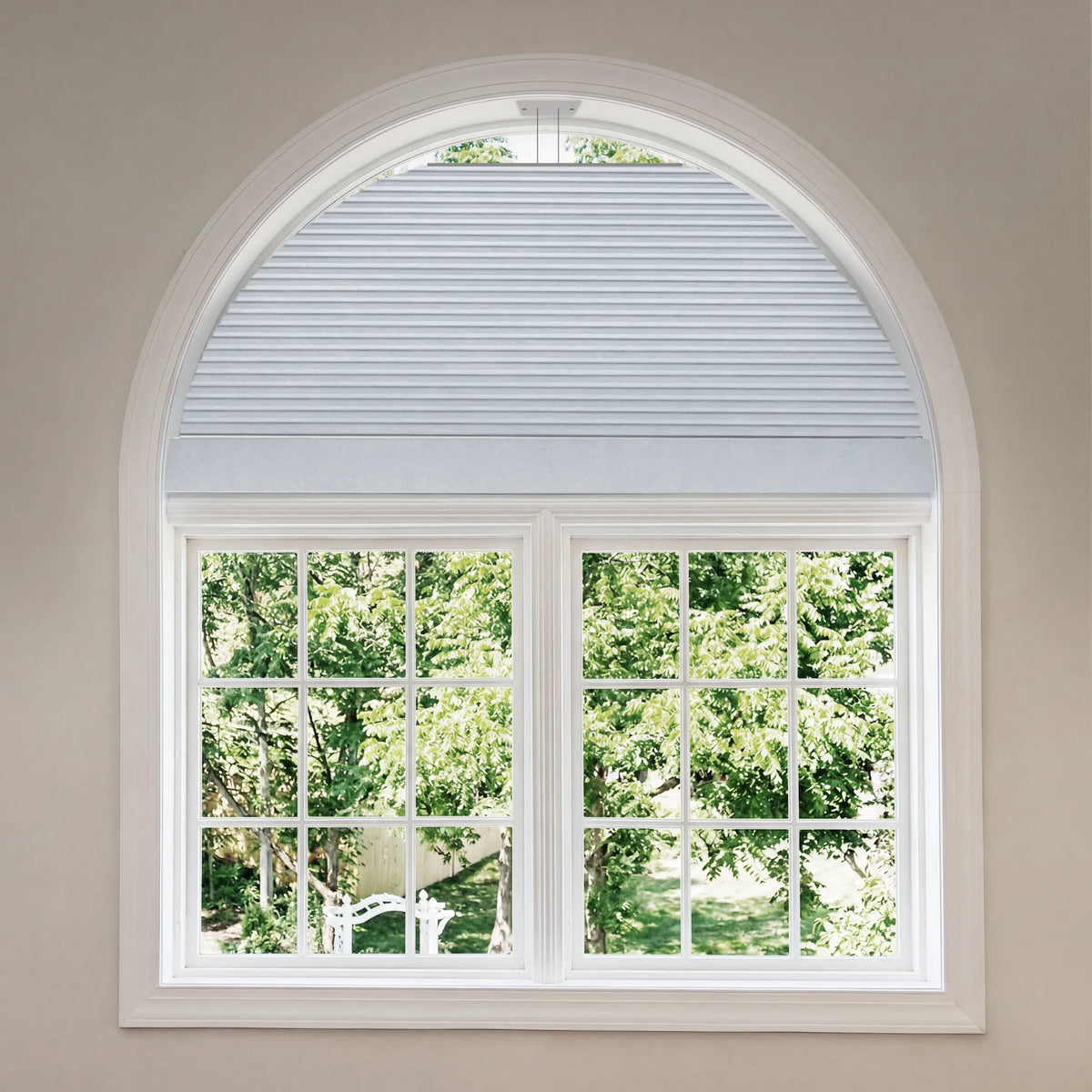
Once the required level is clear, Graywind offers several custom, motorized routes. The Curtains currently includes sheer or light-filtering, room-darkening, and blackout fabrics in track and rod configurations. For a streamlined window fit, compare light-filtering shades with blackout shades.
Rooms that change function can use Day Night Cellular Shades, which combine light-filtering and blackout sections in one treatment. Selected Graywind systems can be operated by remote, app, schedule, or a compatible voice platform; available controls vary by product. Confirm the fabric, mount, dimensions, power option, and ecosystem before ordering, and evaluate swatches in the room where they will be used.
Choose for the hardest requirement: view, glare, evening privacy, or darkness. If one fabric cannot handle both bright days and private nights, layering is usually more useful than forcing a compromise. The label narrows the search; a sample and a coverage plan confirm the result.