

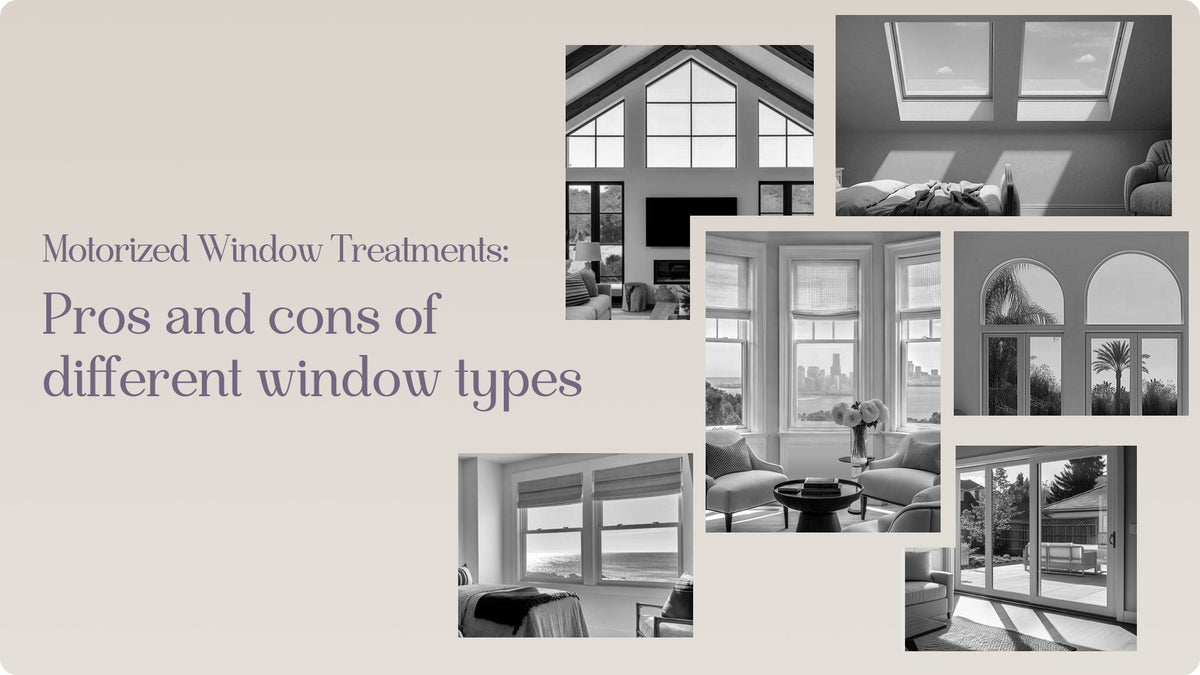
Motorized window treatments can work with many window types, but the right product depends on the opening's shape, size, orientation, access, and mounting space. In this blog, we'll break down the pros and cons of automating different window types, helping you make an informed decision for your home.
Understanding Motorized Window Treatments
What Are Motorized Window Treatments?
Motorized window treatments are automated shades, blinds, or curtains operated via remote control, smartphone app, or voice command. They offer a seamless way to control natural light, enhance privacy, and improve energy efficiency. But what makes them truly versatile is their adaptability to various window types, from standard double-hung windows to custom-shaped designs.
Why Choose Motorized Treatments?
- Convenience: Adjust your shades with the touch of a button.
- Energy Savings: Program treatments to open or close based on sunlight, reducing heating and cooling costs.
- Safety: Eliminate cords, making them ideal for homes with children or pets.
- Aesthetics: Achieve a sleek, modern look with minimal effort.
Now, let's dive into how motorized treatments work with different window types.


Finding the Right Treatment for Each Window Type
Standard Double-Hung or Casement Windows
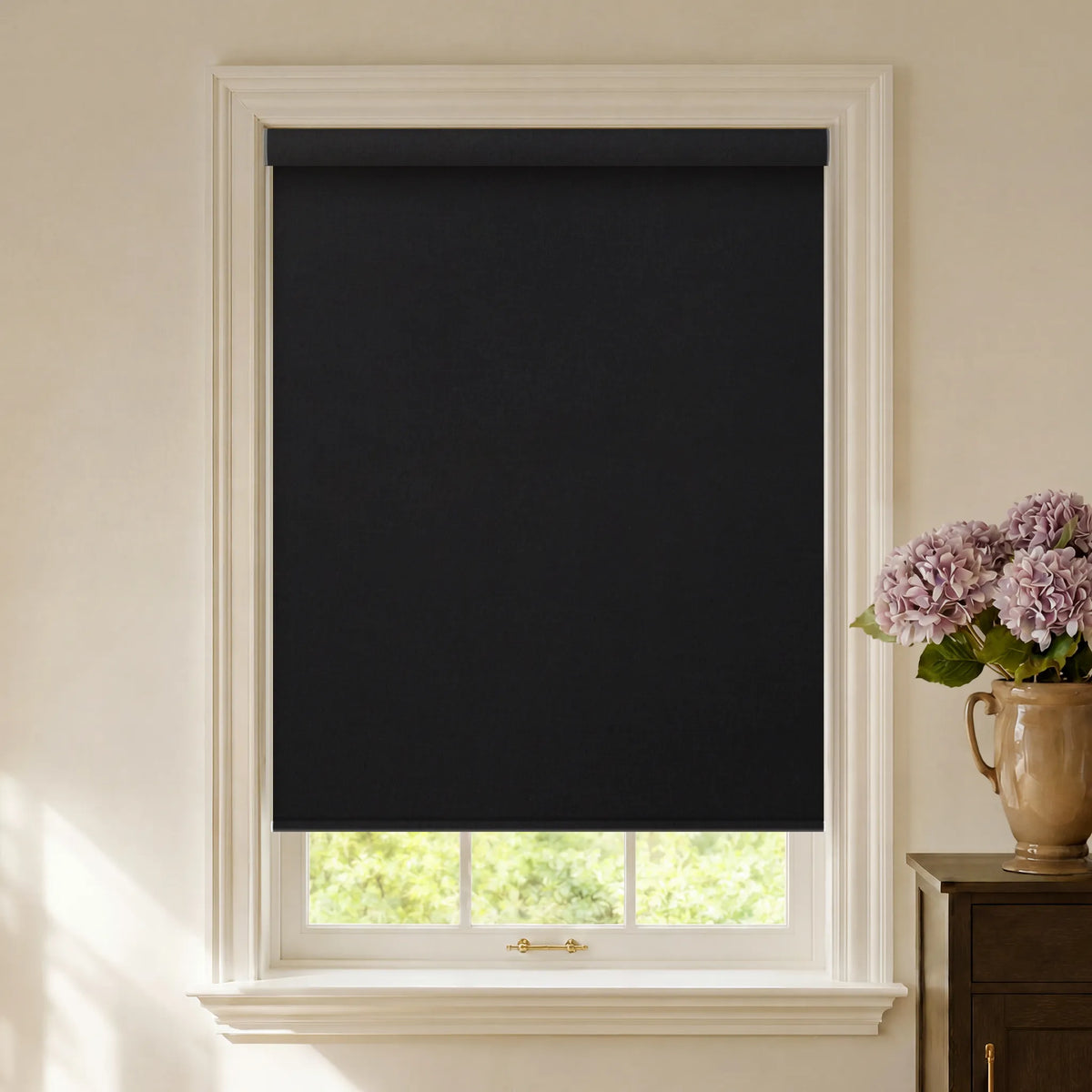
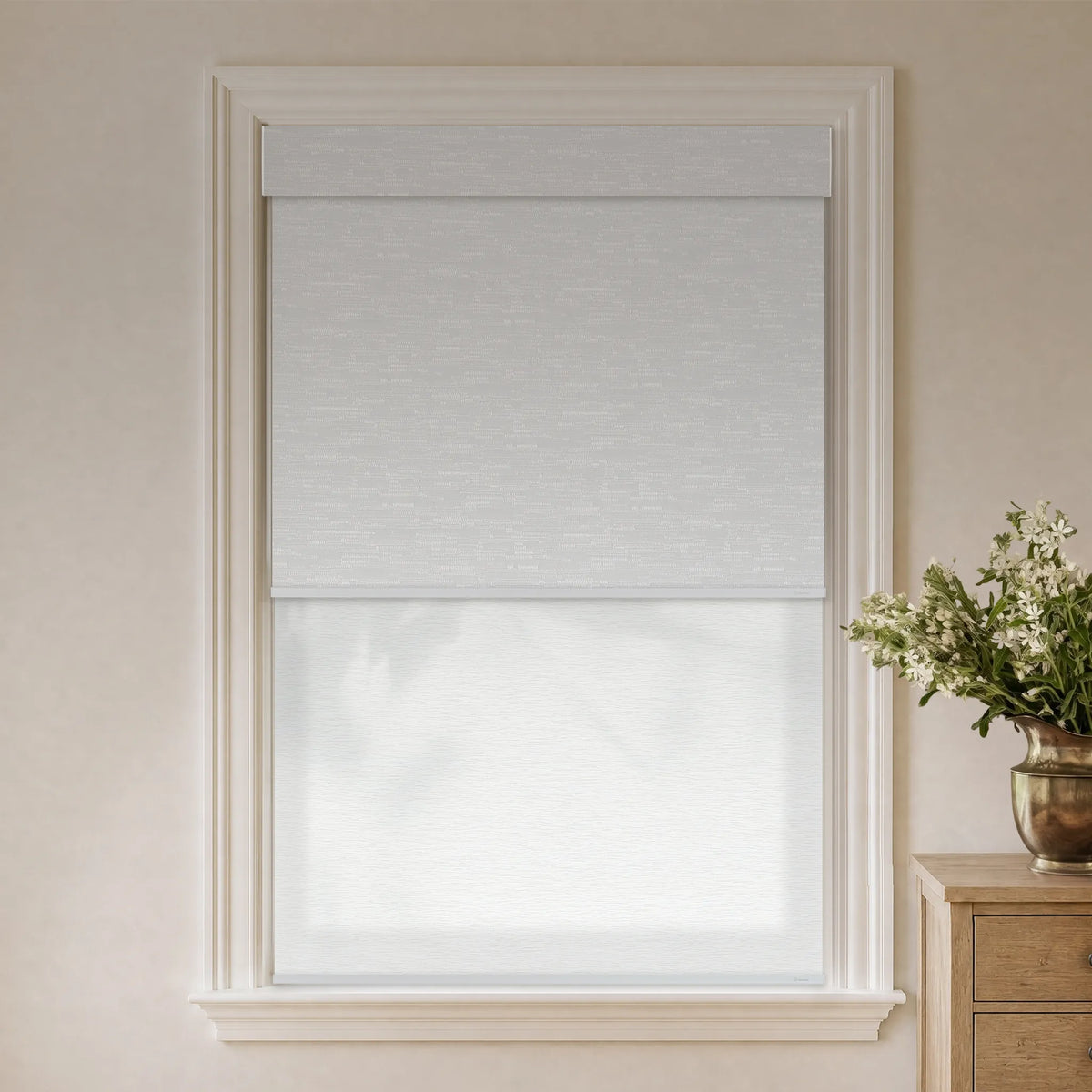
Rectangular double-hung windows are generally the simplest to motorize. Motorized roller shades provide a compact profile, while motorized curtains suit wider openings or layered designs.
The main advantage is straightforward measuring and installation. The main limitation is clearance. Casement handles, locks, screens, and inward-opening sashes can interfere with an inside-mounted treatment. Large windows may also require separate units. If two treatments must move together, confirm that the selected motors support grouping or synchronized control.
Bay and Octagonal Windows
Bay windows are usually covered with one treatment per pane. This approach follows the window's angles and lets compatible motors operate separately or as a group. It also avoids forcing one straight headrail across a multi-sided opening.
The disadvantages are tighter mounting areas and more measurements. Adjacent brackets, motor heads, and bottom rails need enough clearance at each corner. Octagonal windows may require a specialty solution rather than a standard rectangular shade. Measure every section independently and confirm whether the shape can accept the selected mounting method.
Skylights and Sloped Windows
Motorization is especially practical for skylights because it removes the need to reach an overhead window manually. Graywind's motorized skylight shades use side rails to guide the fabric and help it remain supported on sloped or horizontal installations.
These systems require more planning than ordinary shades. The opening must meet the product's size and depth limits, and the rails need suitable mounting surfaces. The current Graywind skylight shades uses a rechargeable motor, with an optional solar panel for supplemental charging. Charging access, sunlight at the panel, and the compatible control setup should be checked before purchase.
Large Sliding Doors and Floor-to-Ceiling Windows
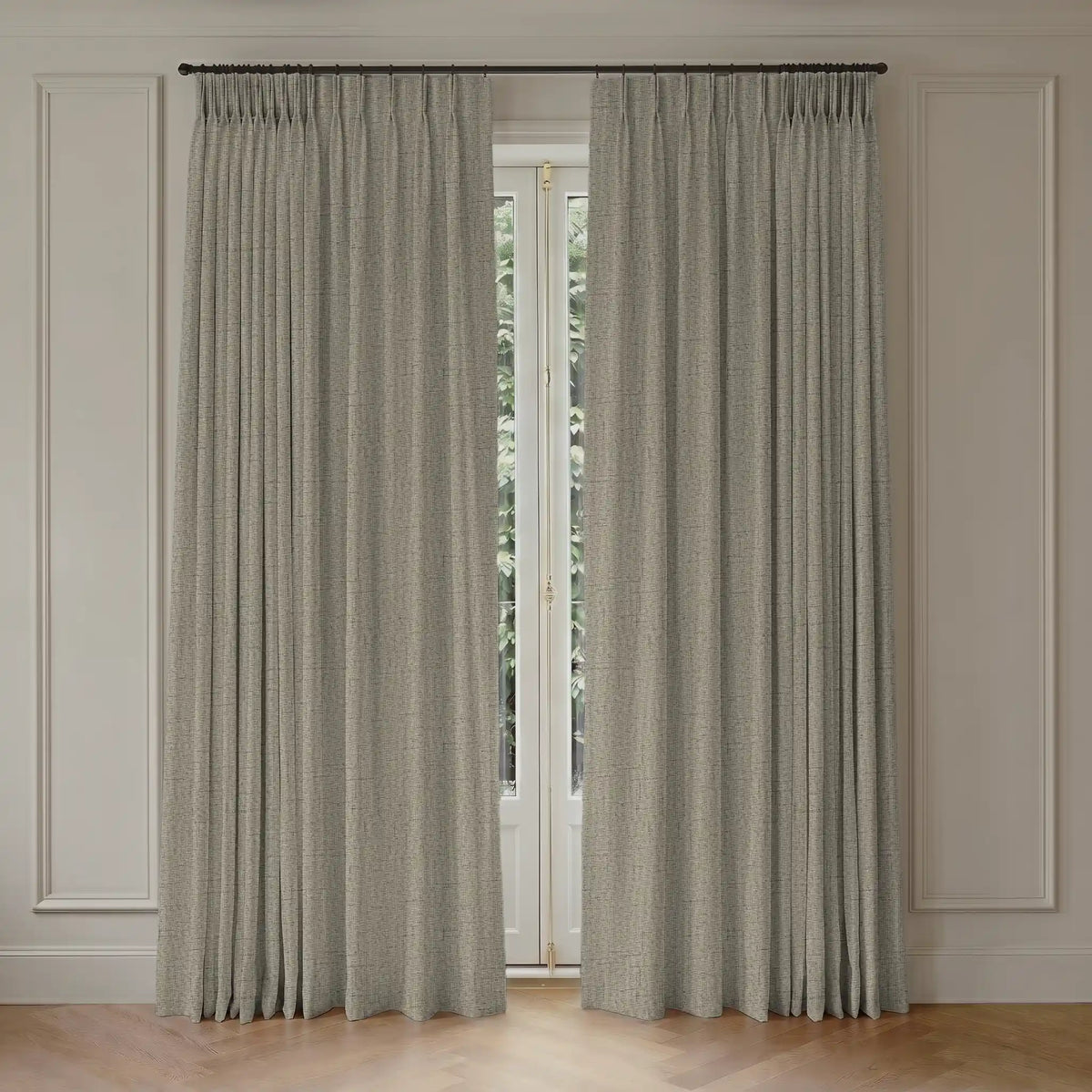
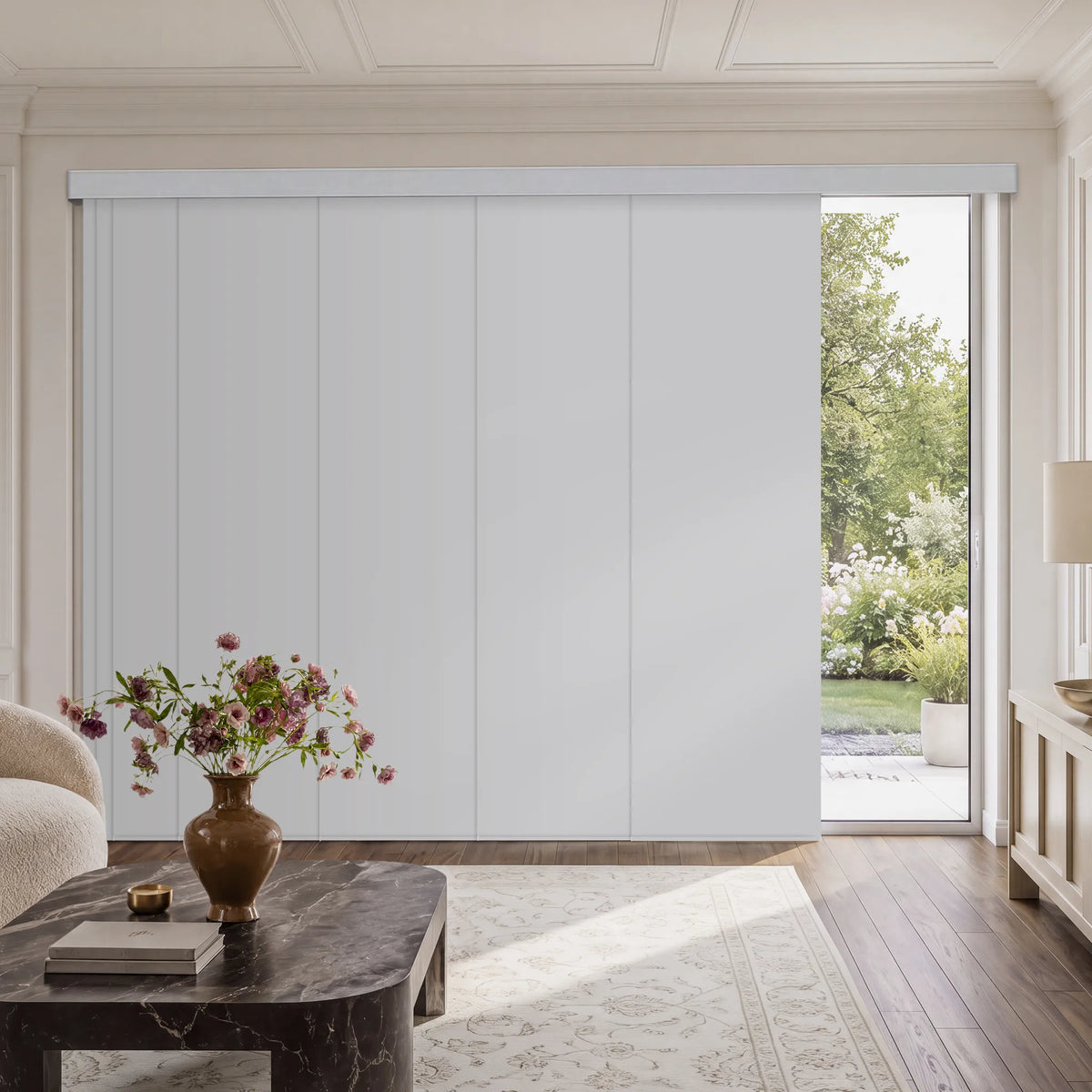
Wide glass openings benefit from motorization because large coverings can be difficult to move evenly by hand. Motorized panel track blinds, vertical blinds, sheer vertical blinds, and curtains can move sideways and leave a passage open when configured correctly.
The key limitations are width, weight, stack space, and traffic flow. The treatment must clear the active door panel, and its stacking direction may be fixed when manufactured. Power requirements also vary by product. Confirm the maximum size, opening direction, track location, and available power source before selecting a system.
Arched, Circular, and Triangular Windows
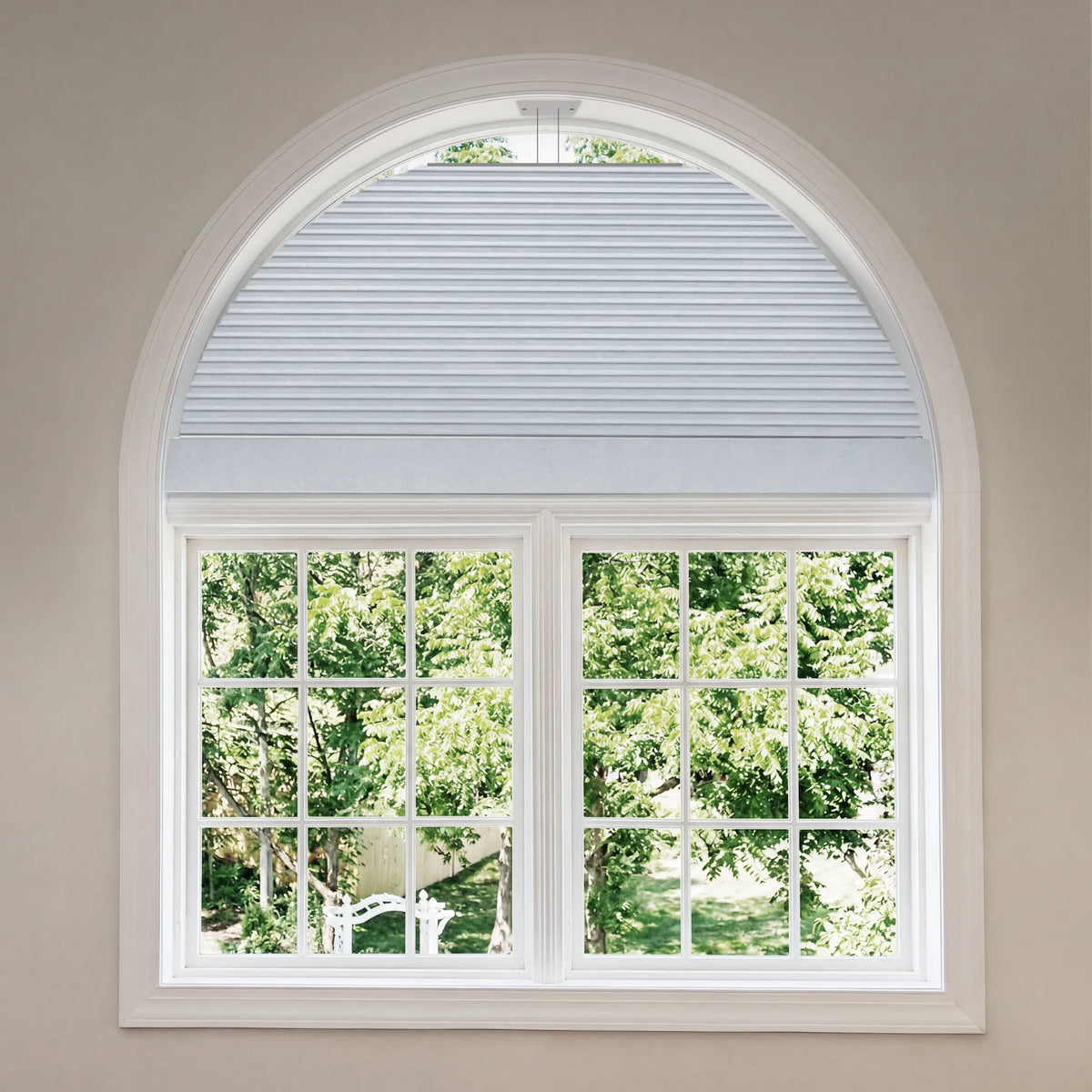
Motorized specialty shades can make high architectural windows easier to use while preserving their shape. Graywind offers custom arch and angled shades for selected window profiles, including specific arch and angled configurations.
Customization is the principal benefit and the main limitation. These products depend on precise dimensions and supported geometry, and they may not open in the same way as a rectangular shade. Not every circular, triangular, or irregular opening is compatible with every design. Confirm the exact shape, operating direction, size range, fabric, and motor option before ordering.


Choosing the Right Motorized Window Treatments
Match the treatment to five factors: window shape, dimensions and mounting depth, opening direction, required light and privacy level, and the preferred power and control system. Standard windows usually offer the widest product choice. Bay windows need coordinated individual units. Skylights need guided overhead systems. Sliding doors need horizontal movement and sufficient stack space. Specialty windows require an approved custom shape.
Use the Graywind Measuring Guide, then verify the current product specifications and smart-control requirements. The best result comes from choosing a system designed for the window rather than adapting a standard treatment to an unsuitable opening.

Explore Graywind's current motorized collections and choose the solution that matches your window type, measurements, and control preferences.


1 comment
Great!