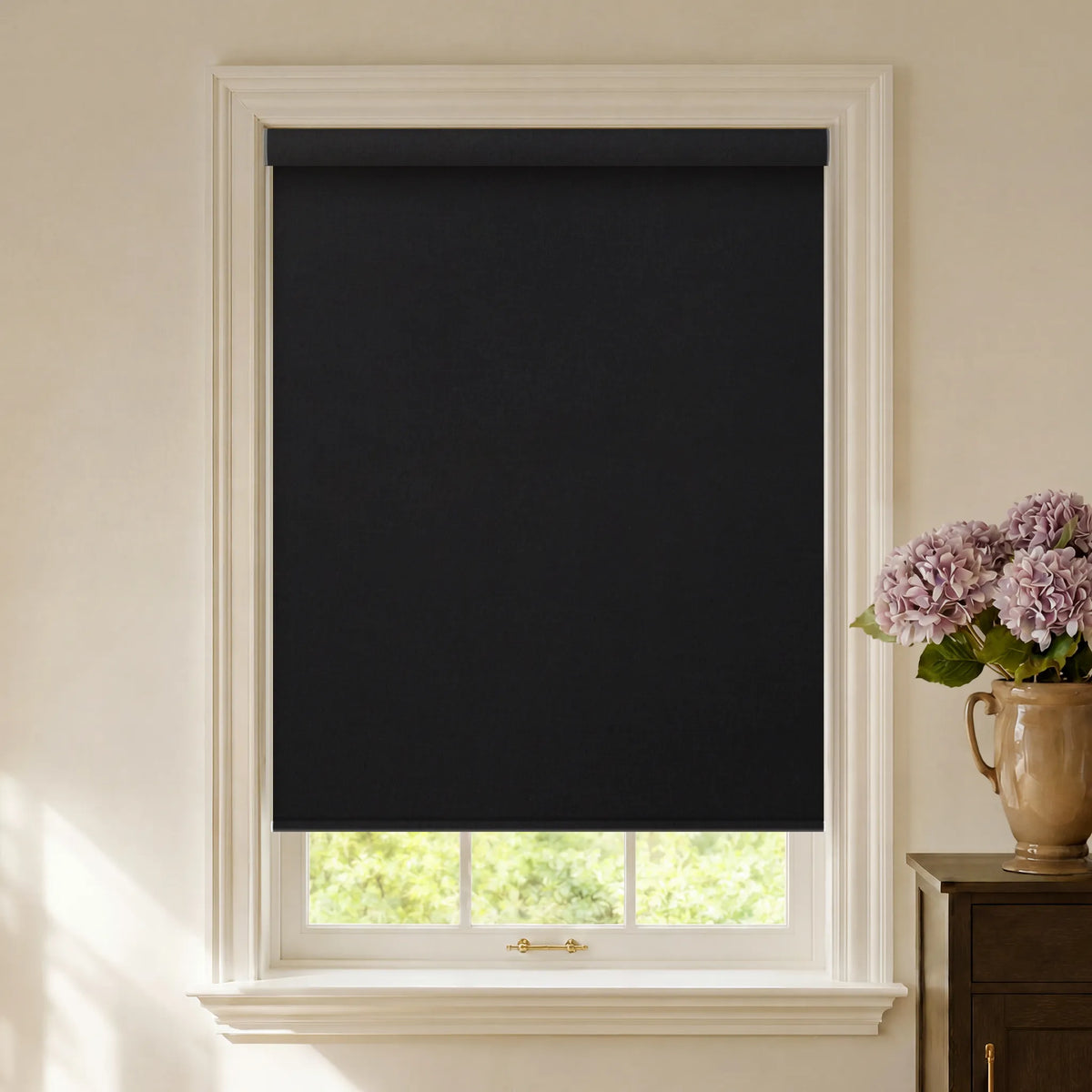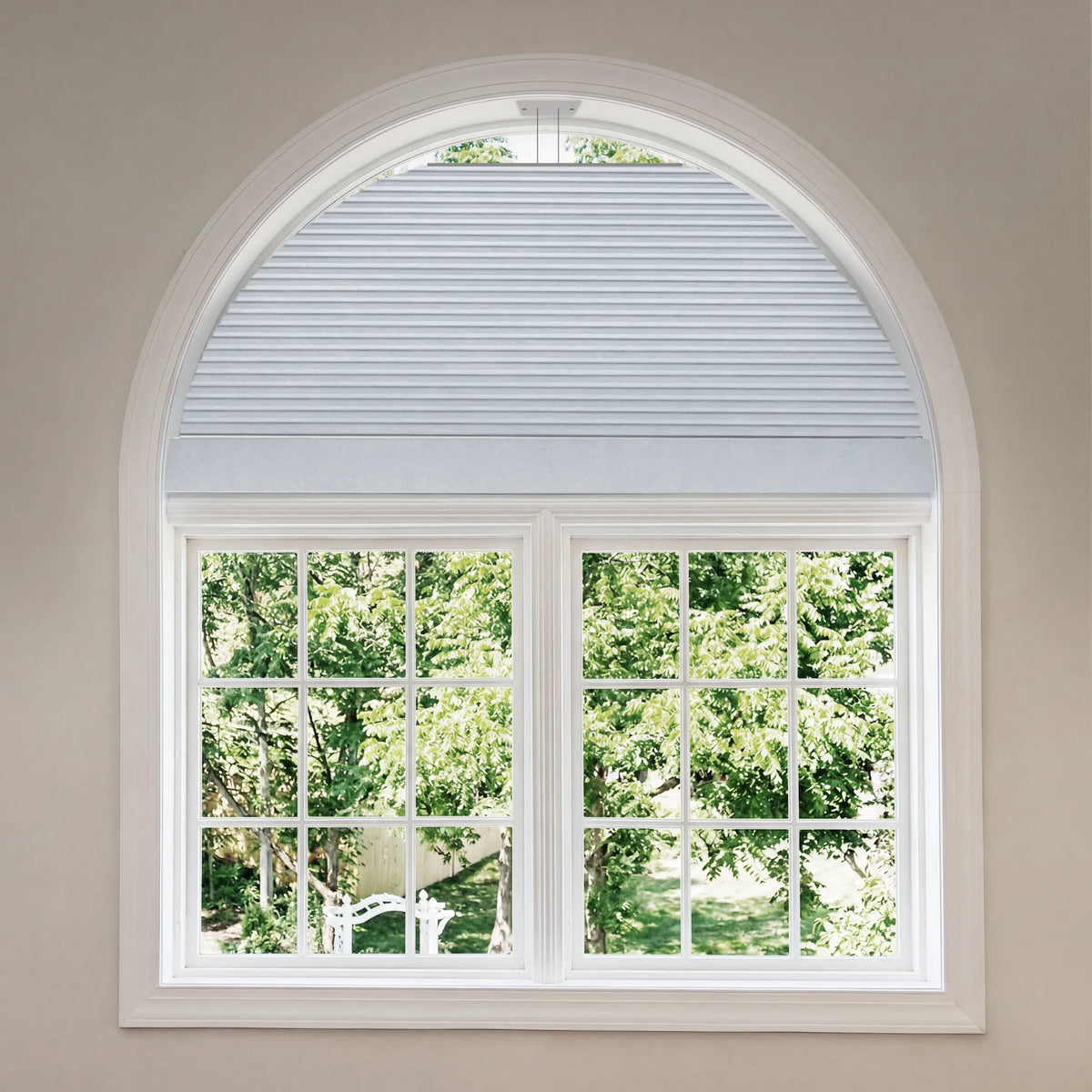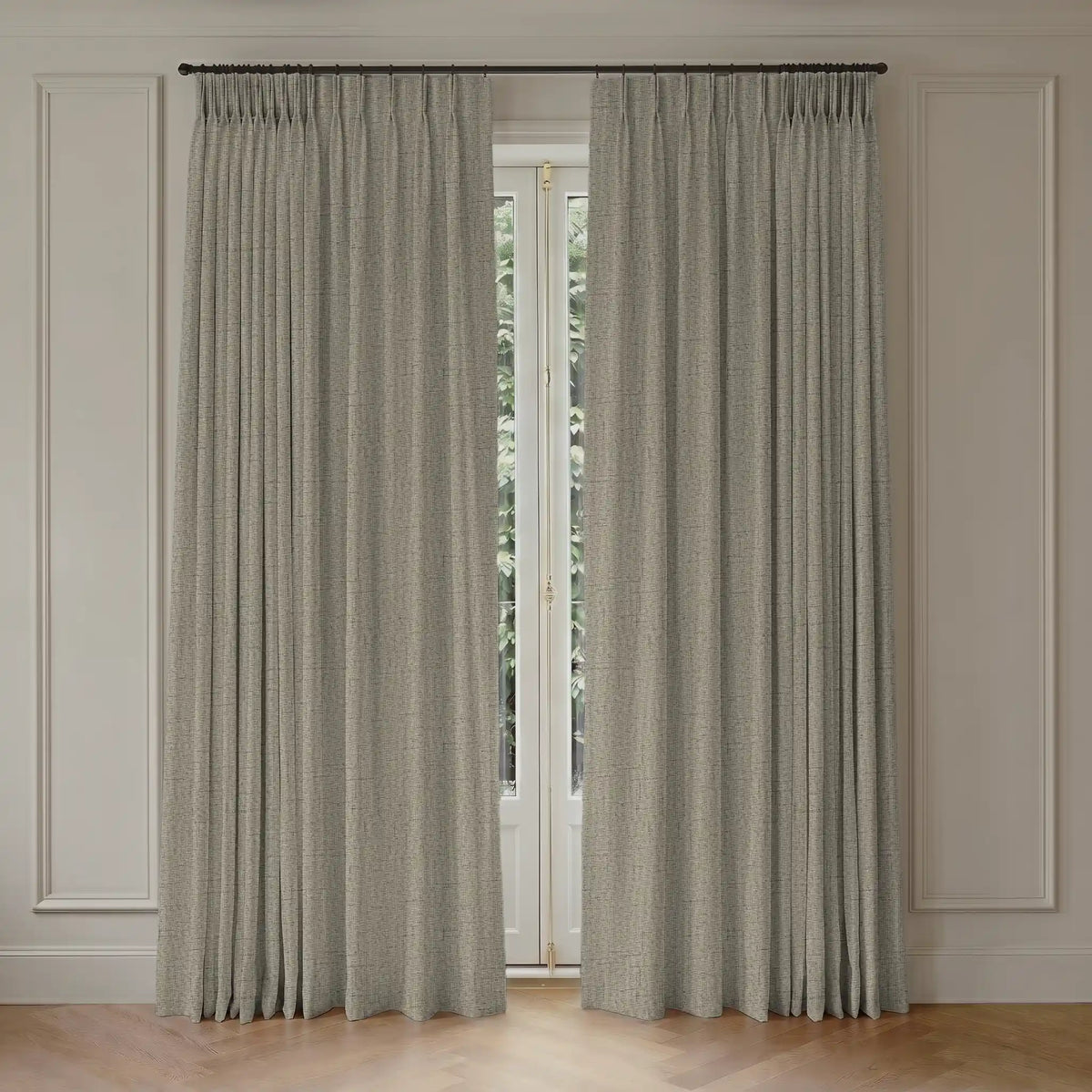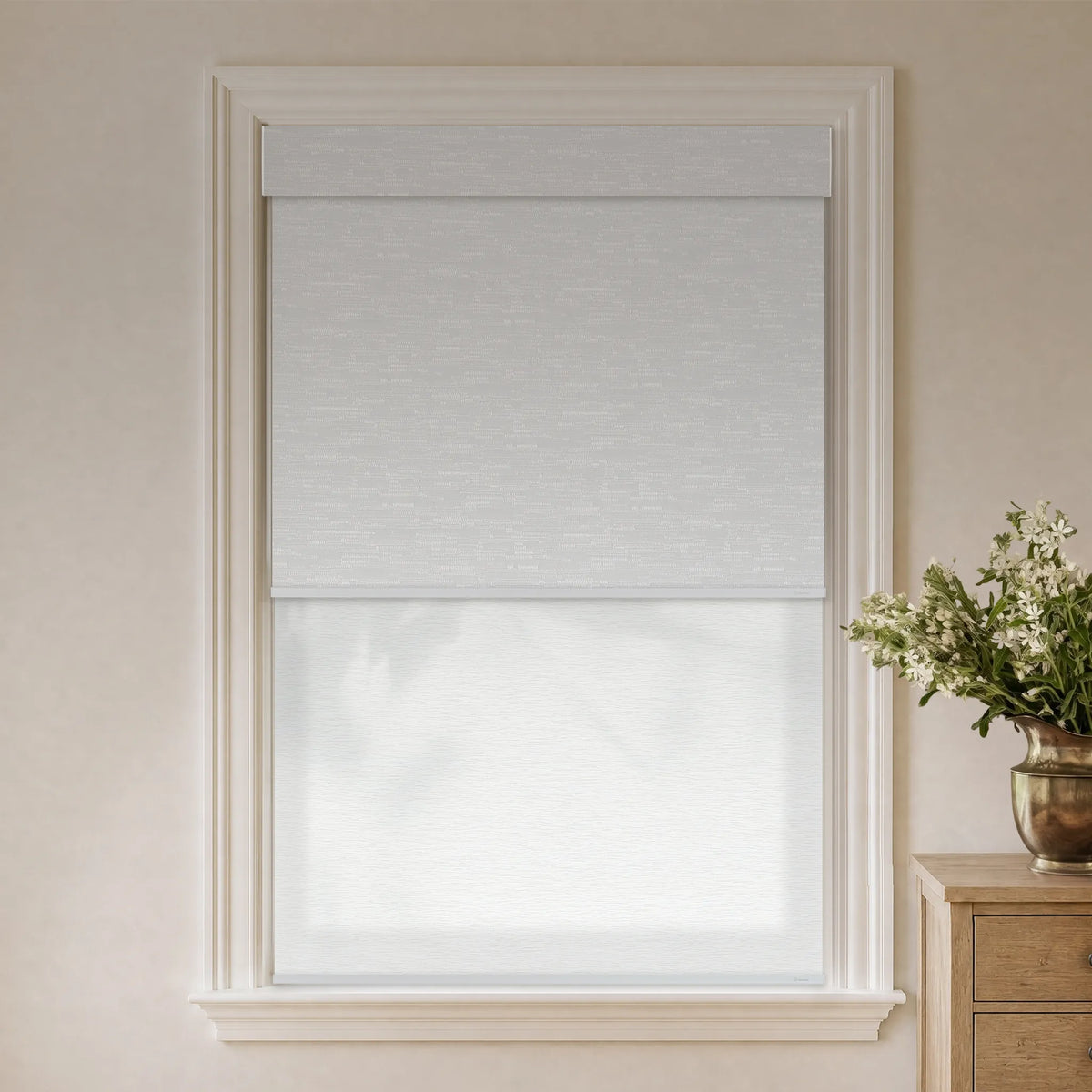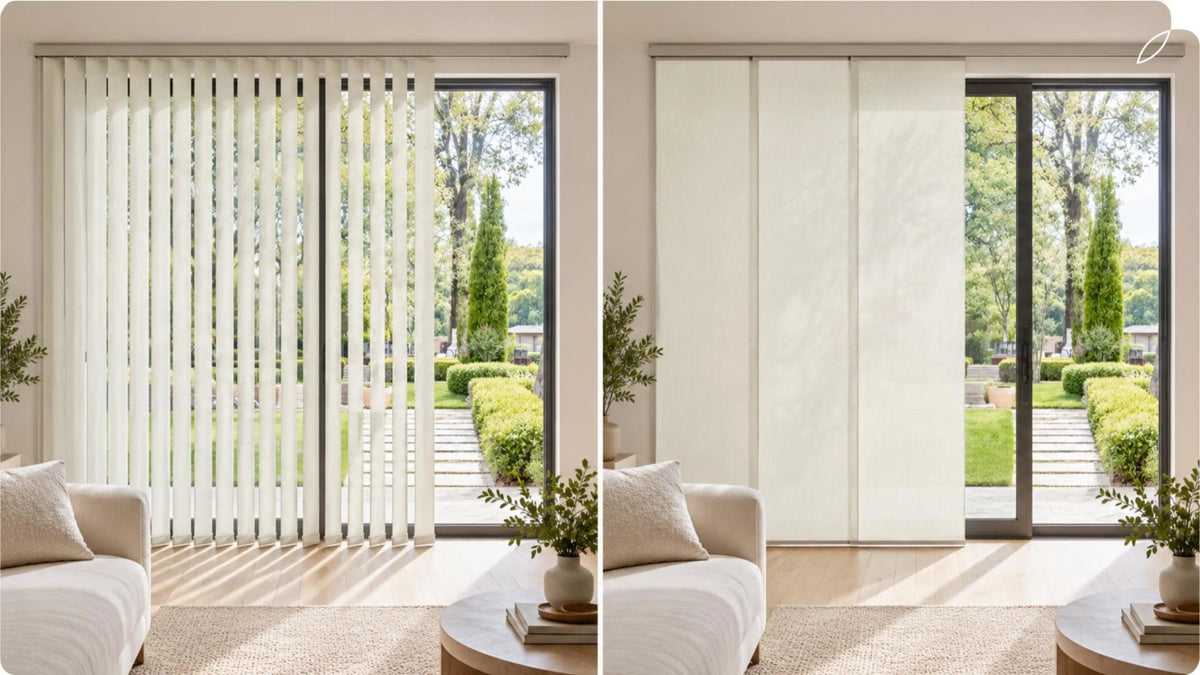
Sliding blinds and vertical blinds both cover wide windows and sliding glass doors, but they solve the job differently. Vertical blinds use narrow rotating vanes, making them useful when adjustable light control and a lower initial cost matter most. Panel track blinds use broad fabric panels that slide sideways, creating a quieter, more architectural look with fewer moving pieces at eye level. The better choice depends on how the opening is used, how precisely you want to direct light, and how much maintenance you are willing to manage.
What Are Vertical Blinds?
Vertical blinds consist of individual vanes suspended from carriers inside a headrail. A control tilts the vanes to change the angle of incoming light, while a separate draw action moves them to one or both sides of the opening.
Their main advantage is directional control. You can rotate the vanes to reduce glare or screen a view without fully closing the blind. Because the vanes are narrow and commonly produced in vinyl, fabric, or composite materials, damaged pieces may also be replaced individually when matching parts remain available.
Vertical blinds are often used on patio doors, rental properties, offices, and large windows where straightforward coverage and flexible light adjustment take priority over a continuous fabric appearance.
What Are Sliding Blinds?
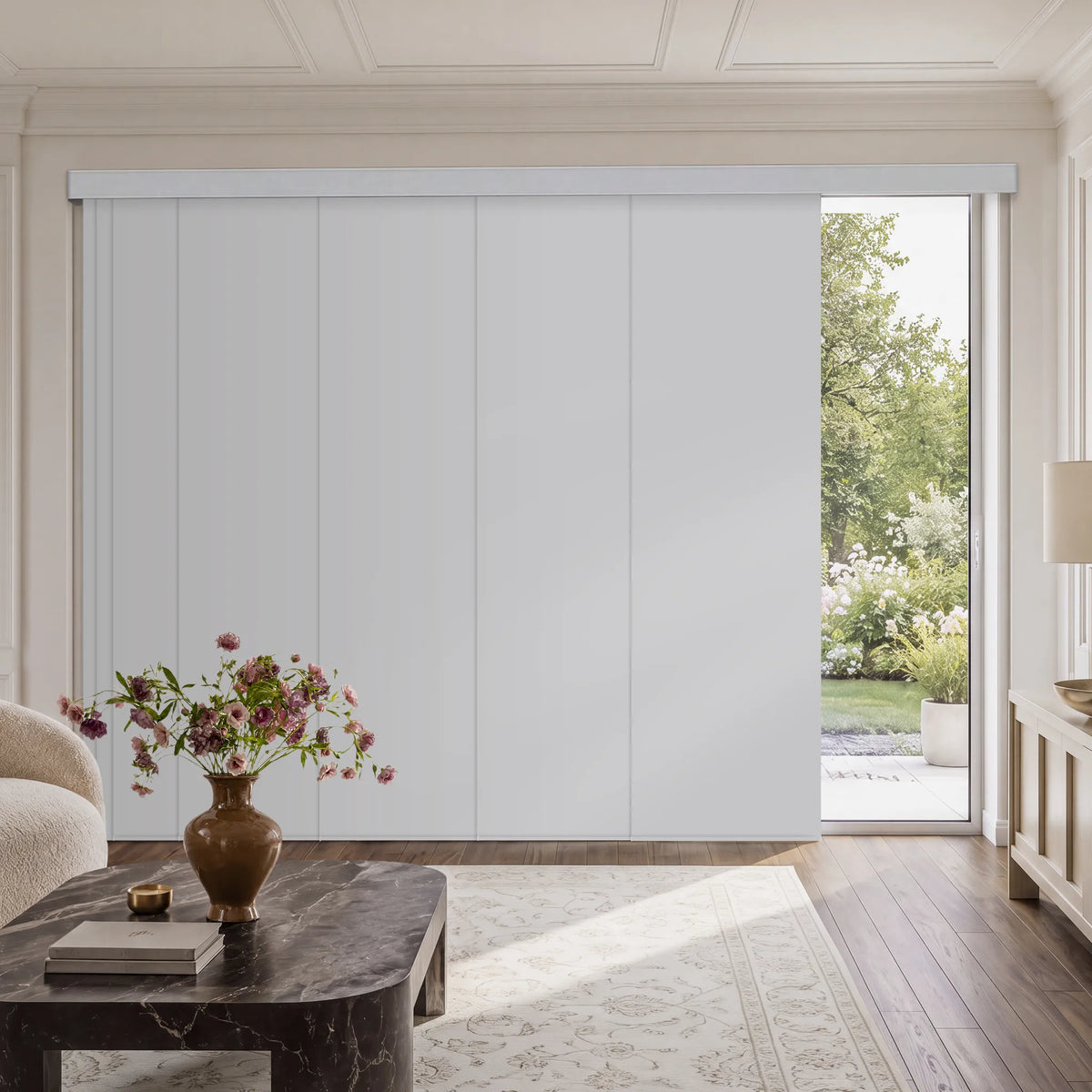
Sliding Blinds, also called sliding panel blinds, suspend several wide fabric panels from a multi-channel track. Pulling the leading panel causes the panels to overlap, travel across the opening, and stack at the side or split from the center, depending on the configuration.
Unlike rotating vanes, panel track blinds usually control light by changing how much of the opening is covered. Fabric selection determines what happens when the panels are closed: solar and light-filtering materials soften daylight, while blackout fabrics reduce transmitted light. Because the panels move horizontally and stay relatively flat, they suit wide glass, frequently used sliding doors, and open-plan spaces where the window covering also needs to work as a room divider.
Sliding Blinds vs Vertical Blinds: Key Differences
|
Comparison |
Panel Track Blinds |
Vertical Blinds |
|
Visual structure |
Broad, overlapping fabric planes |
Repeated narrow vanes |
|
Light adjustment |
Open, partially open, or closed; fabric controls diffusion |
Vanes tilt for more directional control |
|
Passage through a door |
Panels slide and stack horizontally |
Vanes draw aside but may sway around traffic |
|
Common wear points |
Track carriers, panel attachments, and fabric edges |
Chains, weights, hangers, vanes, and tilt parts |
|
Routine cleaning |
Fewer, wider surfaces |
More individual surfaces and edges |
|
Typical starting cost |
Often higher due to larger panels and track system |
Often lower in basic vinyl configurations |
Design and Appearance
Panel tracks divide a wide opening into a small number of large sections. Their scale can make tall glass feel intentional rather than visually busy. Woven textures can add softness, while solid fabrics support a restrained, contemporary interior. When open, however, the stacked panels occupy measurable space at the side. The stack location should be planned so it does not obstruct the active section of a sliding door.
Vertical blinds create a stronger rhythm of lines. That can complement rooms with repeated architectural elements, but bent or uneven vanes are easy to notice. Material makes a significant difference: fabric vanes appear softer, while vinyl versions often look more utilitarian.
Light Control and Privacy
Vertical blinds offer finer control during the day. Tilting the vanes can redirect light and limit a direct view while preserving some brightness. This is helpful when sun angle and glare change through the day.
Panel tracks provide broader zones of coverage rather than vane-by-vane adjustment. A panel can be parked over the brightest part of the glass, but it cannot redirect light at multiple angles. Privacy and room brightness therefore depend heavily on fabric openness, color, and overlap. Light-filtering fabric is not a substitute for blackout material, and gaps at the track, sides, or between panels can still admit light.
Operation, Daily Use, and Durability
For a door used several times a day, movement matters as much as appearance. Wide panels tend to move as stable surfaces and do not twist individually when someone passes. A properly sized stack also keeps the doorway clear.
Vertical vanes are light and easy to tilt, but frequent contact can turn vanes, disconnect bottom chains, or damage hangers. They may also move near an open door when air passes through. Panel tracks avoid bottom chains and individual rotating vanes, although their carriers and overlap still require correct alignment. Neither option should be forced when the track is obstructed.
Price and Maintenance
Basic vertical blinds usually have the lower purchase price, especially in standard vinyl. Premium fabric, custom dimensions, upgraded headrails, and professional installation narrow the difference.
Panel tracks may cost more because they use larger fabric sections and a multi-channel track. Maintenance can be simpler: there are fewer panels to dust, and removable or replaceable panels may extend the useful life of the system. Cleaning instructions still depend on the fabric. Vinyl vanes may tolerate wiping, while woven or coated textiles may require vacuuming with a soft brush or spot cleaning only.
Before comparing quotes, check what is included: measurements, mounting hardware, valance or headrail finish, opening direction, installation, replacement parts, and shipping for oversized components.

Which One Should You Choose?
Choose vertical blinds when:
- You want to tilt the covering throughout the day to manage changing glare.
- A lower initial price is a leading requirement.
- You prefer replacing one narrow vane instead of a full fabric panel.
- The opening sees moderate traffic and the vanes are unlikely to be handled roughly.
Choose Sliding Blinds when:
- You prefer broad fabric surfaces and a contemporary look.
- The sliding door is used frequently and stable horizontal movement matters.
- You need coordinated coverage for a very wide window or a room-divider application.
- You want fewer individual pieces to dust and align.
For strong room darkening, compare fabric and installation details rather than product labels alone. For a busy doorway, confirm the panel stack width and opening direction. In homes with children or pets, prioritize an appropriate control system and keep the travel path clear.
A Graywind Option for Wide Openings
For buyers who prefer the panel-track format, Graywind Manual Sliding Track Blinds 2.0 are made to measure for wide windows, patio doors, closets, and room-divider layouts. The system uses one telescopic aluminum rail, allowing width adjustment without joining separate rail sections. Its continuous carrier path supports smooth panel travel across the adjusted span.
Graywind offers single-side or center opening and a selection of blackout, light-filtering, solar, and woven-texture fabrics. Replaceable panels make it possible to refresh damaged fabric or change the finish without replacing the complete track system. Because panel overlap, fabric choice, and stack position affect darkness and access, buyers should confirm those details for the specific room before ordering.

Graywind's panel system is better suited to buyers who value stable sliding operation, a larger-scale fabric look, and made-to-measure coverage for a demanding wide opening.