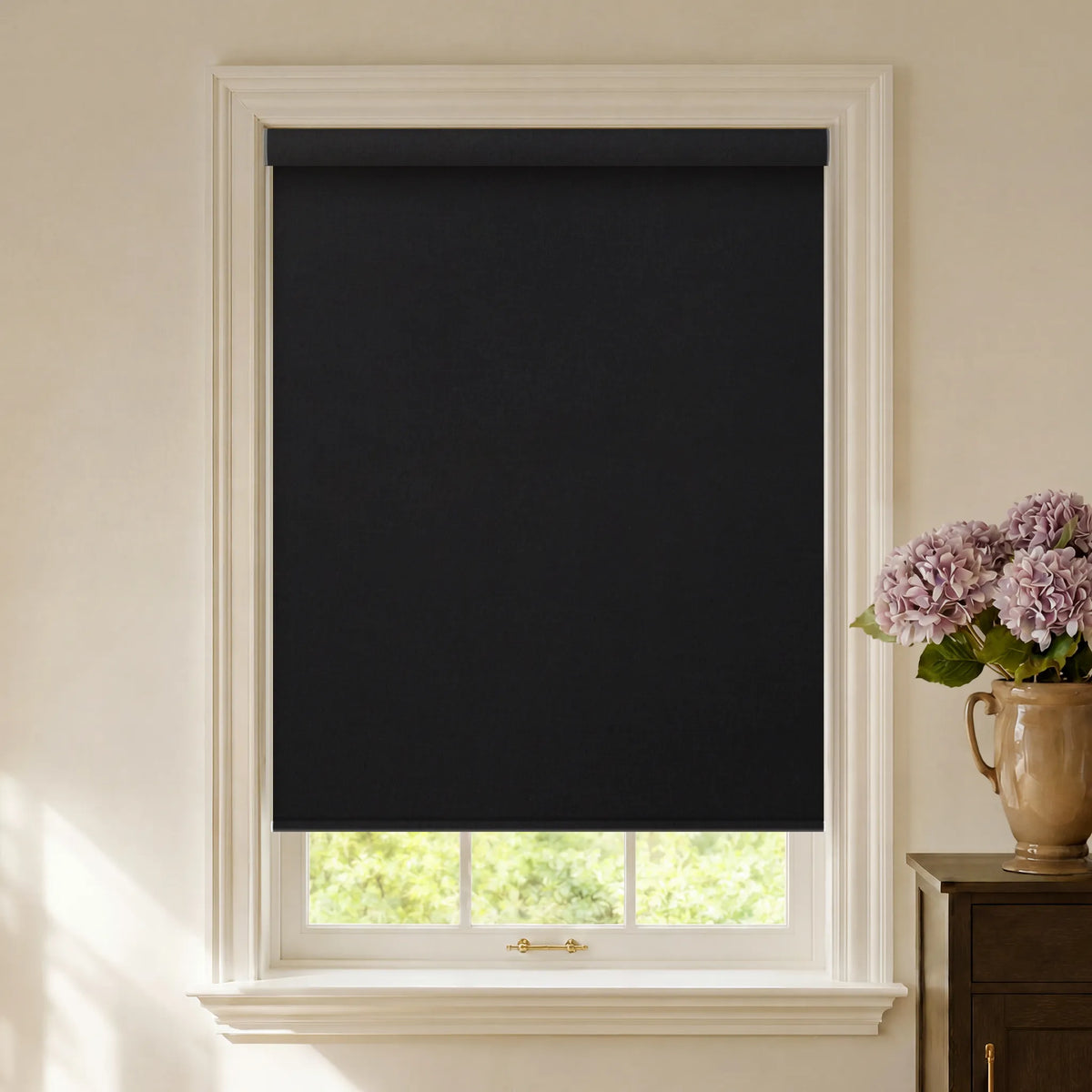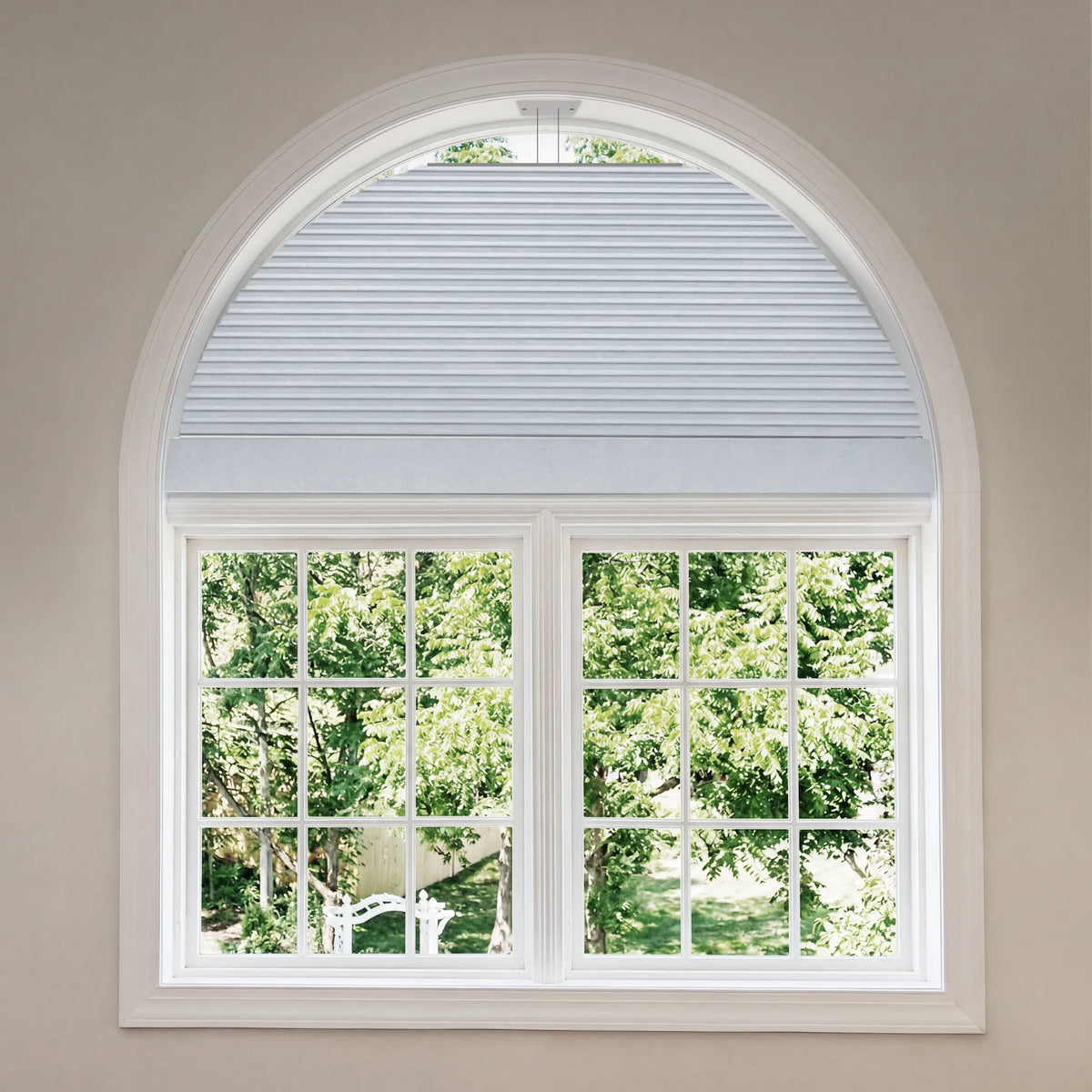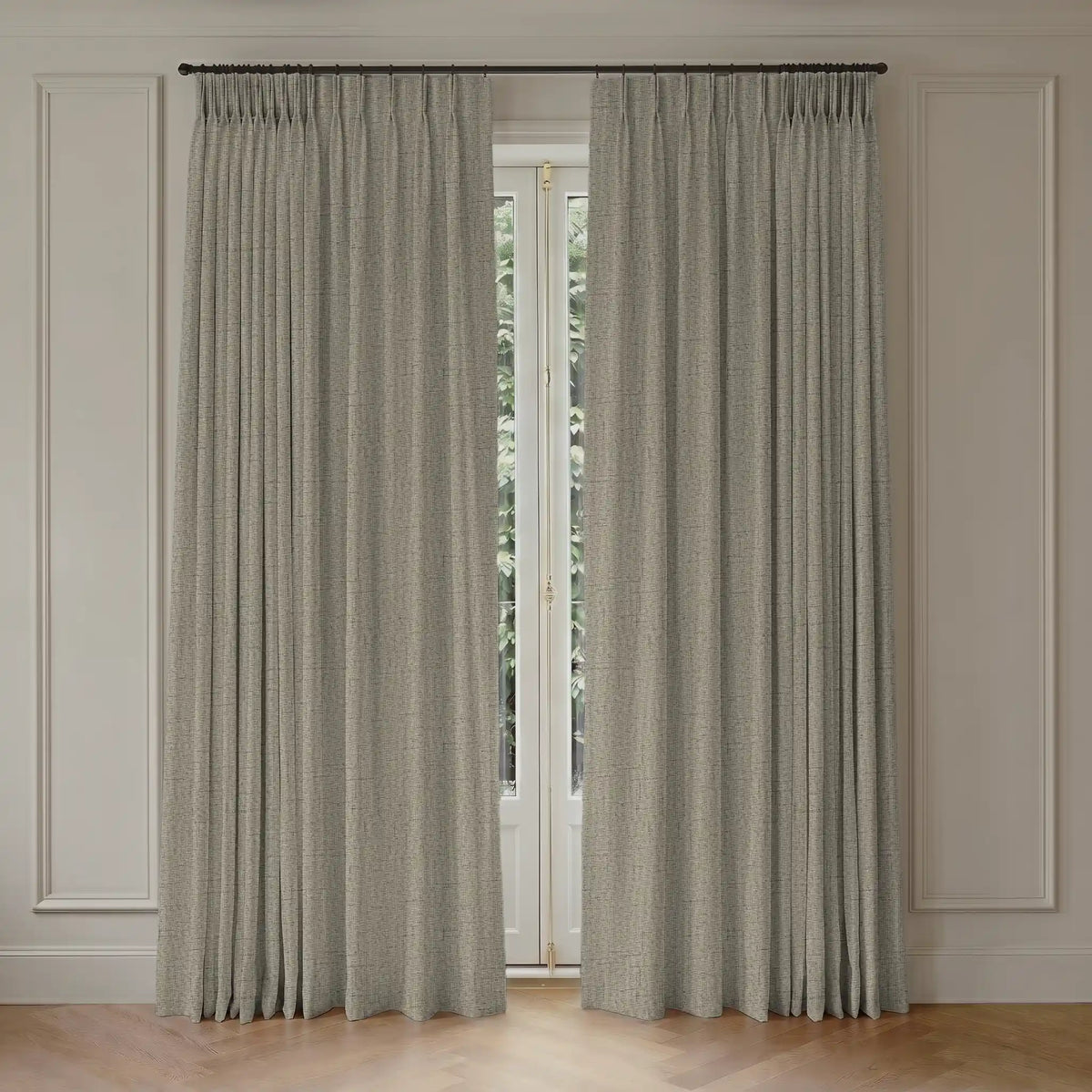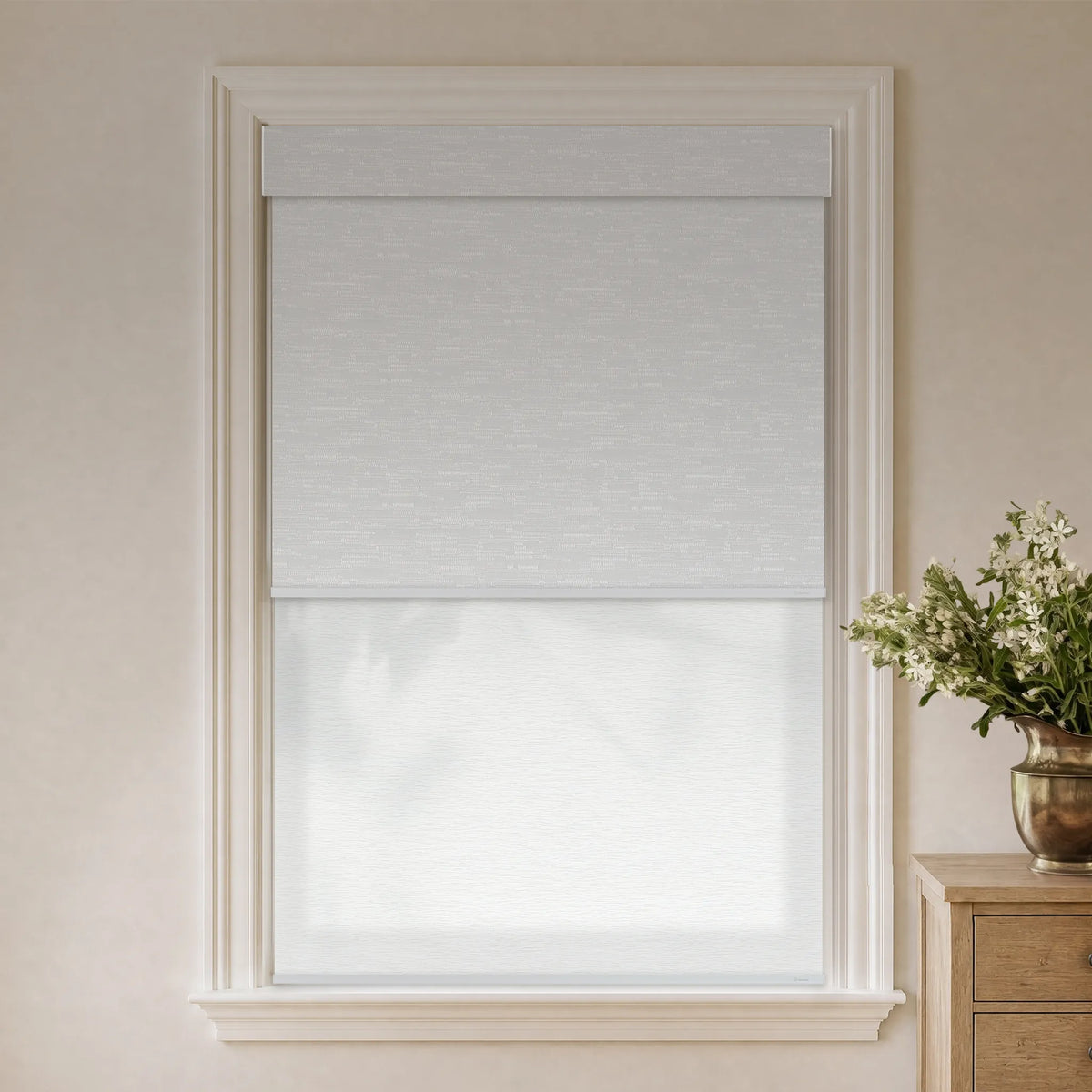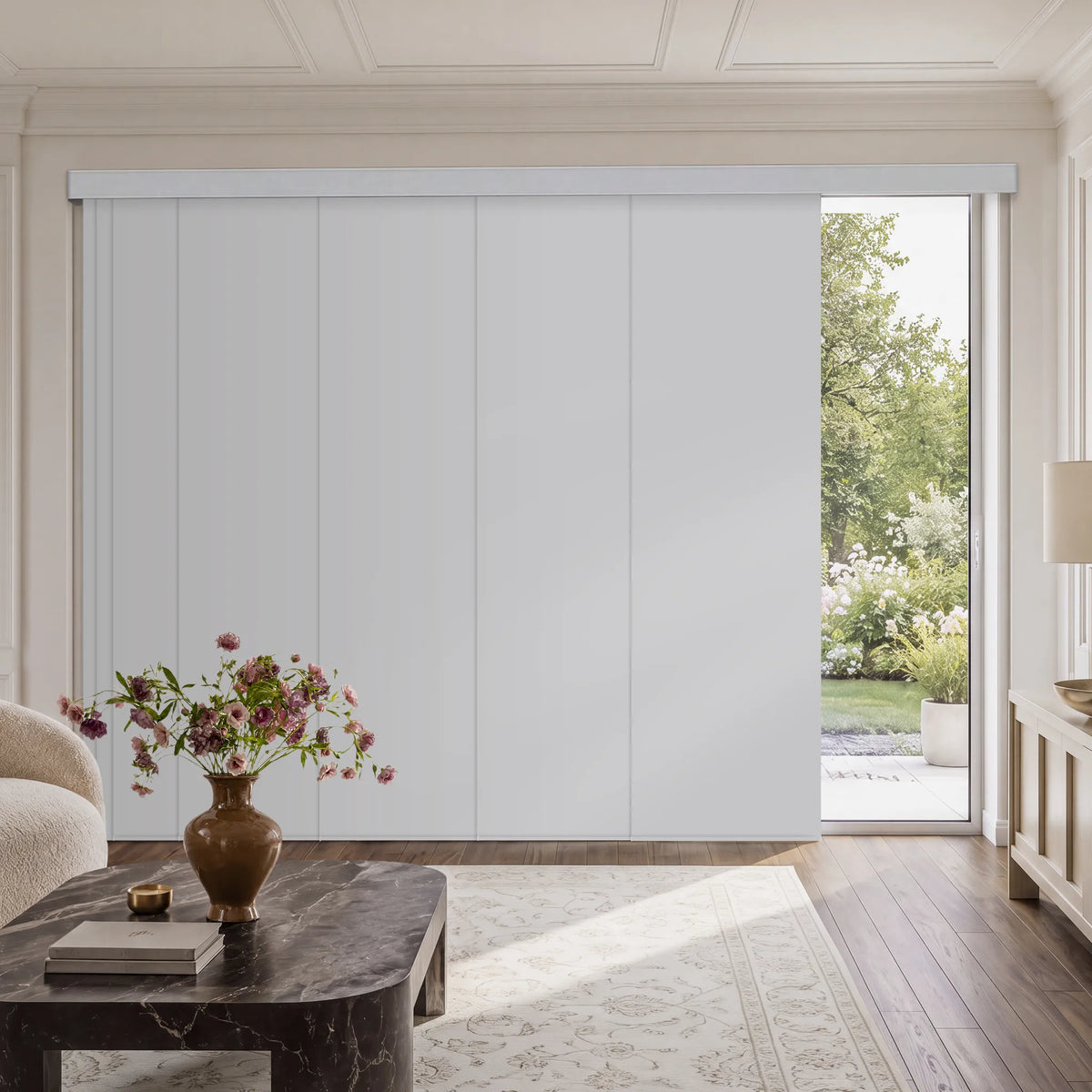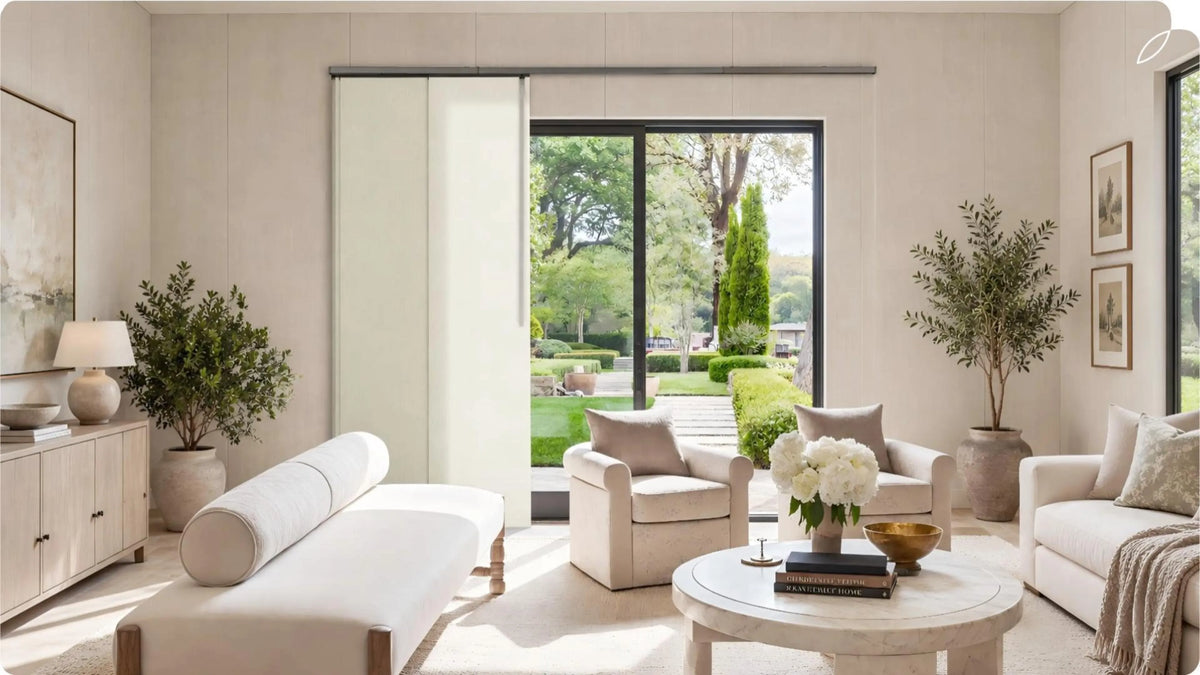
Panel track blinds work best when the material, measurements, stack position, and control system are planned around the opening rather than selected separately. Before buying, decide how much light and privacy you need, how the panels should clear the doorway, and whether the track will mount inside the opening or above it. These choices determine how the finished treatment looks and functions.
This guide explains how to compare panel materials, calculate an appropriate size, coordinate colors, select manual or motorized operation, choose a mounting method, and avoid common ordering mistakes.
Choosing the Right Panel Track Blinds Materials
The panel material affects light control, privacy, appearance, weight, cleaning, and long-term performance. "Solar" describes a fabric's light-management properties rather than one specific material, so evaluate both the construction and openness of the textile.
Fabric Panels
Polyester and blended fabrics offer the widest range of colors, textures, and opacity levels. Light-filtering fabric softens direct sunlight while keeping a living room or dining area bright. Blackout fabric provides stronger privacy and room darkening, although light may remain around the track, panel overlaps, and outer edges.
Fabric panels are versatile and generally easy to coordinate with upholstered furniture. However, heavily textured or pale fabrics may hold visible dust, while softer materials can move more in rooms with strong airflow.
Best for: living rooms, bedrooms, dining rooms, sliding glass doors, and spaces that need a softer finish.
Woven Wood and Natural Materials
Woven wood panels introduce visible grain, variation, and warmth. Bamboo, reeds, grasses, and wood-like weaves suit organic, coastal, transitional, or relaxed interiors. Their natural texture can make a wide installation feel less flat.
These materials may filter light unevenly and usually provide less complete privacy unless paired with a liner. Because natural fibers can react to moisture and strong temperature changes, they are not always the best choice for humid bathrooms or spaces exposed to outdoor conditions.
Best for: living areas, sunrooms, and interiors that emphasize natural texture.
PVC and Vinyl Panels
PVC or vinyl panels resist moisture and can usually be wiped clean. Their smooth surface makes them practical for kitchens, playrooms, rental properties, or other high-use areas. Some designs also provide strong privacy at a relatively accessible price.
The tradeoff is aesthetic. Lower-quality vinyl may appear more commercial than woven fabric and can become less flexible with age or prolonged heat exposure. Ask for samples before ordering, especially when covering an entire wall.
Best for: humid rooms, easy-clean applications, and high-traffic spaces.
Solar Fabrics
Solar panels reduce glare and filter UV exposure while retaining some outward visibility. Their openness factor indicates how tightly the fabric is woven: a lower percentage generally provides more privacy and glare reduction, while a higher percentage preserves more of the view.
Solar fabric does not provide reliable nighttime privacy when interior lights are on. It is also different from blackout fabric and should not be chosen when darkness is the main goal.
Best for: bright living rooms, home offices, west-facing windows, and spaces where daytime view-through matters.

Selecting the Perfect Size
Accurate sizing begins with the intended mount type. Do not measure only the glass. The frame, trim, handles, floor level, mounting surface, and panel stack can all affect the final dimensions.
Measure the Width
For an inside mount, measure the opening at the top, middle, and bottom. Use the manufacturer’s instructions to determine which measurement to submit and confirm that the frame has enough unobstructed depth for the track.
For an outside mount, measure the area you want the panels to cover. Add enough width to reduce side gaps and, when space allows, position the stack beyond the glass or doorway. This can preserve more of the view and usable passage when the blinds are open.
Measure the Height
Measure from the proposed track position to the sill or floor in several places. Floors and ceilings are not always level. Allow suitable clearance so the panels do not drag, collect dirt, or catch on rugs.
Check for baseboards, floor vents, door handles, security sensors, and furniture before confirming the height.
Plan Panel Overlap and Stack Space
Adjacent panels must overlap when closed to reduce sightlines and light gaps. Too little overlap weakens privacy; excessive overlap creates a larger stack and may cover more of the doorway when open.
Also determine whether the panels will stack left, stack right, or open from the center. Match the configuration to the moving door panel, main traffic route, furniture placement, wall switches, and preferred view.
Consider the Window and the Room
The opening size is only the starting point. Large panels can make a tall room feel more architectural, while narrower panels create more vertical divisions. Panel width should look proportional to the wall and provide enough support for the selected material.
Before ordering, confirm:
- The clear width needed for people to pass through the door.
- The wall or ceiling area available for mounting.
- The depth of handles and trim.
- The space occupied by the stacked panels.
- Whether the pattern must align across several panels.
- Whether a large installation can be transported into the room.
Picking the Right Color and Pattern
Color changes how visually dominant panel blinds appear across a large opening.
Light neutral shades reflect more daylight and can keep a compact room feeling open. Warm beige, oatmeal, and natural woven tones complement wood furniture and relaxed interiors. Gray and taupe work well with modern palettes but should be compared with the room’s flooring and wall undertones.
Dark colors create stronger contrast and can make the panels a focal point. They may also show lint or dust more easily. When choosing blackout fabric, remember that a dark face color does not automatically guarantee better room darkening; fabric construction and edge gaps matter as well.
Patterns require additional planning because each panel displays only part of the repeat. Large-scale patterns suit broad installations, while small, high-contrast motifs can look busy when divided by overlaps. Order samples and view them vertically in the room during both daylight and evening hours.
Light Control and Privacy Options
Select opacity according to the room rather than applying one fabric throughout the home.
- Sheer or open solar fabric preserves daylight but provides limited privacy.
- Light-filtering fabric diffuses sunlight and obscures details without darkening the room.
- Room-darkening fabric offers stronger privacy and reduces brightness.
- Blackout fabric blocks light through the material, but the complete system can still have perimeter and overlap gaps.
For bedrooms, media rooms, or room dividers, inspect the panels from different angles. A fabric that appears private from directly in front may reveal silhouettes through diagonal gaps.
Manual or Motorized Control
Manual panel blinds are practical for accessible openings and occasional adjustment. A wand keeps hands away from the fabric and avoids exposed operating cords. Manual operation also requires no charging, app, remote, or smart-home setup.
Motorized panel track shades suit tall, wide, hard-to-reach, or frequently adjusted installations. They can make heavy panels easier to move and allow several treatments to operate together. Before ordering, confirm the power source, charging access, control options, motor noise, emergency manual operation, and compatibility of the selected model.
Motorization adds cost and more components to maintain, so it may not be necessary for a small, easy-to-reach patio door.
Choosing the Right Mounting Method
An inside mount creates a built-in appearance but requires sufficient frame depth and a square opening. Handles, locks, and trim must remain clear.
An outside mount can cover uneven frames, reduce side light gaps, and make the opening appear taller or wider. It also provides more freedom to move the stack beyond the doorway.
Ceiling mounting works well for floor-to-ceiling windows and room dividers. The ceiling must provide suitable support across the complete track. Use appropriate hardware for the mounting surface, and consult an installer when the structure or track weight is uncertain.
Customizing Panel Track Blinds with Optional Features
Useful options depend on how the opening is used. Consider:
- Left, right, or center-opening configurations.
- Additional panel overlap for greater privacy.
- Decorative valances or track covers.
- Blackout or privacy liners for woven materials.
- Coordinating fabric across nearby windows.
- Replaceable panels for easier future updates.
- Child-conscious wand operation.
- Remote, app, voice, or scheduled control on compatible motorized models.
Do not add features without checking their effect on panel weight, stack size, track dimensions, and price.

Maintenance and Care Tips for Panel Track Blinds
Use a vacuum with a soft brush attachment for routine fabric cleaning. Work from top to bottom without pressing the panel out of shape. Vinyl and many PVC surfaces can be wiped with a lightly dampened cloth, but abrasive cleaners may damage the finish.
Treat stains according to the fabric supplier's instructions. Test any cleaning solution on an inconspicuous area and avoid soaking natural fibers or coated blackout materials.
Keep the track free of dust and inspect the carriers if movement becomes uneven. Do not force a panel that catches; check for obstructions or misaligned hardware first. Periodically confirm that brackets remain secure, particularly on frequently used sliding doors.
Graywind Panel Track Blinds for Wide Openings
Graywind offers made-to-measure panel track blinds for sliding doors and large windows, including manual and motorized configurations. Available choices include blackout, textured light-filtering, and natural light-filtering fabrics for different privacy and daylight needs.
Manual models use straightforward wand operation, while motorized options are better suited to wide, tall, or frequently adjusted openings. Depending on the selected product, customers can configure panel quantity and left, right, or center-opening movement.
Graywind panel tracks can also cover floor-to-ceiling windows, closet openings, or serve as flexible room dividers. Before ordering, use the measuring guide to check mounting depth, height, overlap, handle clearance, and stack position. For help with an unusual opening or control setup, customers can also book an online support consultation.