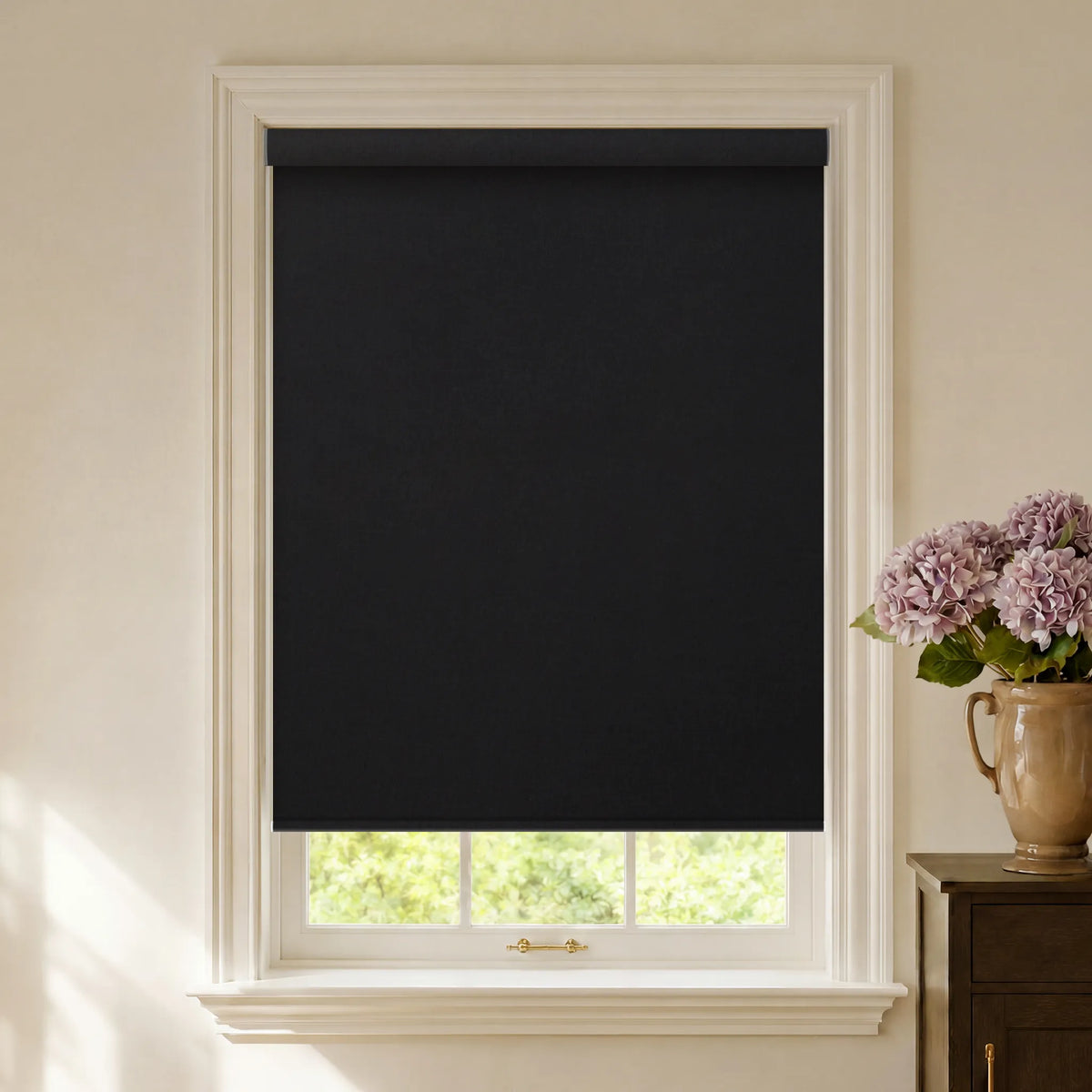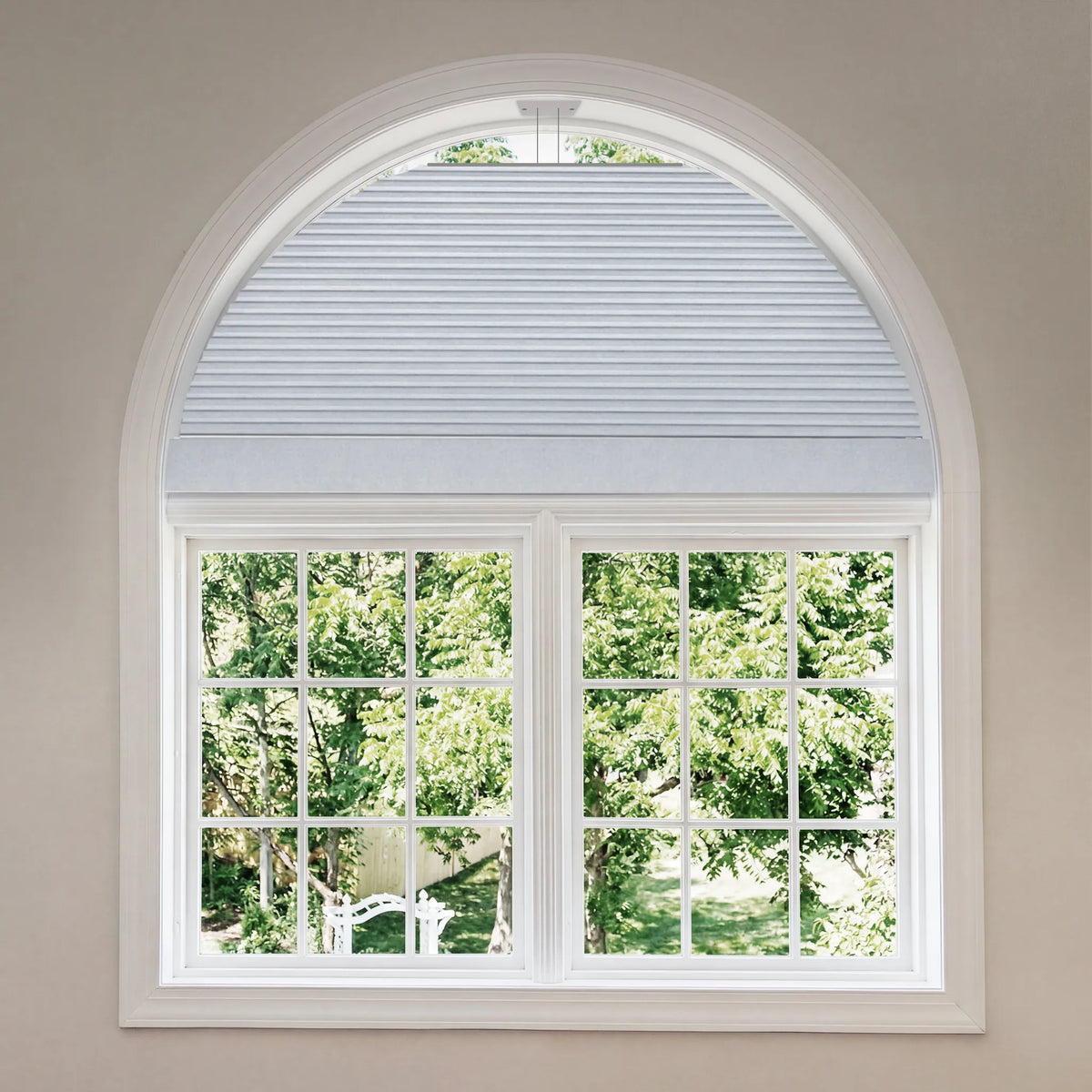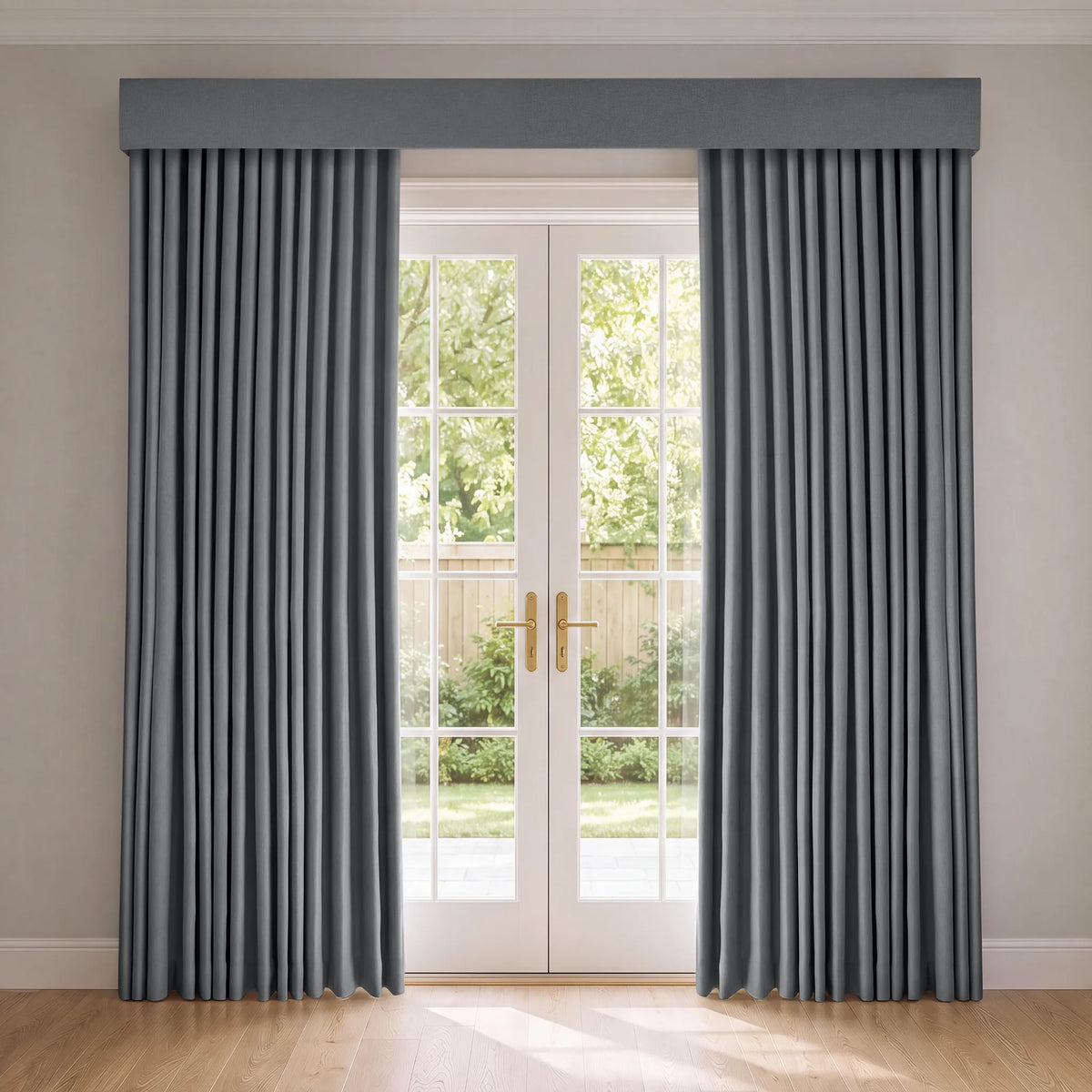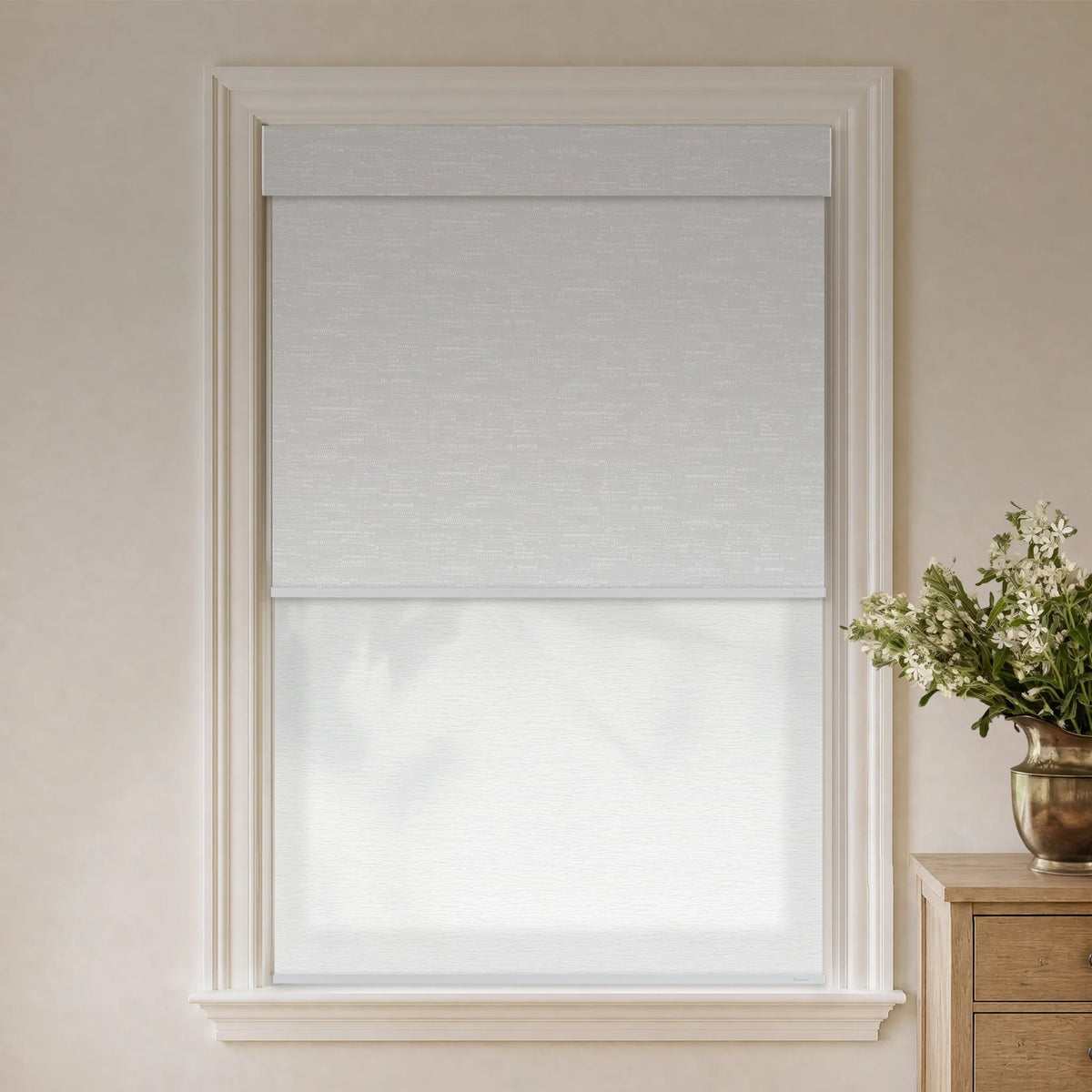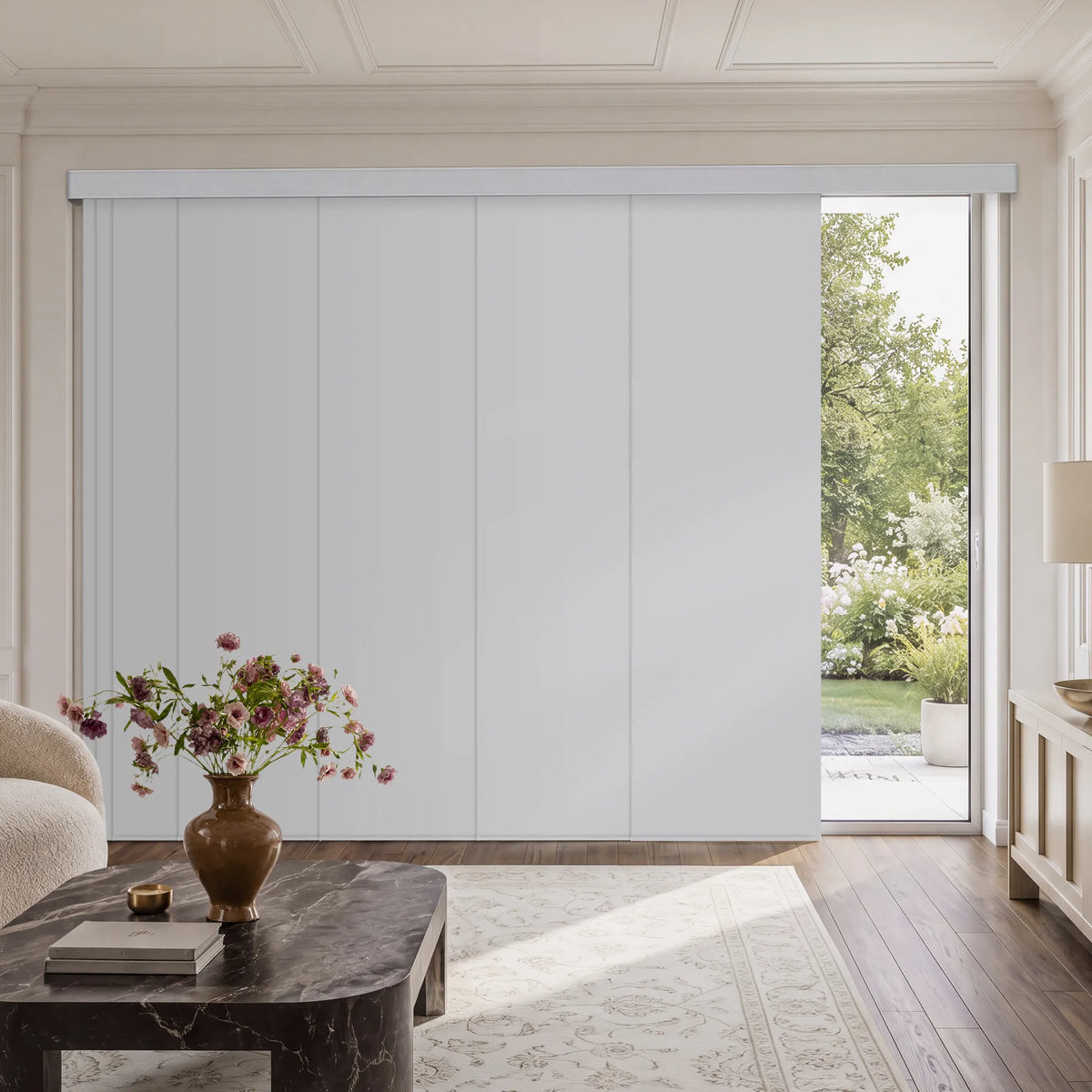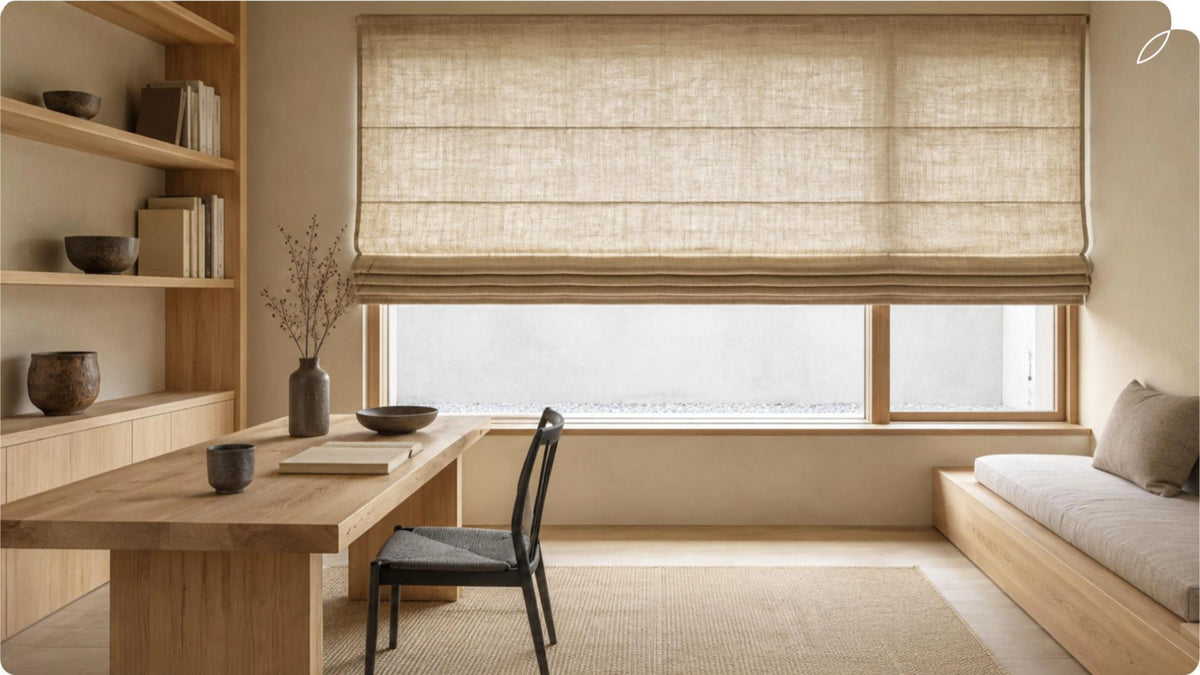
Roman shades look balanced when their folds, fabric volume, and mounting position suit the window and surrounding room. They can look awkward when a thick stack overwhelms a short opening, a large pattern gets cropped on a narrow shade, or neighboring windows have inconsistent mounting heights.
The difference often becomes clearer when the shades are raised. A fabric that looks understated across the glass may form a substantial bundle above it. Before choosing a color or fold style, consider how the shade will look fully lowered, partly open, and raised for daylight.
Why Roman Shades Depend More on Window Proportions
Roller shades wrap fabric around a tube. Roman shades gather it into visible folds, adding both depth and horizontal lines to the window.
Those lines can emphasize width, while the raised fabric stack occupies part of the opening unless it has space above the glass. On a tall window, this may feel proportionate. On a short window, the same stack can make the remaining glass look compressed.
There is no universal stack height. Shade length, construction, fabric, and lining all affect it. Ask for guidance for the actual shade you intend to order.

Start With the Shape of the Window
Short, Wide Windows
Roman shades can work on short, wide windows, but substantial folds may exaggerate their horizontal shape. Consider a flatter profile and a fabric without excessive bulk.
If there is suitable wall space above the opening, an outside mount can move some of the raised stack above the glass. This helps preserve daylight and gives the treatment more apparent height.
Tall, Narrow Windows
A tall window provides room for folds, but a narrow shade can become visually busy. Small patterns, subtle textures, and restrained fold depth generally give the eye more breathing room.
Before ordering a large motif, check how much of it will remain visible across the finished width.
Double Windows, Triple Windows, and Bay Windows
Plan adjacent windows as one composition. Align the headrails and decide whether shades should usually sit at matching raised positions.
Separate shades allow independent adjustment, while one broad shade creates a continuous surface but must meet the manufacturer's size limits. For bay windows, check bracket projection and clearance at the angled corners so neighboring shades do not interfere.
Inside or Outside Mount: What Does the Window Allow?
A deep recess can accommodate an inside mount while preserving decorative trim. However, minimum installation depth and the depth needed for a fully flush appearance are different measurements.
A shallow recess may leave the headrail projecting beyond the frame. An outside mount can provide another option, provided there is a suitable fixing surface.
|
Mount |
Visual effect |
Main consideration |
|
Inside mount |
Preserves the window's existing outline |
Raised fabric may cover upper glass |
|
Outside mount |
Can make the opening appear taller or wider |
Needs mounting space and planned coverage |
If the frame sits close to the ceiling, do not assume there is room to mount above it. Check the hardware requirements first.
Mounting too low leaves more fabric over the glass. Mounting higher can help, but greater height also requires a longer shade, which may increase the stack. Check the side view too: projecting hardware or an unfinished headrail can become visible without appropriate coverage.
Keep attractive trim exposed deliberately, or cover it with enough overlap to look intentional. Avoid leaving a narrow, uneven strip visible.

Why the Same Fabric Looks Different on Different Windows
A fabric sample shows color and texture. It does not show the volume of the finished shade.
Thick fabric can overwhelm a small opening. Very soft fabric may look less controlled across a wide span unless the construction provides appropriate support. Lining also changes how the fabric folds, hangs, and transmits light. A thicker lining can improve light blocking while adding bulk.
Pattern placement matters just as much. A large floral motif may be cropped awkwardly on a narrow window. An off-center stripe can make a correctly installed shade appear misaligned.
Check the sample vertically against the window and wall. Backlighting, fold shadows, and the wall's undertone can make the same beige look warm in one room and slightly gray in another.
Match the Fold to the Interior and Daily Routine
Flat Roman shades have a quieter face when lowered, making them a useful starting point for modern and transitional interiors. They also give patterns more uninterrupted space.
Relaxed Roman shades have a curved lower edge. They suit decorative windows where a softer silhouette matters, but some constructions need more dressing after operation. They are often a better fit for occasional adjustment than repeated daily lifting.
Fuller, cascading folds add visible fabric dimension. They can balance substantial furniture and formal rooms, although generous room size does not automatically make them appropriate for every small window within it.
Decoration alone does not determine ease of use. Ask whether the chosen construction raises evenly and whether its folds need arranging. Motorization simplifies lifting, but it does not remove fabric bulk or change how a decorative fold settles.
Common Mistakes That Make Roman Shades Look Awkward
Several small decisions can combine into an unbalanced result:
- Thick fabric and deep folds overwhelm a small window.
- Oversized horizontal folds make a short opening appear shorter.
- Adjacent headrails sit at different heights without a clear reason.
- A prominent motif or stripe is not centered as intended.
- The shade's undertone clashes with the wall.
- The raised stack was never considered during planning.
Review the window from the doorway and from seated positions. A treatment that looks balanced straight ahead may expose hardware or feel oversized from elsewhere in the room.
Adjust the Plan to the Room
|
Room |
A useful adjustment |
|
Bedroom |
Balance light blocking with fabric volume. Plan edge coverage as well as fabric opacity. |
|
Living room |
Coordinate the shade's folds with curtain fullness, furniture scale, and nearby patterns. |
|
Dining room |
Use pattern or fuller folds where the window has enough visual space to carry them. |
|
Home office |
Protect useful daylight by checking how much glass remains exposed when raised. |
|
Kitchen |
Favor manageable fabric volume and accessible care. Keep fabric clear of splash zones and cooking heat. |

Choosing Graywind Roman Shades Around Your Window
Choosing custom Roman shades starts with the window, rather than a favorite fabric photograph. Graywind's Roman shades collection lets you compare fold styles, fabrics, light control, mounting options, and motors. Use those choices to address the proportion problem you identified first.
For a compact window in a modern or transitional room, Motorized Flat Roman Shades offer a smooth face when lowered and gather into folds when raised. This quieter surface can work beside patterned upholstery or curtains. However, flat does not mean stack free: a short window still needs a plan for the raised fabric.
Motorized Plain Fold Roman Shades introduce defined horizontal folds. Consider them when a room needs more structure, such as a dining area with simple furniture. On a low, wide opening, assess whether those horizontal lines reinforce proportions you would rather soften.
Motorized Soft Fold Roman Shades retain cascading loops when lowered. They can complement a spacious bedroom or layered living room, but their fuller appearance may feel excessive on a small window surrounded by deep trim. This is a different construction from a relaxed Roman shade with a curved bottom.
Choose light filtering fabric for softened daylight, room darkening for reduced brightness, or blackout fabric where stronger light blocking matters. Blackout fabric alone does not eliminate light around the edges. Compare samples against your wall color in both daylight and evening light before committing.
Mounting depth deserves equal attention. Check the selected product's minimum installation depth, flush mounting depth, and required space above the window separately. Also request stack guidance for your exact size and fabric.
For windows behind furniture or several shades adjusted daily, motorized control can make operation easier. Remote, app, voice, and scheduling options depend on the selected motor and setup. Before ordering, settle the fold style, raised position, mounting height, fabric, and control configuration together.