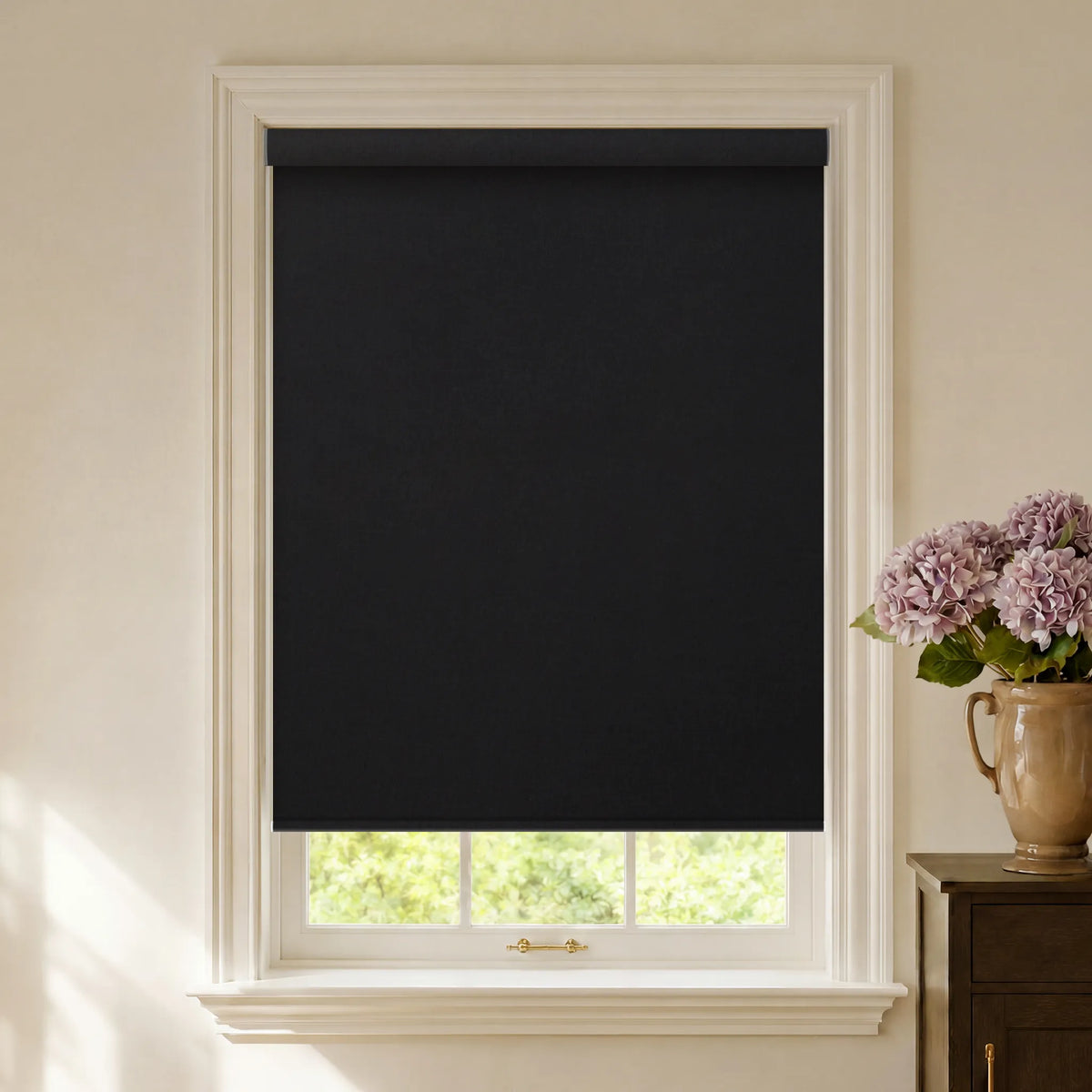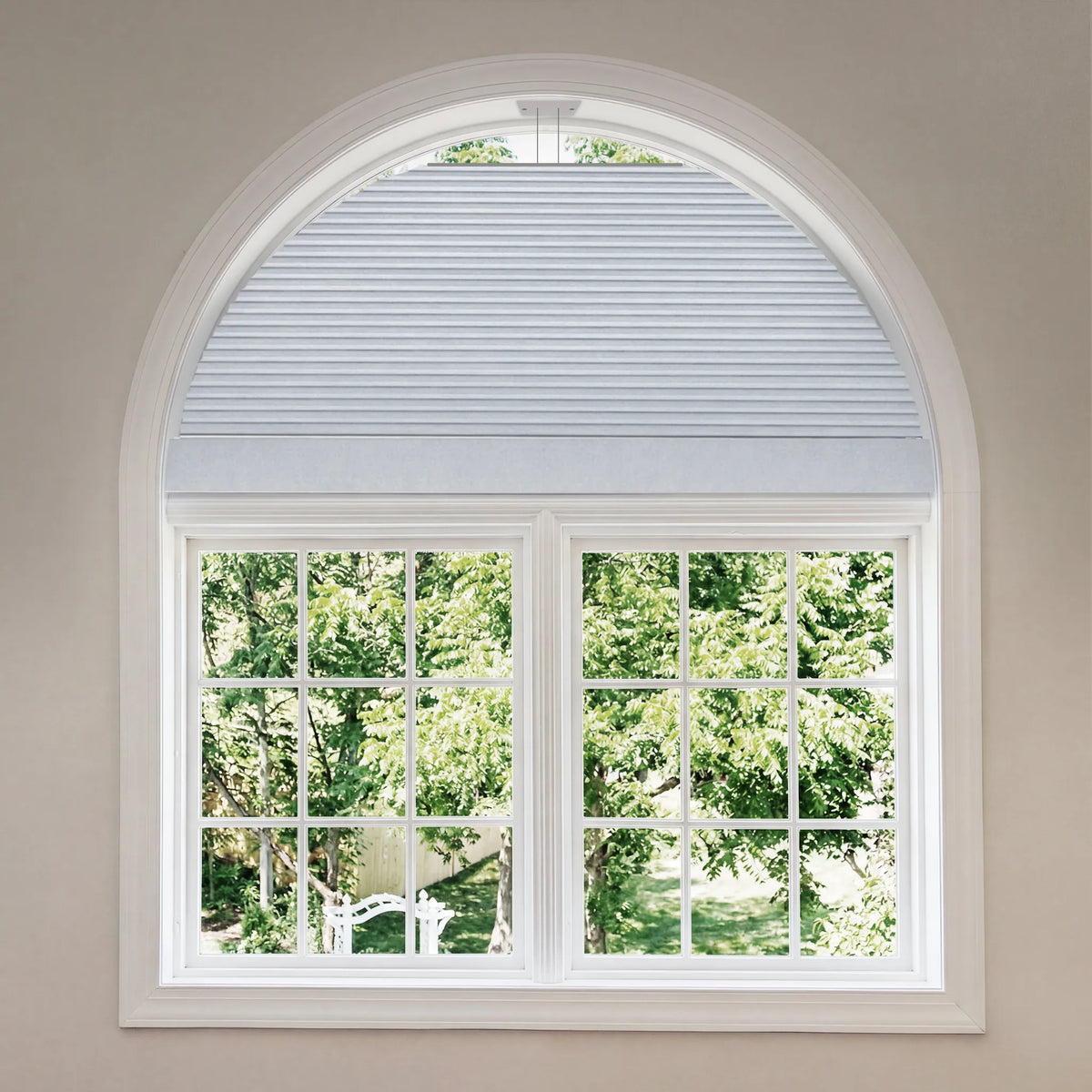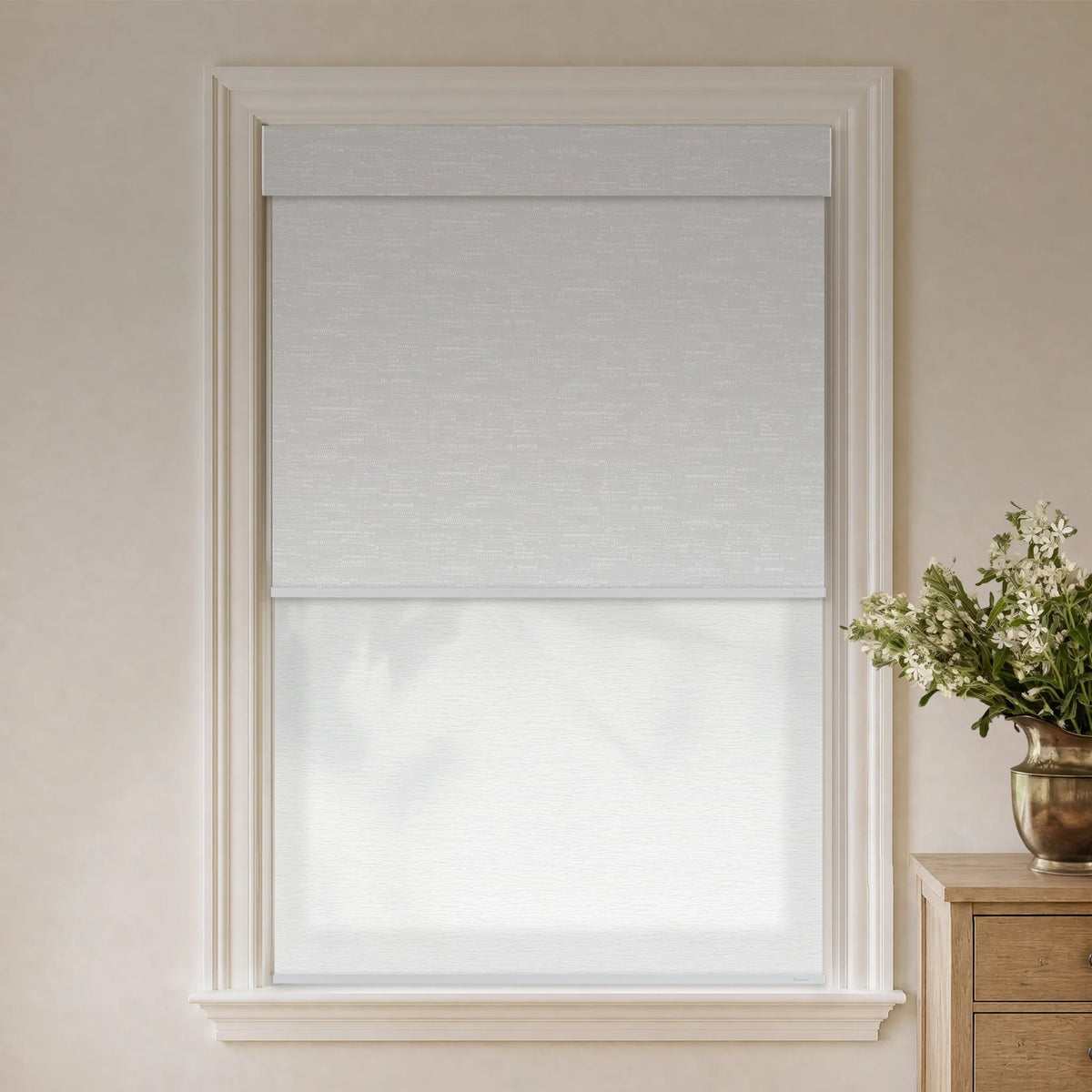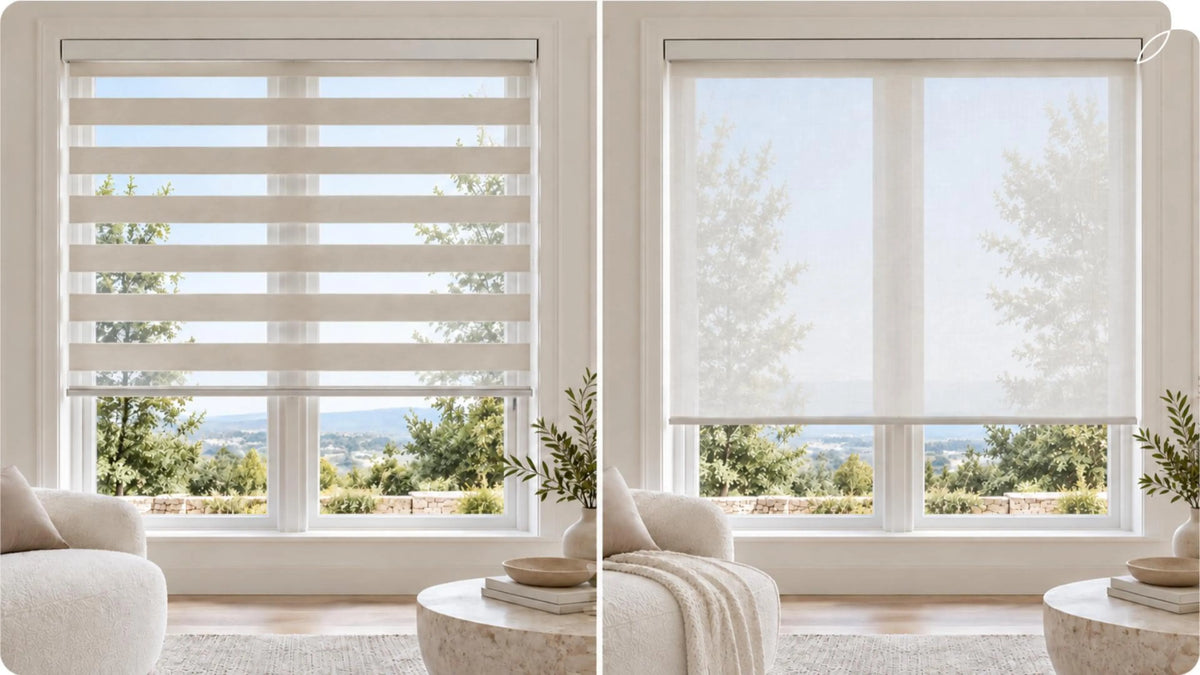
Zebra blinds offer adjustable light and privacy through overlapping fabric bands. Sheer roller shades provide a continuous layer of filtered daylight with a simpler appearance. Choose zebra blinds if you want to change coverage without uncovering the window. Choose sheer roller shades if soft daylight and an uninterrupted fabric surface matter more, with another covering available for nighttime privacy.
Here, "sheer shades" refers specifically to sheer roller shades: one sheer fabric panel that rolls onto a tube. These differ from horizontal sheer shades with adjustable fabric vanes between two sheer layers.
Zebra Blinds vs Sheer Shades: Understanding the Construction
Zebra Blinds: Alternating Bands in Two Layers
Zebra blinds use fabric woven with alternating sheer and denser horizontal bands. A continuous length typically loops around the bottom rail, creating two overlapping layers across the window.
Moving the fabric changes how the bands align. When the sheer sections line up, daylight enters through the exposed openings. When the denser bands overlap those openings, the blind provides greater coverage.
You can also stop between these positions to narrow the sheer openings. This allows adjustments to light and visibility while the blind remains lowered.
Sheer Shades: One Continuous Fabric Panel
Sheer roller shades use a single sheet of translucent or open-weave fabric attached to a roller tube. Lowering the shade covers the glass; raising it exposes part of the window.
The material's transparency stays the same wherever it covers the window. Unlike zebra blinds, sheer roller shades cannot overlap denser sections to create a more private setting.
Both categories may use polyester or blended fabrics. Their performance depends on the weave and construction, so a linen-like texture should not be taken as proof of natural linen content.
How Do They Compare?
|
Consideration |
Zebra Blinds |
Sheer Shades |
|
Fabric structure |
Alternating bands in two overlapping layers |
One continuous sheer panel |
|
Light adjustment |
Change band alignment or raise the blind |
Raise or lower the fabric |
|
Appearance |
Distinct horizontal stripes |
Uninterrupted fabric surface |
|
Outside visibility |
Views through exposed sheer bands |
Views filtered through the weave |
|
Nighttime privacy |
Stronger with dense bands fully overlapped |
Usually requires another covering |
|
Main limitation |
Horizontal pattern remains visible |
Cannot change fabric transparency |

Which Gives You Better Daylight Control?
Zebra blinds provide more adjustment within one treatment. You can expose the sheer bands for daylight, narrow the openings as sunlight strengthens, or overlap the denser bands for greater screening.
Sheer roller shades provide a more consistent fabric surface. They can soften daylight across the covered window without introducing alternating stripes. The result depends on the fabric: an open weave may preserve more outside visibility, while a denser sheer may obscure the view more noticeably.
Consider how you use the room. In a dining area overlooking a garden, a sheer roller shade may provide the light atmosphere you want throughout the day. Beside a west-facing desk, stronger afternoon sun may make adjustable zebra bands more useful.
Neither category guarantees adequate glare reduction for every window. A sheer fabric can soften sunlight while still leaving a monitor uncomfortable to use. Test the selected material during the hours when direct sunlight reaches your workspace.
Which Offers More Privacy?
Daytime Screening Depends on Lighting
Both treatments can reduce visibility into a room during the day, especially when outdoors is brighter than indoors. However, fabric density, viewing distance, and the position of neighboring windows affect the result.
With zebra blinds, opening the sheer bands also opens sightlines through them. A sheer roller shade maintains a continuous screen, but its weave may still allow people outside to see through.
Nighttime Privacy Requires More Coverage
Sheer roller shades should not be the only covering where privacy after dark is essential. Once indoor lights are on, occupants, movement, or furnishings may become visible through the fabric.
Zebra blinds can provide stronger screening when dense bands fully overlap the sheer sections. Lightweight bands, incomplete alignment, and gaps around the shade can still affect privacy.
For a street-facing room, compare the actual evening arrangement. Sheer roller shades paired with opaque curtains offer separate daytime and nighttime settings. Dense zebra blinds may suit homeowners who prefer adjusting coverage within one treatment.
Can Either Make a Bedroom Dark?
A sheer roller shade is a daylight covering. Lowering it completely does not turn it into a room-darkening shade. For sleeping, it generally needs an additional opaque layer.
Room-darkening zebra blinds reduce more light when their denser bands overlap, but they should not automatically be treated as blackout shades. Fabric performance and installation gaps influence the finished result.
Privacy and darkness also serve different purposes. A shade may prevent a clear view into the bedroom while still allowing enough morning light to disturb sleep.
If you sleep during the day, use a projector, or wake easily at sunrise, compare a dedicated blackout covering and its edge coverage before choosing either style.
Which Style Fits Your Interior?
Choose Zebra Blinds for Visible Structure
Zebra blinds introduce a repeating horizontal pattern. They can work well alongside simple furniture, clean cabinetry, and uncluttered architectural lines.
Look at a full-window installation before choosing the fabric. A small sample shows color and texture but cannot communicate the overall striped effect. Across neighboring windows, ask whether band positions can be coordinated.
Choose Sheer Roller Shades for a Quieter Surface
Sheer roller shades introduce less pattern, allowing furniture, artwork, or decorative wall finishes to remain prominent.
Their continuous surface can suit minimalist, Scandinavian, coastal, and neutral interiors. Texture still matters: a fine white sheer creates a different impression from a more visible woven fabric.
Neither style belongs exclusively to one design category. Judge the treatment alongside the room's existing lines, materials, and proportions.
Choosing Zebra Blinds or Sheer Roller Shades from Graywind
Graywind's range lets you approach this decision through two different fabric constructions. Choose around the way you use each window, then coordinate colors across the home rather than requiring every room to use the same shade.
For adjustable band coverage, consider Graywind Motorized Zebra Blinds. This option combines alternating sheer and solid sections with motorized operation. It is worth comparing for a living area that needs daylight during the morning and greater screening later. The striped appearance remains a design feature, and room-darkening performance depends on the chosen fabric and installation.
For an uninterrupted sheer surface, explore Graywind Motorized Roller Shades, selecting a sheer fabric rather than assuming every light-filtering option is equally transparent. Current choices include Sheer White and Sheer Linen Beige. These options suit projects where the fabric's visual lightness matters, such as a bright dining space or a living room with separate evening curtains. They should be evaluated as daylight coverings, with additional privacy planned where needed.

Motorized operation adds convenience to either style, with control options depending on the selected motor and accessories. The deciding factor is how you want the window to work: zebra blinds let you adjust coverage through overlapping bands, while sheer roller shades maintain a continuous layer of filtered daylight. With Graywind, you can choose the construction that suits each room, then coordinate fabric colors and controls for a consistent look throughout your home.