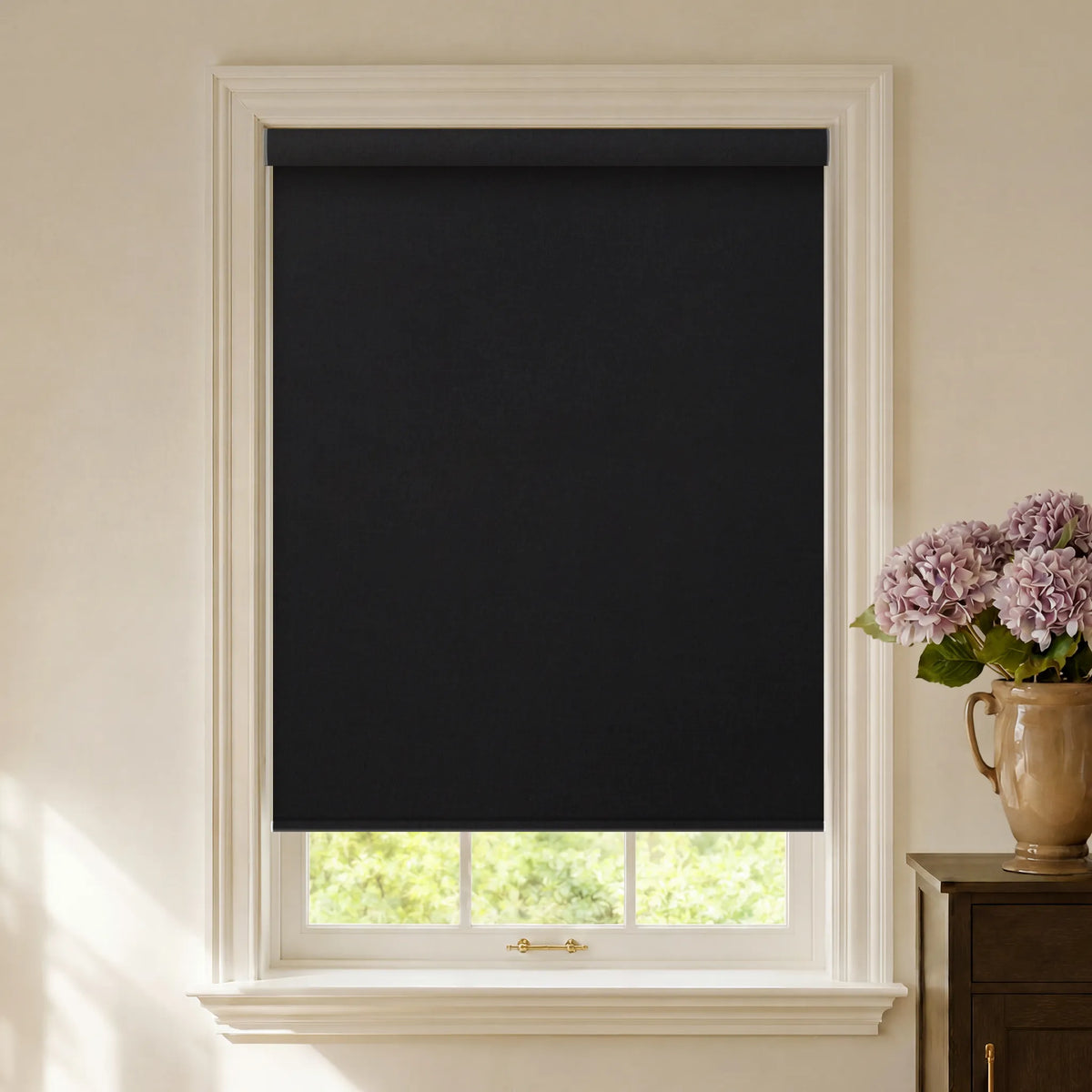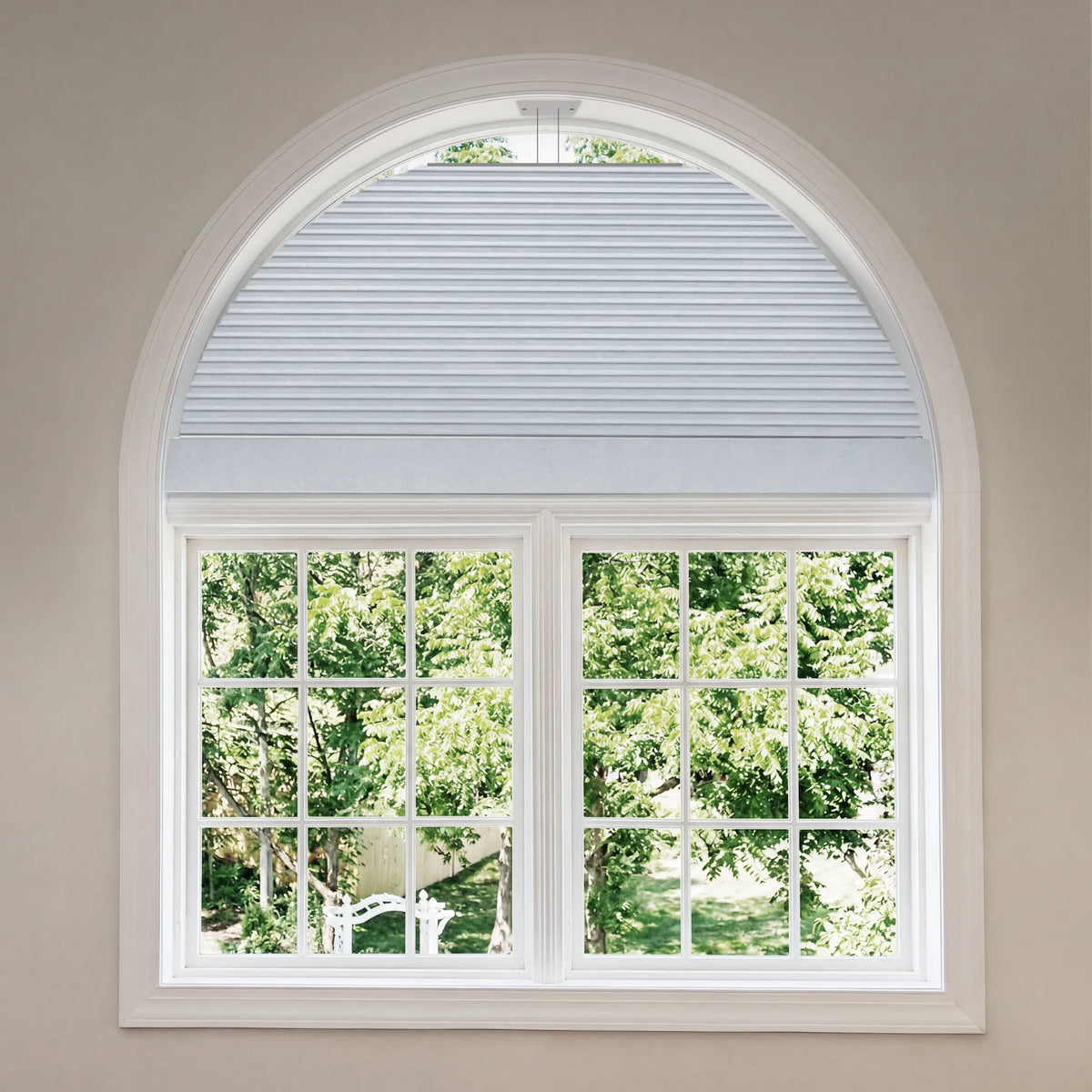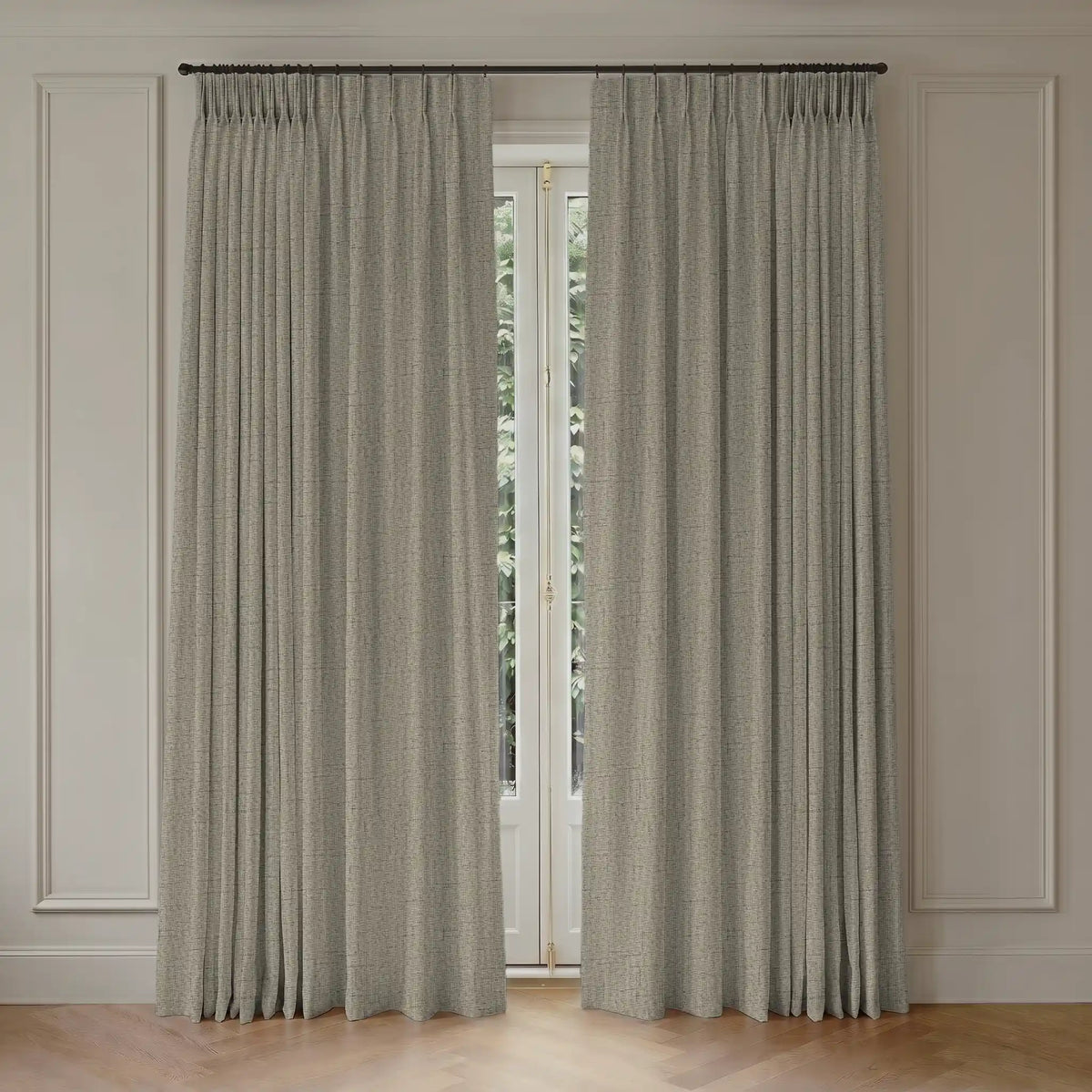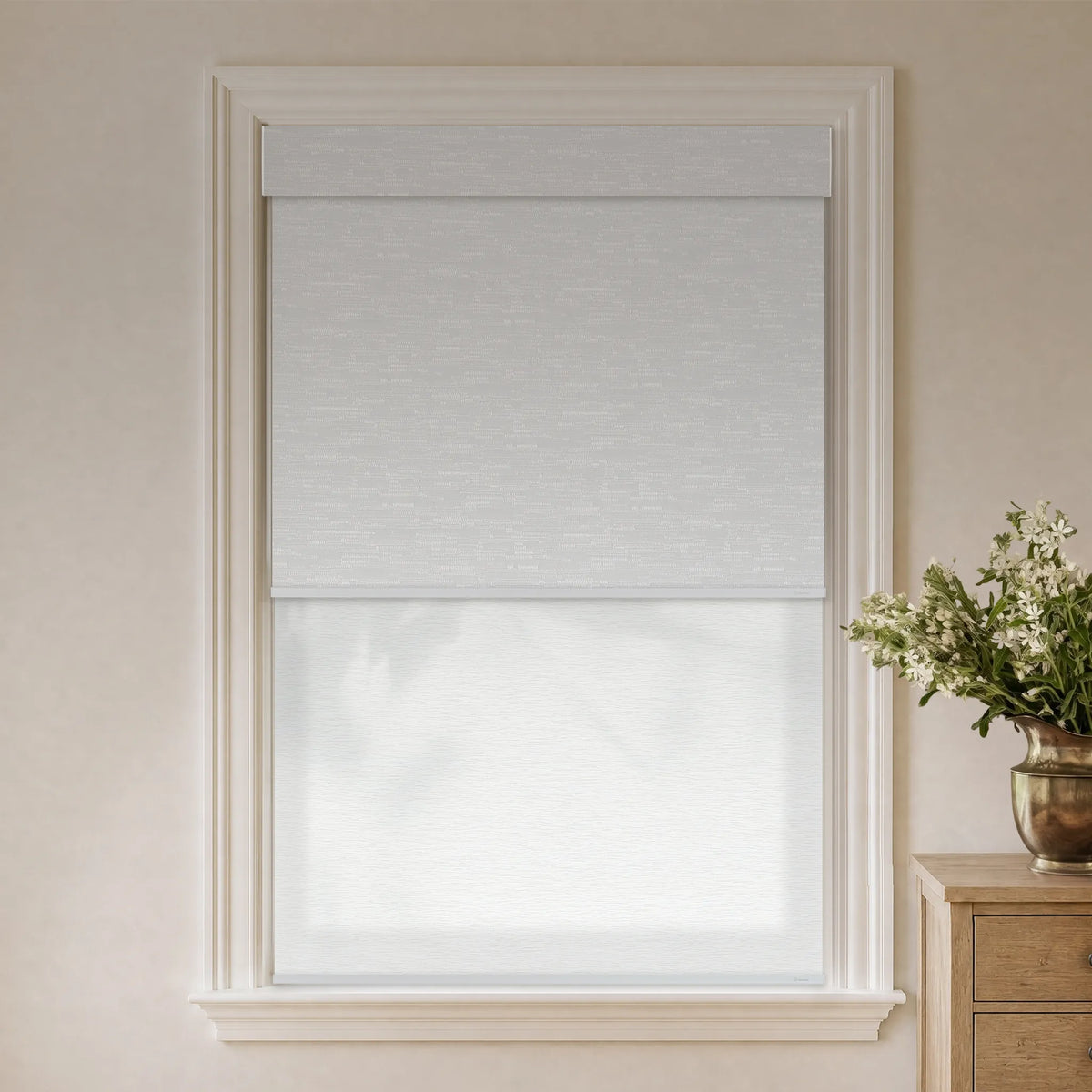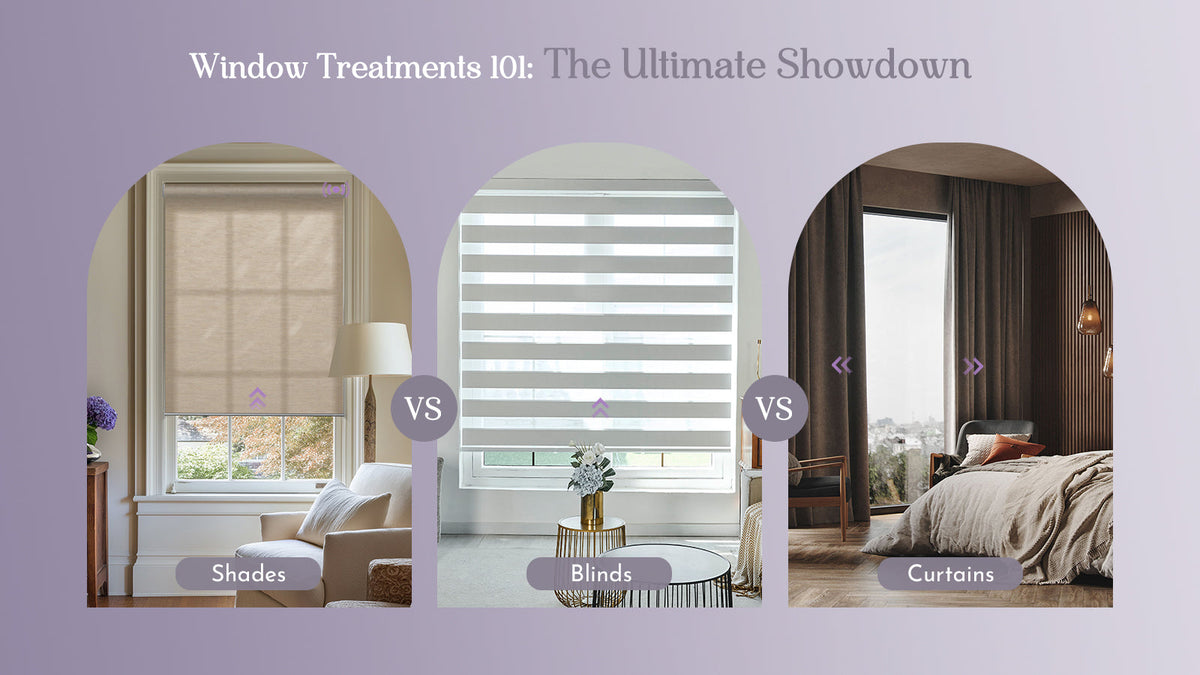
Blinds give you the most precise light control. Shades—especially cellular—lead on insulation. Curtains offer the widest range of color, texture, and floor-length coverage. The right choice depends on your room's function, humidity level, safety requirements, and budget. This guide walks through each option's real strengths and limits so you can decide without guesswork.

What Are Shades, Blinds, and Curtains?
If you're new to window treatment terminology, our Window Treatment Terms to Know glossary covers the core vocabulary before you dive into comparisons.
Shades: Sleek & Functional
Shades use continuous fabric or flexible material that rolls, folds, or stacks. Common types:
- Roller Shades: Compact; available in light-filtering, solar, room-darkening, and blackout fabrics.
- Roman Shades: Form tailored fabric folds when raised.
- Cellular (Honeycomb) Shades: Trap air in honeycomb cells—the strongest insulation of any window treatment.
- Solar Shades: Reduce glare while preserving daytime outward visibility.
Best for: Streamlined interiors, motorization, and rooms where insulation matters most.

Blinds: Adjustable & Versatile
Blinds use horizontal slats or vertical vanes that tilt to adjust daylight and privacy independently of raise/lower position.
- Venetian Blinds: Horizontal slats provide directional light control.
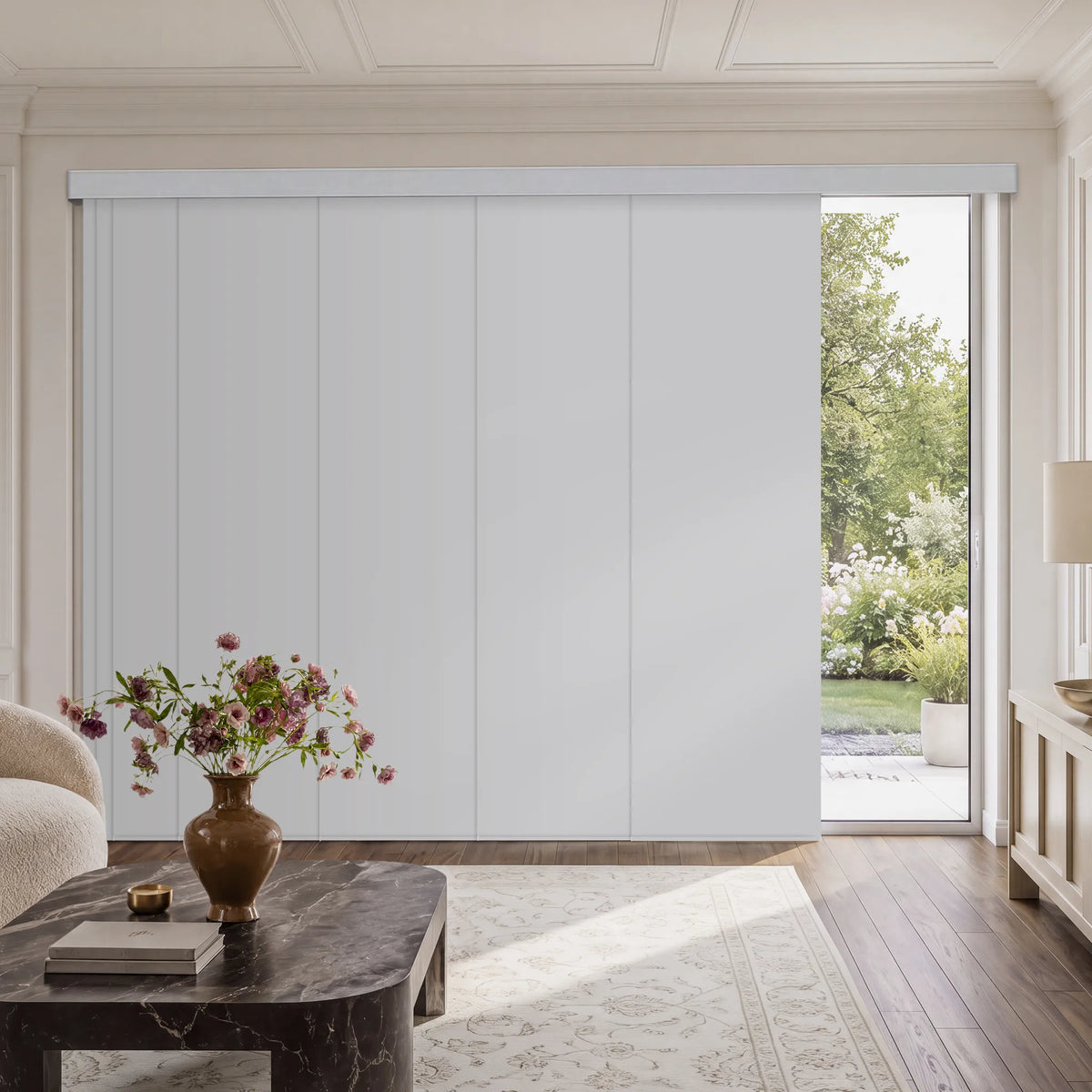
- Vertical Blinds: Vertical vanes suit wide windows and sliding doors.
- Faux Wood / Aluminum: Moisture-resistant; suitable for kitchens and bathrooms where real wood warps.
Best for: Rooms needing precise, moment-to-moment light adjustment and humid environments when moisture-resistant materials are selected.

Curtains: Stylish & Soft
Curtains are fabric panels that move along a rod or track. Key types:
- Sheer Curtains: Admit daylight but provide limited privacy, especially after dark.
- Blackout Curtains: Block light through the fabric; note that side and top gaps may still let light in.
- Thermal / Insulated Drapes: Add a layer of temperature regulation, though less effective than cellular shades.
Best for: Color, texture, wide coverage, floor-length designs, and layering over other treatments.

Blinds vs Curtains vs Shades: Key Comparison
|
Feature |
Shades |
Blinds |
Curtains |
|
Light Control |
Good (fixed opacity per fabric) |
Best (tiltable slats) |
Moderate (depends on fabric weight) |
|
Privacy |
Good (blackout options available) |
Good (adjustable slat angle) |
Best (full panel coverage) |
|
Energy Efficiency |
Best (cellular shades, per DOE data) |
Low–Moderate |
Good (thermal drapes) |
|
Child & Pet Safety |
Safe when cordless or motorized |
Risk with corded versions; choose cordless |
Safe (no cords) |
|
Humidity Resistance |
Moderate (fabric-dependent) |
Best (faux wood / aluminum) |
Low (fabric absorbs moisture) |
|
Style Range |
Modern & minimal |
Functional / classic |
Most decorative |
|
Typical Price Range |
Mid to high |
Budget to mid |
Budget to luxury |
How to Choose: Room-by-Room
Bedroom
Prioritize blackout and insulation. Blackout roller shades or cellular shades block light effectively; thermal curtains add a decorative layer. Avoid corded blinds in children's rooms—the CPSC links corded window coverings to strangulation risk; cordless or motorized options eliminate this hazard. Not sure which opacity level you need? Our comparison of sheer vs light-filtering vs room-darkening vs blackout treatments breaks down exactly what each fabric lets through.
Living Room
Layering works well here: sheer curtains soften the space while a roller or cellular shade underneath handles privacy and glare. Venetian blinds suit a more utilitarian or industrial aesthetic.
Kitchen & Bathroom
Moisture resistance is non-negotiable. Faux wood or aluminum blinds hold up where real wood warps and fabric absorbs odors. Keep treatments short to avoid contact with countertops or water.
Home Office
Solar shades reduce screen glare while keeping the view. Venetian blinds let you redirect light toward the ceiling rather than blocking it entirely.
Nursery
Cordless roller shades or motorized shades are the safest choice. Pair with blackout fabric to support sleep schedules.
When Each Option Falls Short
- Blinds: Slat gaps mean they never achieve true blackout. Corded versions are a safety hazard. Real wood warps in humid rooms.
- Shades: Once you choose a fabric opacity, you're committed—you can't tilt to adjust like blinds. Fabric shades are not ideal for very humid rooms without proper ventilation.
- Curtains: Sheers offer almost no nighttime privacy. Blackout curtains still let light in at the edges unless you use a wrap-around rod or side returns. Fabric collects dust more than hard treatments.
Budget Guide
- Under $50 per window: Basic roller shades, aluminum venetian blinds, off-the-shelf curtain panels.
- $50–$150 per window: Faux wood blinds, light-filtering or blackout roller shades, mid-weight curtains.
- $150+ per window: Cellular shades, motorized roller or zebra shades, custom curtains with lining.
Graywind Options Worth Considering
Graywind's motorized roller shades and zebra shades are designed for rooms where you want both blackout performance and smart-home integration. The cordless and motorized configurations meet CPSC child-safety guidelines. If you're comparing specific products, the custom curtains collection and shade lines include measured dimensions and fabric specs so you can verify fit before ordering.
Next Steps
Once you've chosen your treatment type, the next decision is measuring correctly—incorrect measurements are the most common reason custom window treatments don't fit. See our Window Treatment Terms to Know for inside-mount vs outside-mount definitions, then check the product pages for specific dimension requirements before you order.